
Five species that shape wetlands and rainforest landscapes
Written by: Alejandra Hart

A royal fern growing by a temperate rainforest stream, a sign of natural regeneration. Credit: Bull and Wolf.
The UK is home to a wide variety of ecosystems, from wetlands and river valleys to ancient woodlands and temperate rainforests. Due to centuries of exploitation, inappropriate levels of grazing and drainage, these ecosystems have become fragmented and degraded.
At the Woodland Trust, we work to protect and restore our woodlands, helping species and natural processes to thrive. Alongside lichens and mosses, the following species demonstrate the interconnectedness of our landscape and can play a key role in keeping these ecosystems healthy. Whilst the Hazel Gloves Fungus is endemic to rainforests, Willow, Beavers, White-Tailed sea-eagles and Salmon are not exclusive to this habitat.
Hazel Gloves Fungus
Small, bright orange, and shaped like tiny rubber gloves wrapped around branches, the hazel gloves fungus is one of the rarest species in Europe. It grows only in Atlantic hazelwoods, making it a powerful symbol of Britain’s temperate rainforests.
Mycologist David Satori, who works in Scotland’s Atlantic woodlands, calls it “as iconic to British rainforests as the orangutan is to Indonesia.” But what really sets it apart is how it survives.
In the words of David Satori:
“It’s a globally rare, bizarre-looking fungus… in the same family as the famous Cordyceps that take control over insects. Turns out this species hunts down other fungi, particularly the Glue Crust. The Glue Crust grows through hazel stems and creates hard mycelial bridges that allows it to move along trees without touching the ground. The Hazel Gloves feeds off the mycelium of the Glue Crust in a kind of cat-and-mouse game, and in Britian they’re only found in Atlantic Hazelwoods, which I think are some of the most special types of temperate rainforest we have.”
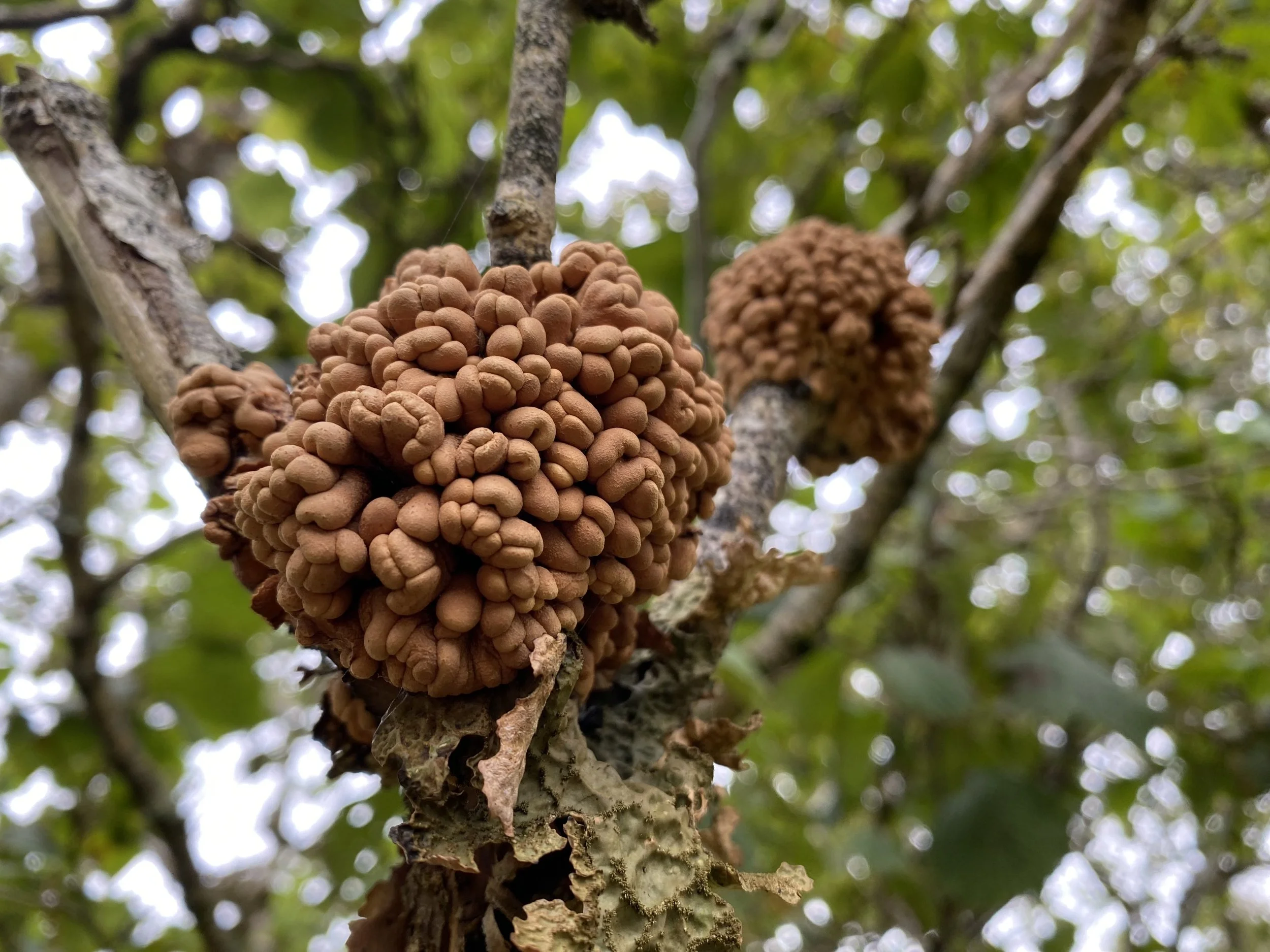
Hazel Gloves Fungus found on the Isle of Skye, in Scotland. Credit: David Satori
Willow
Willow trees have a great ability to grow quickly in wet conditions and hold water in the landscape. Their roots stabilise soil, their presence helps lock in nutrients, and their canopy cools the surrounding air and water. When found in river valleys and woodland edges, they help slow the flow of water, reducing flood risk and play a part in retaining the humidity that supports mosses, liverworts and lichens rainforests are known for.
The Willow is useful for other species too. Their flexible branches are used for building nests, their leaves support insects, and their structure offers shelter for birds and mammals. Barbestelle bats, one of the rarest woodland specialist bats in the UK, depend on willow for their lifecycle. They are the earliest emerging bat, so they need the earliest emerging moth as their food source. The moth, therefore, needs the earliest emerging flower: the willow flower. There is a layer of ecology all linked to willow.

The canopy of a willow tree, providing shade and shelter for other species. Credit: Zhenya
Beaver
Beavers were once widely found in Britain’s ecosystems. Now, as they return, they’re rewetting woodlands in ways we couldn’t easily do ourselves. The impact of beavers on ecosystems needs to be monitored to ensure they don’t have a negative effect on lichen rich woodlands.
Beavers don’t like the sound of running water, so part of the work on our estate is making our sites beaver-ready by slowing the flow of water with leaky dams. Beavers cut down trees like willow to build dams, slowing streams and allowing water to expand into the surrounding land. This rewetting creates pools, wet woodland and marshes, all of which are a haven for species like frogs, dragonflies, and dormice. By transforming fast-flowing streams into biodiverse wetlands, beavers are re-creating the slower-moving, wetter river systems that used to be common in western Britain.

A beaver, also known as a rainforest engineer, munching on its favourite snack - willow! Credit: Laurie Campbell
White-tailed Sea Eagle
The white-tailed sea eagle is Britain’s largest bird of prey. It once lived in coastal woodlands, nesting in tall trees and cliffs while feeding mostly on fish and seabirds. Though extinct in the UK for much of the 20th century, it is now slowly returning to our coasts and forests.
The sea eagle helps link marine and forest ecosystems. By feeding at sea and nesting inland, they bring nutrients from the ocean back into the forest. The remains of its prey provide food for other species and enrich the soil, supporting plant growth in the low-nutrient forests.

A majestic white-tailed sea eagle in flight on the Isle of Mull, in Scotland. Credit: Dan Russon.
Atlantic Salmon
Like the sea eagle, the Atlantic salmon connects land and sea, playing an important role in the nutrient cycling that supports rainforest growth. They hatch in streams, travel to the ocean, then return to the same rivers to spawn. Along the way, they bring nutrients from the sea, including nitrogen and phosphorus, back into our rivers.
In other temperate rainforest regions, such as the Pacific Northwest, salmon are known as a keystone species, vital to rainforest health. Bears, eagles and otters all rely on them for food, and as their remains decompose, they enrich the soil of temperate rainforests.
In the UK, salmon once played a similar role, but populations have declined and are under serious pressure. Restoring rivers, improving water quality, and rewetting, will give them a better chance to recover.
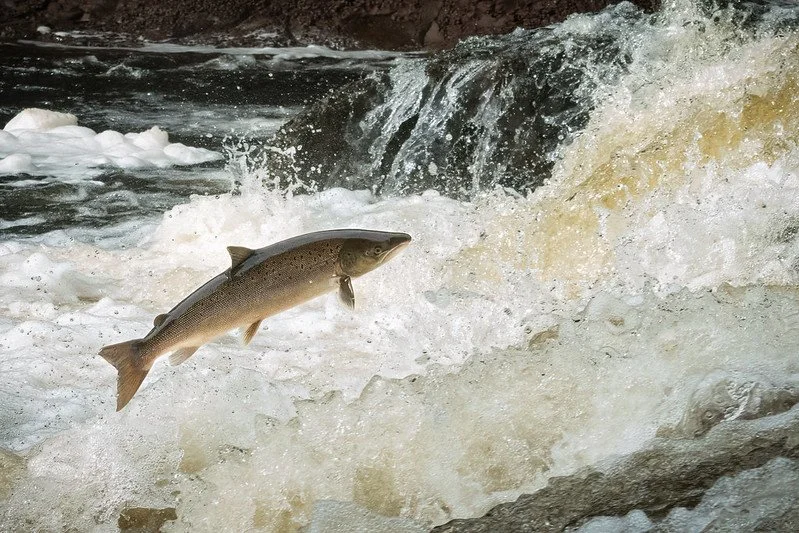
A salmon making the most of a spate after rain on the River Almond, Perthshire, Scotland. Credit: Gregg Parson.
Together, these five species show the functionality of ecosystems. Willow and beaver shape the landscape. Salmon and sea eagles connect woodlands to the sea, moving nutrients back inland. And Hazel Gloves reminds us that fungi, lichens, mosses, and deadwood are also essential in our woodlands.
Britain’s temperate rainforests are fragile, rare, and irreplaceable. But with your help, they can thrive again.
On this Biodiversity Day, take a moment to appreciate the richness of life that surrounds us and join us in protecting and restoring temperate rainforests. Whether you explore our projects, volunteer your time or donate, your support helps bring rainforests back to life.
Support the Woodland Trust’s Temperate Rainforest recovery efforts here: https://woodlandtrust.org.uk/support-us/give/appeals/buckland-wood/
Rainforest Recovery is the South West strand of The Rainforest Restoration Project. It is being led by the Woodland Trust in partnership with Plantlife. This project is funded as part of the Government's Species Survival Fund. The fund was developed by Defra and its Arm's-Length Bodies. It is being delivered on behalf of Defra by The National Lottery Heritage Fund.
