
Cornwall’s Lost Rainforests
Written by: Isabel Lane
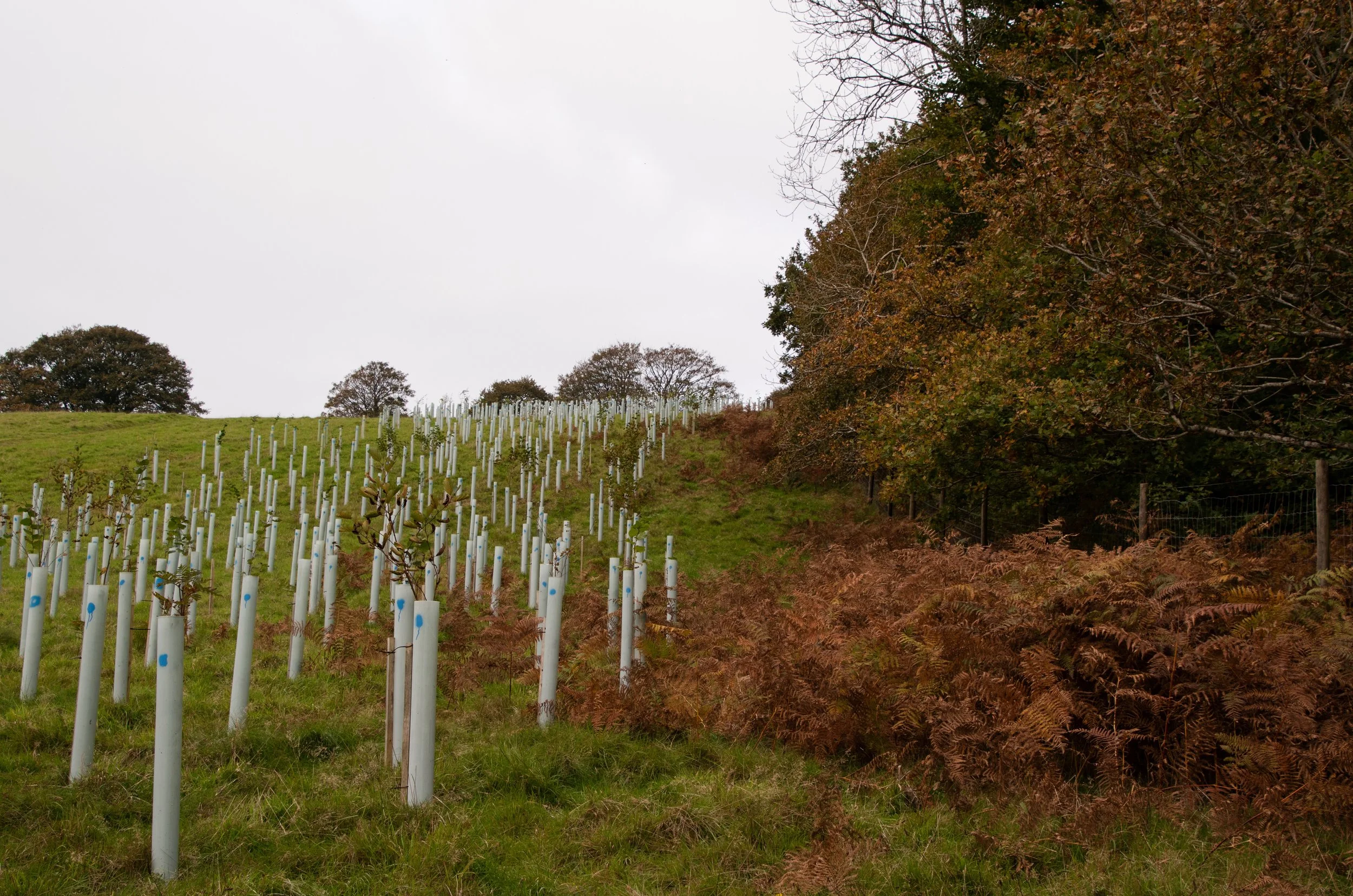
Young and old; sharing nutrients and giving support to one another. The original remnants of the temperate rainforest stand tall and gnarled to the right of the image, overlooking the growth of their brothers and sisters to the left. Credit: Isabel Lane
Bodmin Moor, often perceived today as a stark and windswept landscape, is undergoing restoration to resemble the rich, wooded environment it supported over 6,000 years ago. Izzy Lane has joined forces with the Woodland Trust and Plant One to document the revival of the UK’s rare and remarkable temperate rainforest ecosystem.
Imagine standing on Bodmin Moor today: exposed, rugged, and hauntingly beautiful. But 6,000 years ago, this same land was alive with towering oaks, dripping mosses, and a chorus of birdsong echoing through its temperate rainforest. It’s hard to picture now, because what remains is only a barren shadow of its former self. These ecosystems once blanketed a vast part of our planet, but due to centuries of deforestation, their share has decreased dramatically from 80% to 1%. This makes them rarer than the tropical rainforests. The UK currently holds only 0.7% of these fragments, which are tucked away in pockets of Cornwall, Devon, Wales and Scotland.
The story of Bodmin Moor and its lack of trees shows how we haven’t just lost this habitat for wildlife and plants, but also the history, cultural links, and connection to the land.
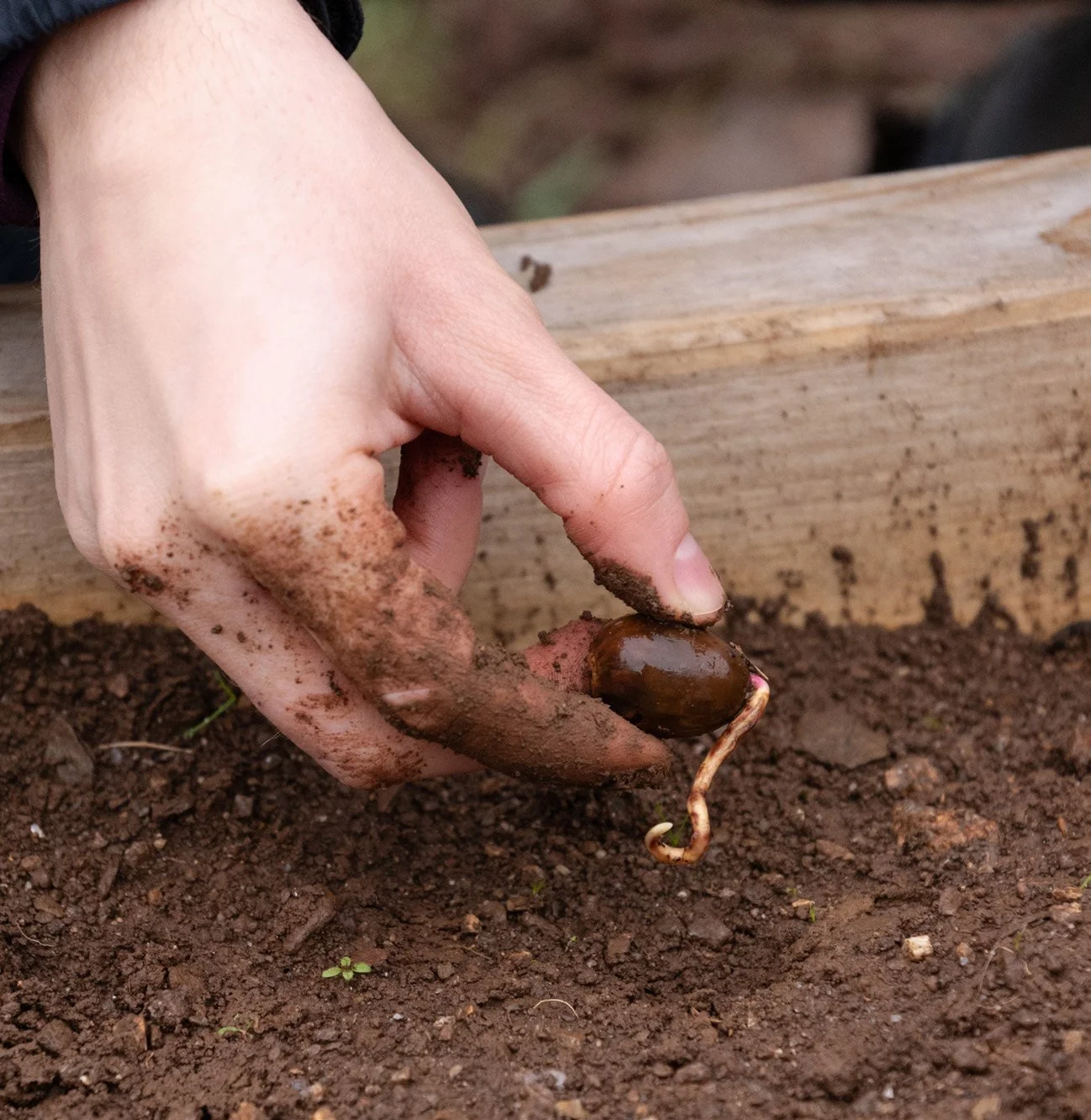
Covered in mud and laughter filling the air, the Woodland Trust volunteers got down to business with planting the sprouting acorns gathered from the heart of the temperate rainforest at Cabilla. Credit: Isabel Lane
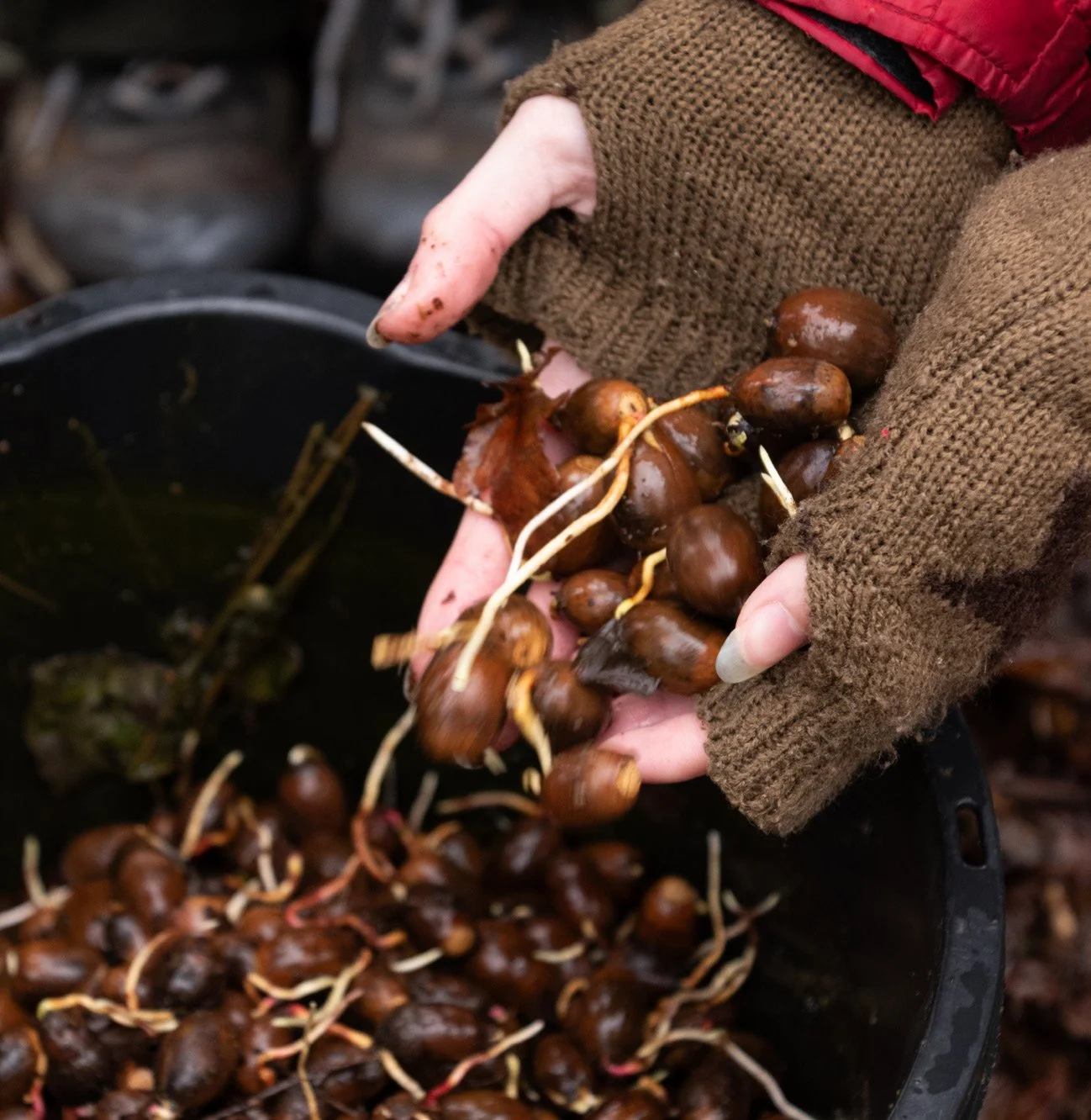
Channelling our inner jays and squirrels, the volunteers started to rummage around in the leaf litter. No care for the bugs, mud or wet weather they found the future of temperate rainforests. Credit: Isabel Lane
Once upon a time, this was the home to ancient communities who worshipped and celebrated the myths, legends and the forest itself. Now it is home to grazing livestock that do more harm than good, the odd rock and boggy grass. It shouldn’t have to stay this way. For me, these locations are calling out for help; they are challenging us to restore their green heritage. To get it back to its former glory and allow it to not only brighten the landscape again but to play its part in combating climate change as well.
Temperate rainforests – also known as ancient woodlands, Atlantic rainforests, and even Celtic woodlands – cling to the jagged edges of the Atlantic coastline like glittering emeralds. They thrive in high rainfall areas, where humidity and ocean winds balance each other, and the mist curls around the gnarled trunks of the trees. Temperate rainforests aren’t just made up of trees, though.
They’re living cathedrals of biodiversity: carpets of spongy moss, rocks painted with strange lichen patterns, migratory birds weaving through the canopy, and insects buzzing in their micro-world. But what makes them truly magical? Look up. On the branches of sessile oaks, hazel, birch, and rowan trees, you’ll find epiphytes and bryophytes — mosses, lichens, liverworts, and ferns that don’t just grow on the forest floor.
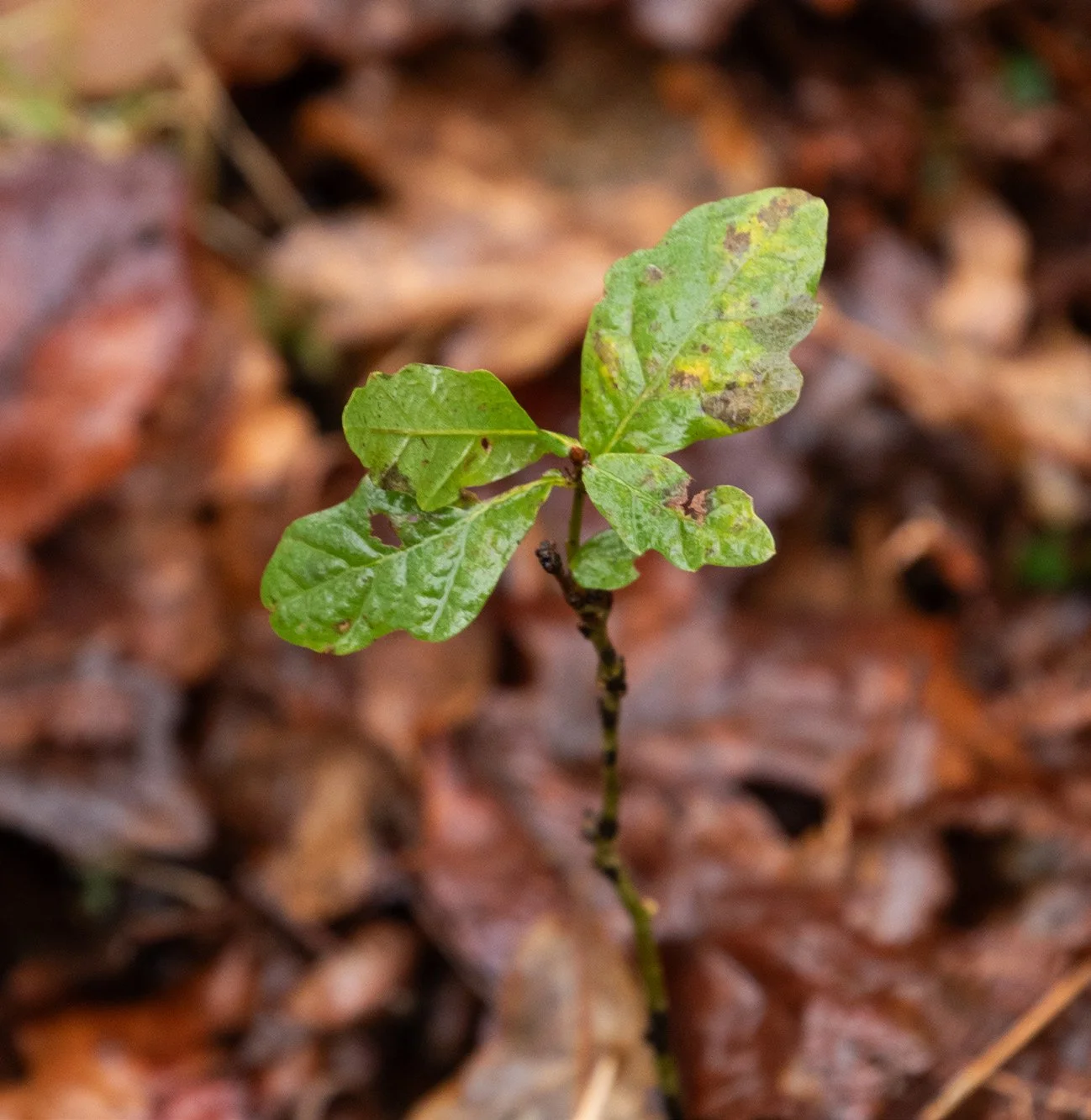
We had been warned that the forest floor could already inhabit saplings that had rooted in the years before. At our feet the small oak sapling pushed past the leaf litter and reached for its mother beside it, wishing to be as tall as she was. Credit: Isabel Lane
Definitely join the volunteering to disconnect from screens and reconnect to the forest, because, we are a rainforest nation. It helps improve your mental and physical health, and you meet great people. – Joe Johnson (BSc Environmental Science)
They turn branches into miniature rainforests of their own, thriving in the damp, shaded corners where sunlight barely touches. It’s like discovering an entire ecosystem within another ecosystem.
I have come to know Cabilla as one of the most significant places on Bodmin Moor—a living landscape that is quietly reshaping the way its owners live, farm, and restore the fragments of temperate rainforest that cling to its valleys. The name itself carries history: in the Domesday records, a farm called Carbullia appears, translated as “the land of the woollen cloak.” That ancient echo feels fitting, for Cabilla has always seemed to me like a cloak—something that wraps around you, offering shelter and renewal. I first visited Cabilla to volunteer, to lend my hands to the work of restoration, and to listen to the wisdom of its steward, Merlin Hanbury-Tenison.
Merlin and his wife, Lizzie, inherited the farm from Merlin’s father, the renowned explorer Robin Hanbury-Tenison. In earlier years, the uplands carried cattle, sheep, boar, and even red deer across their pastures. Yet life on the farm was not without hardship: familial struggles, mental health challenges, and financial strain pressed heavily upon them. It was the rainforest itself—the mosses, lichens, and quiet green abundance along the River Bedalder— that began to heal them. Slowly, they turned toward the forest, choosing to share its restorative power with others. From that decision, Cabilla Cornwall was born: not just a farm, but a retreat, a sanctuary where the living presence of the rainforest nurtures wellness and mental health.
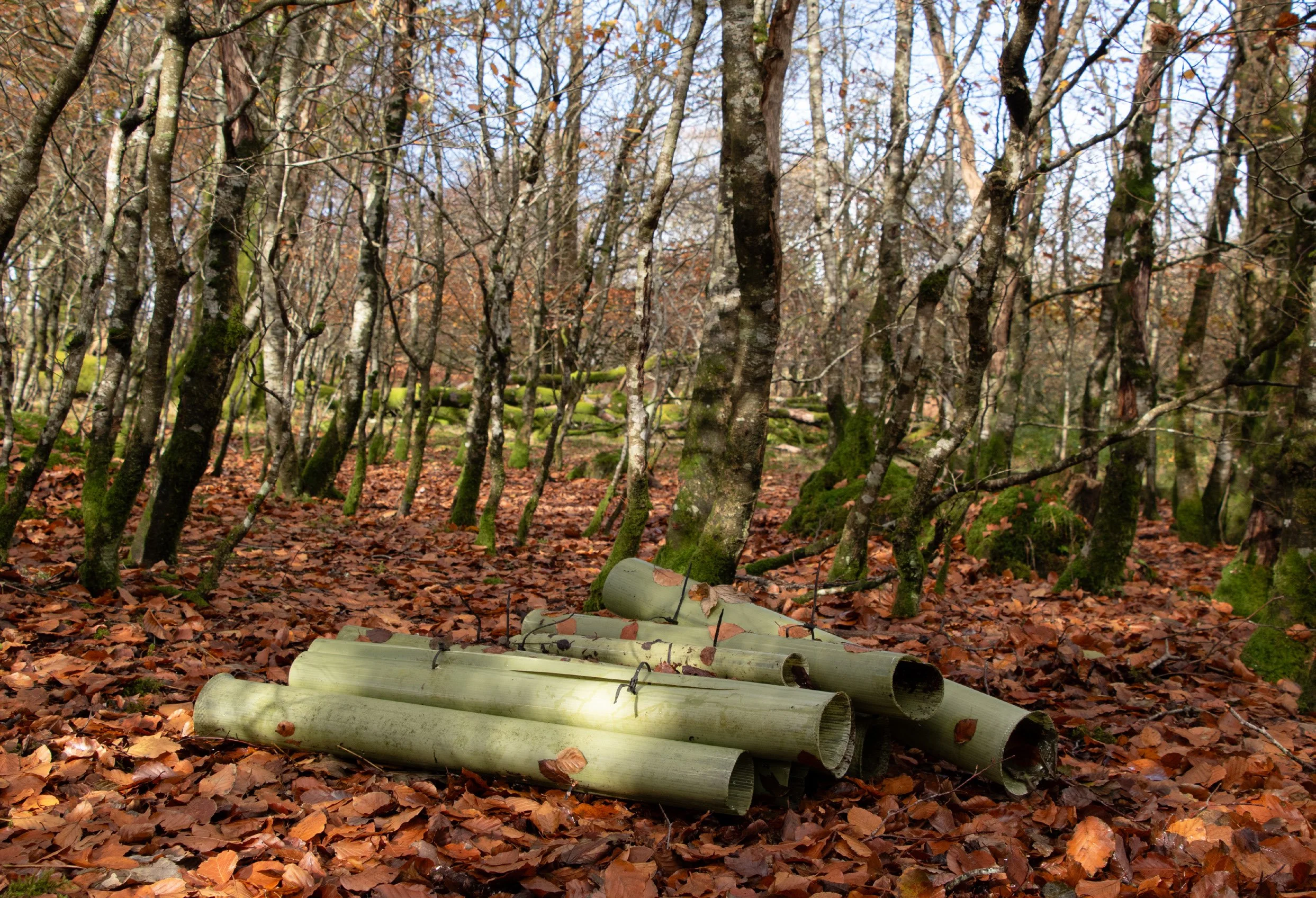
At Sibleyback, Oxygen Conservation has made the first steps into rebuilding their temperate rainforest ecosystem. Collecting the guards that once protected the younger versions of these trees, filled us all with pride and made us feel like proud parents. We looked forward to see them grow taller and get covered with even more moss. Credit: Isabel Lane
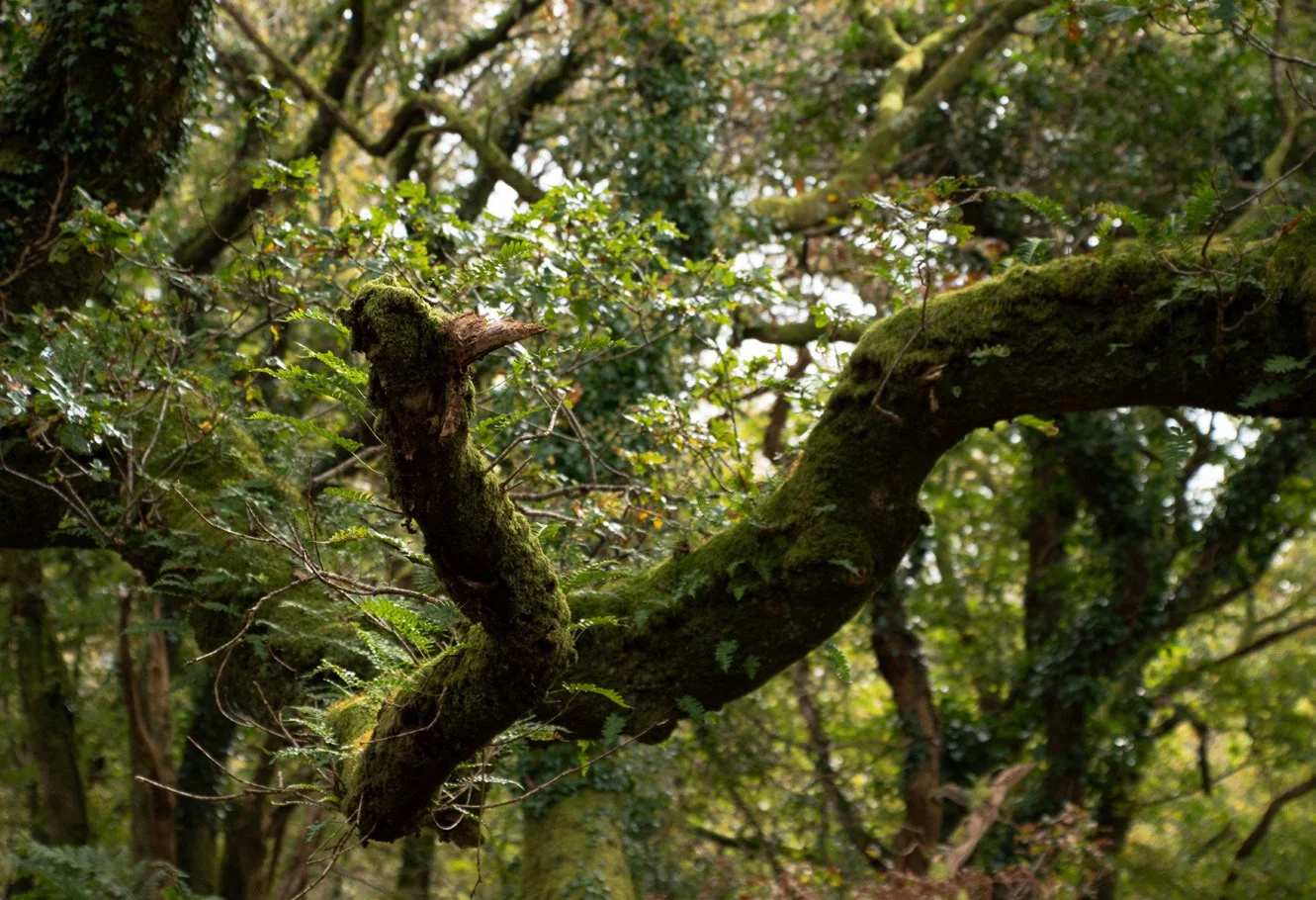
Epiphytes at Cabilla. Credit: Isabel Lane
I first stumbled across the idea of temperate rainforests at the start of this year—and it hit me like a revelation. Since then, it’s become more than an interest; it’s an obsession. A fire that keeps pulling me back into the moss, the ferns, the dripping branches that feel older than time itself. Joe Harkness, in ‘Neurodivergent by Nature’, writes that many of us who are neurodivergent find our truest solace in the wild. We’re drawn to it, not just for peace, but because it offers us a place where our differences aren’t flaws— they’re strengths.
By making this my motto in life, I want to encourage more neurodivergent individuals to step into the forest, to claim it as a space of belonging and power.
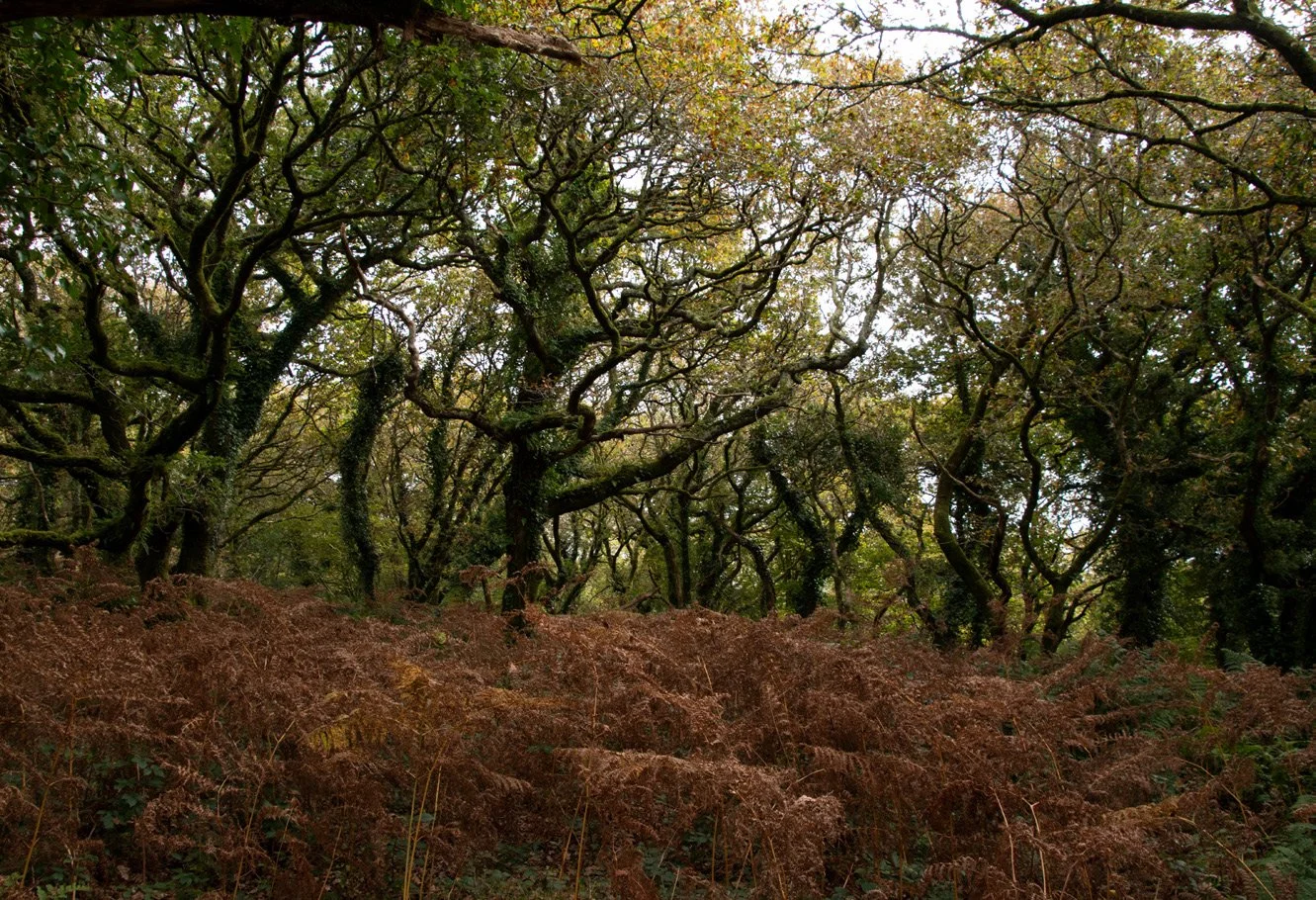
Oak trees at Cabilla. Credit: Isabel Lane
How do you do this? Start small: volunteer, plant a tree, remove a guard, walk the paths until you know them by heart. Let the rainforest teach you resilience, because every sapling, every patch of moss, every river stone is proof that survival can be beautiful. This isn’t just about saving nature—it’s about finding yourself in it. It’s about turning difference into defiance, and defiance into action. The rainforest is calling, and it’s time we answered.
Two organisations, the Woodland Trust and PlantOne, are leading the charge in the recovery of Cornwall’s temperate rainforests. Their mission goes beyond planting trees—it is about engaging communities, inviting people to take part in the long, patient work of restoration.
Recent events have been advertised to students at Penryn Campus, drawing together volunteers from both the University of Exeter and Falmouth University. These gatherings are more than just workdays; they are opportunities for young people to stand shoulder to shoulder in pursuit of a shared vision.
Volunteering is so often framed as something young people do to tick off their Duke of Edinburgh requirements, or as a pastime for those in retirement who want to fill their days with something more than television.
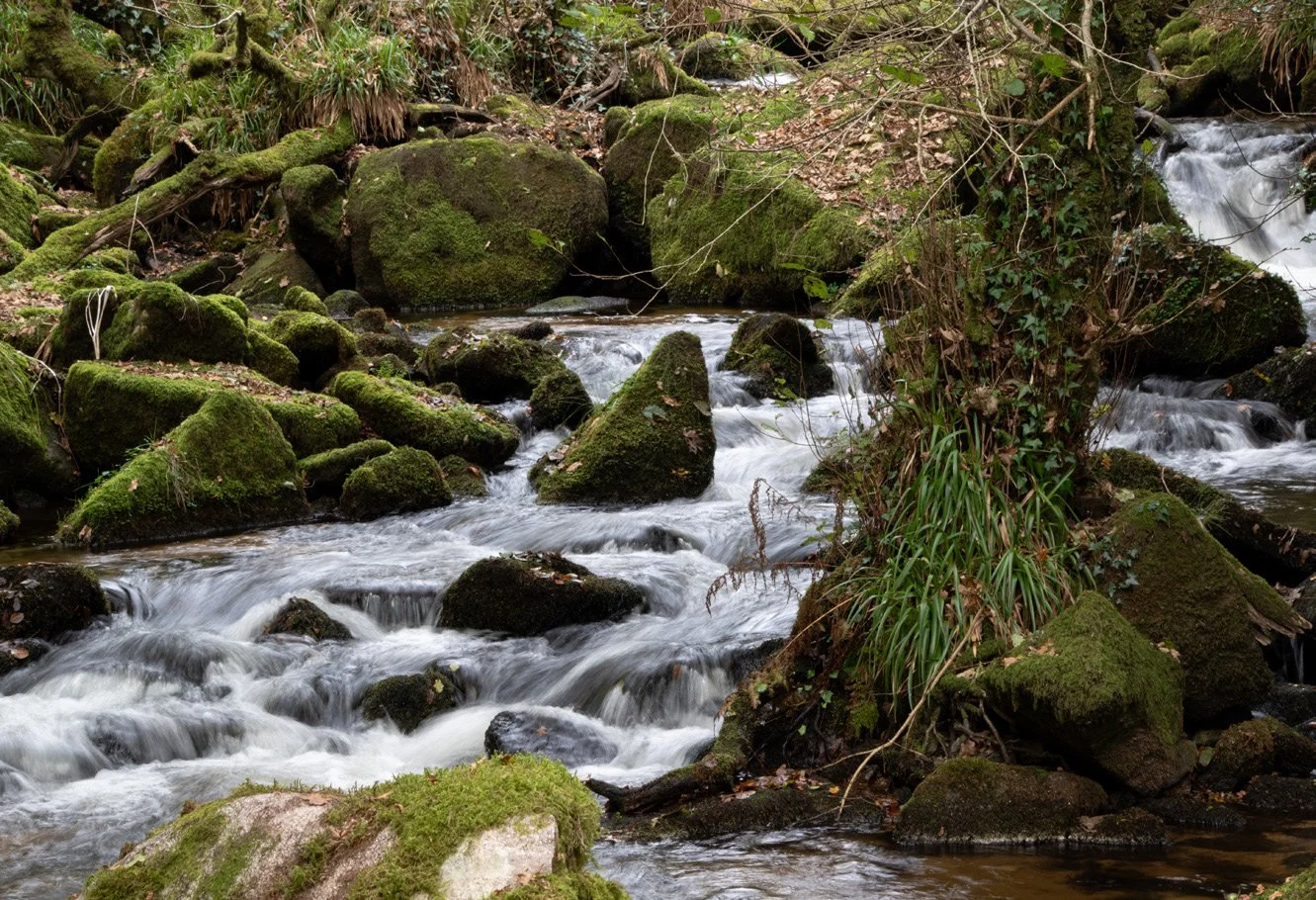
A journey through Cabilla’s temperate rainforest—where the River Bedalder flows, epiphytes cling to oak branches, saplings rise within their guards, and discarded tree guards mark the quiet resilience of young trees growing strong together. Credit: Isabel Lane
When I first signed up to join the Woodland Trust and PlantOne, I’ll admit my motivation was simple—I needed something outside the relentless rhythm of university work. But the reality has been far richer. I’ve learned new skills, felt the weight of mud on my boots, and begun to understand the science that underpins conservation. More importantly, I’ve found myself surrounded by peers who share the same urgency: to protect our planet and to restore it, not just for ourselves, but for the generations who will inherit it. In the rainforest, among saplings and moss, volunteering has become more than a task—it has become a collective act of hope.
I didn’t walk away from that day with just mud on my boots and moss under my nails — I walked away with fire. Being surrounded by people who actually get it, who aren’t just talking about change but making it happen, was electric—no small talk, no awkward pauses, just raw energy and shared purpose. We weren’t there because someone told us to be; we were there because we chose to be. And in that choice, we carved out something bigger than ourselves.
It is so essential to connect to nature, and it’s hard to do that while you’re studying or writing an essay. – Jema Skinner (BSc Geography)
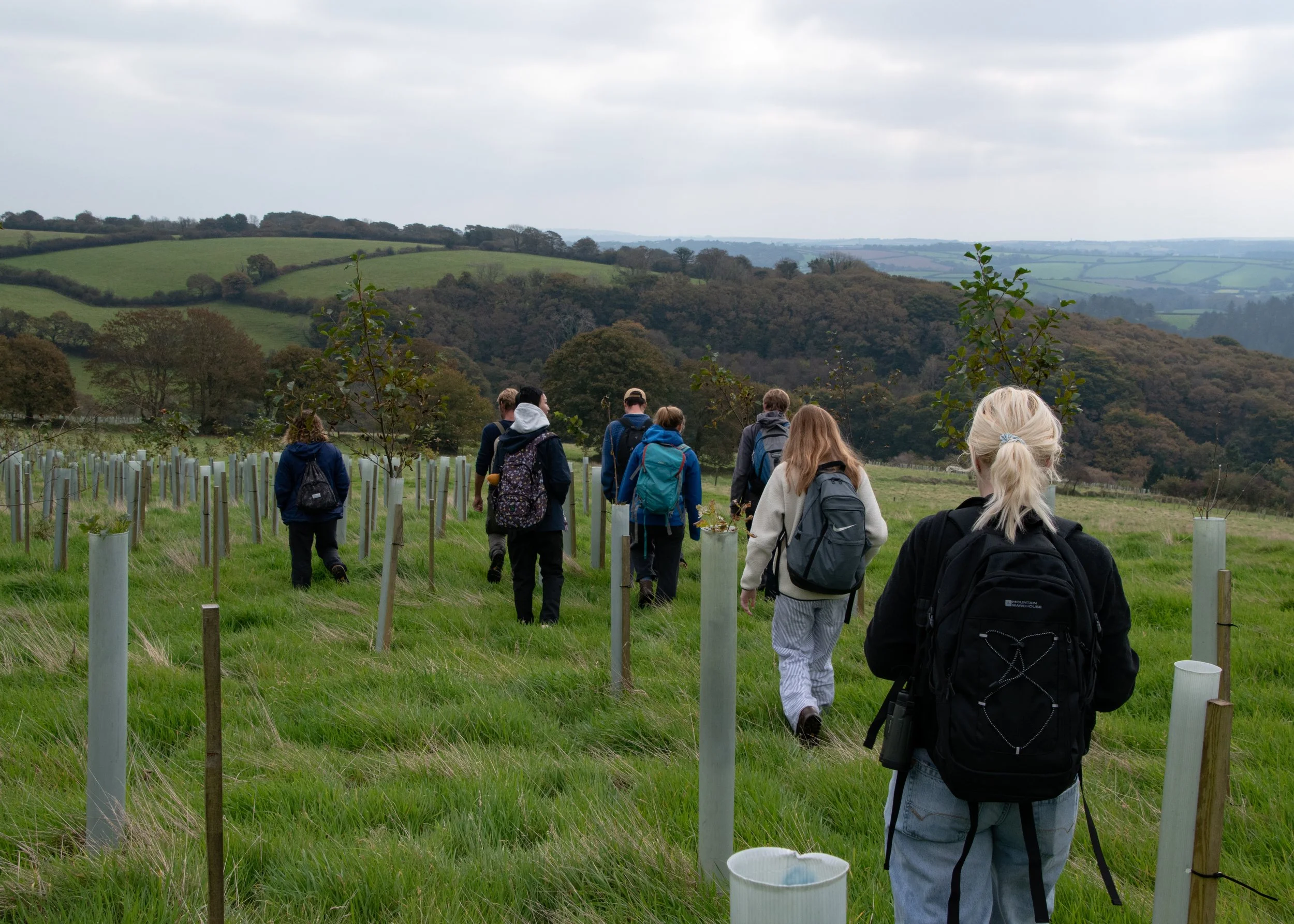
Activity filled days, flowing conservation and reinvigorated volunteers with their hope restored for the future. The age range of these volunteers are broad but we share one common goal – to have more trees for the future generations to appreciate and care for just as much as we do already. Credit: Isabel Lane

Rainforest Recovery is the South West strand of The Rainforest Restoration Project. It is being led by the Woodland Trust in partnership with Plantlife. This project is funded as part of the Government's Species Survival Fund. The fund was developed by Defra and its Arm's-Length Bodies. It is being delivered on behalf of Defra by The National Lottery Heritage Fund.