
New report maps hope for a healthy future for the South West’s rare rainforests
Written by: Alejandra Hart and Danielle Semple

Temperate rainforests have been a feature of the Dartmoor landscape for centuries. Credit: Ben Lee, WTML.
A new report identifying the extent and condition of temperate rainforests in England’s South West has provided an ‘essential blueprint’ to ensure their survival. The State of the South West Rainforests report, commissioned by the Woodland Trust on behalf of the South West Rainforest Alliance (SWRA), gives vital insight into the health of the region’s rare and valuable rainforests – and shows what needs to be done to conserve them for the future.
The report, conducted by the University of Plymouth, will guide the strategy of SWRA and raise awareness of the extremely rare and important temperate rainforests of Devon and Cornwall. A key part was the creation of an interactive map showing areas where temperate rainforests could thrive within the rainforest zone and highlighting locations where woodlands are in urgent need of restoration or could be expanded in future.
The Trust has been championing rainforest conservation across the South West for decades and its Interim Head of Outreach Eleanor Lewis says the report contains groundbreaking information:
“This piece of work has provided us with a really valuable snapshot of the extent and health of our rainforests in the region, as well as the urgent need for action. Significantly, it has provided us with an essential blueprint for how we prioritise efforts and collaborate to protect, restore and create this rare and vital habitat.”
Dr Thomas Murphy, lecturer in environmental sciences at the University of Plymouth and lead author of the report, explained:
“We found temperate rainforests face numerous threats in the South West of England, but there are also massive opportunities for restoration and expansion of this globally significant habitat. In our restoration efforts it is critical that we prioritise and target the areas which will provide the biggest benefits for rainforest conservation. We hope our report, and the new restoration model and map, will help organisations in the region to focus their efforts around the most appropriate locations.”

The report calls for protection and restoration to help the South West’s temperate rainforests thrive. Credit: Ben Lee/WTML
The State of the South West Rainforests report used a combination of geospatial analyses, site reports and a review of existing research to map and assess the current extent and condition of South West rainforest. Here, we’ll highlight some of the key findings and link it to the work we are doing as the Woodland Trust.
RAINFOREST RESTORATION
Ancient’ woodland refers to woodlands that have been continuously present since 1600 AD. Over 25% of woodland in the temperate rainforest zone is considered ancient. Just less than half of these ancient woodlands are plantation on ancient woodland sites (PAWS) meaning they have been artificially planted with non-native species, often conifer.
Conifers were observed in over a third of the Woodland Trust woodlands that were assessed using the Rapid Rainforest Assessment tool. They found the species Norway Spruce, European Larch, Noble Fir to be a significant issue for SW England’s temperate rainforests.
The Trust has been working on Dartmoor for 10 years to tackle just this problem. Site manager Dave Rickwood has developed local supply chains to provide an income for woodland owners. The timber typically had been sold as low value firewood because local manufacturers and sawmills are not currently set up to use the species being extracted locally. Imported softwood is preferred to meet requirements. By creating a viable income from timber sales, ancient woodland management can be supported whilst still protecting and preserving the woodland. More information is available in the article here.
Our restoration approach on plantation on ancient woodland sites (PAWS) is to spend several years removing conifers. By doing this slowly, we allow light to reach the forest floor gradually, which allows for a diverse range of woodland flora to regenerate as well as broadleaf saplings.
Species associated with rainforests, like lichens and mosses, need higher light levels that are typically found in broadleaf woodlands. Biodiversity of all kinds bounces back as native broadleaf species return to these ancient woodlands.
Goshawks and dormice have been recorded in ancient Ausewell Wood in Dartmoor following the gradual removal of conifers as seen in the images below.
“This report shows that what we are doing is the right approach to landscape rainforest restoration, and we are also working with landowners to do the same gradual restoration on their sites.” Eleanor Lewis
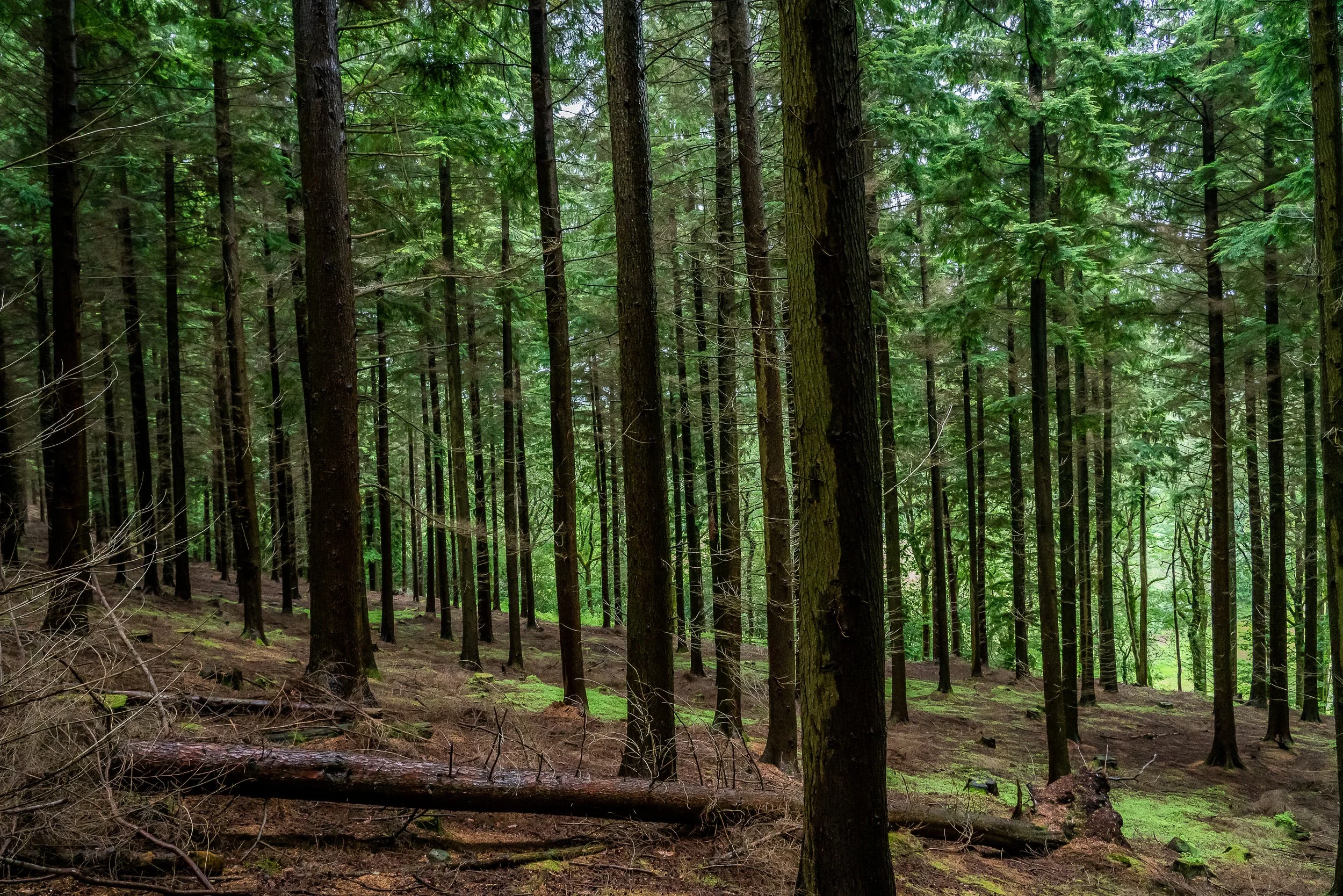
Conifers cast a lot of shade all year round, preventing plant regeneration. Credit: Ben Lee/WTML
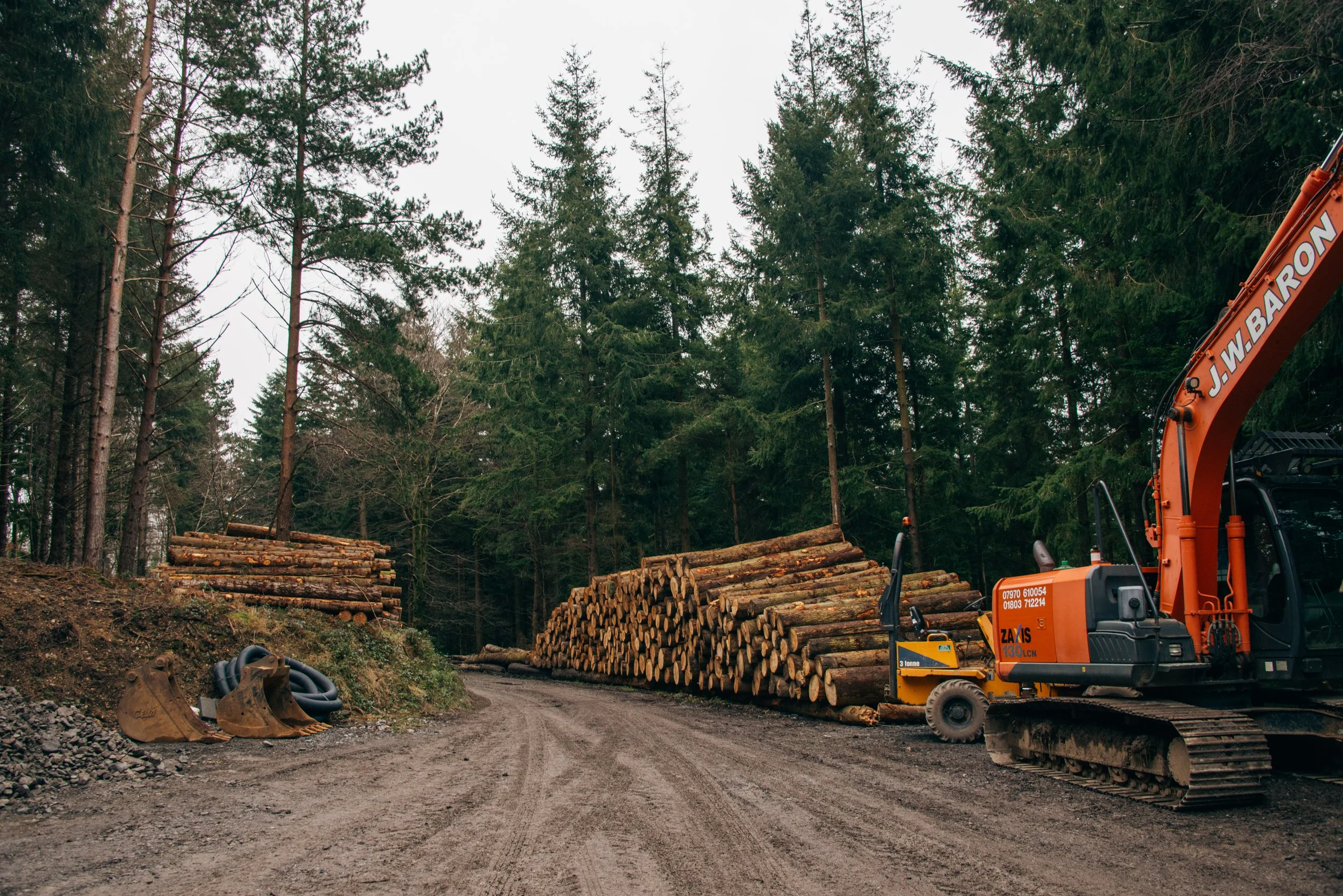
Felled timber goes back into the local economy. Credit: Philip Formby/WTML
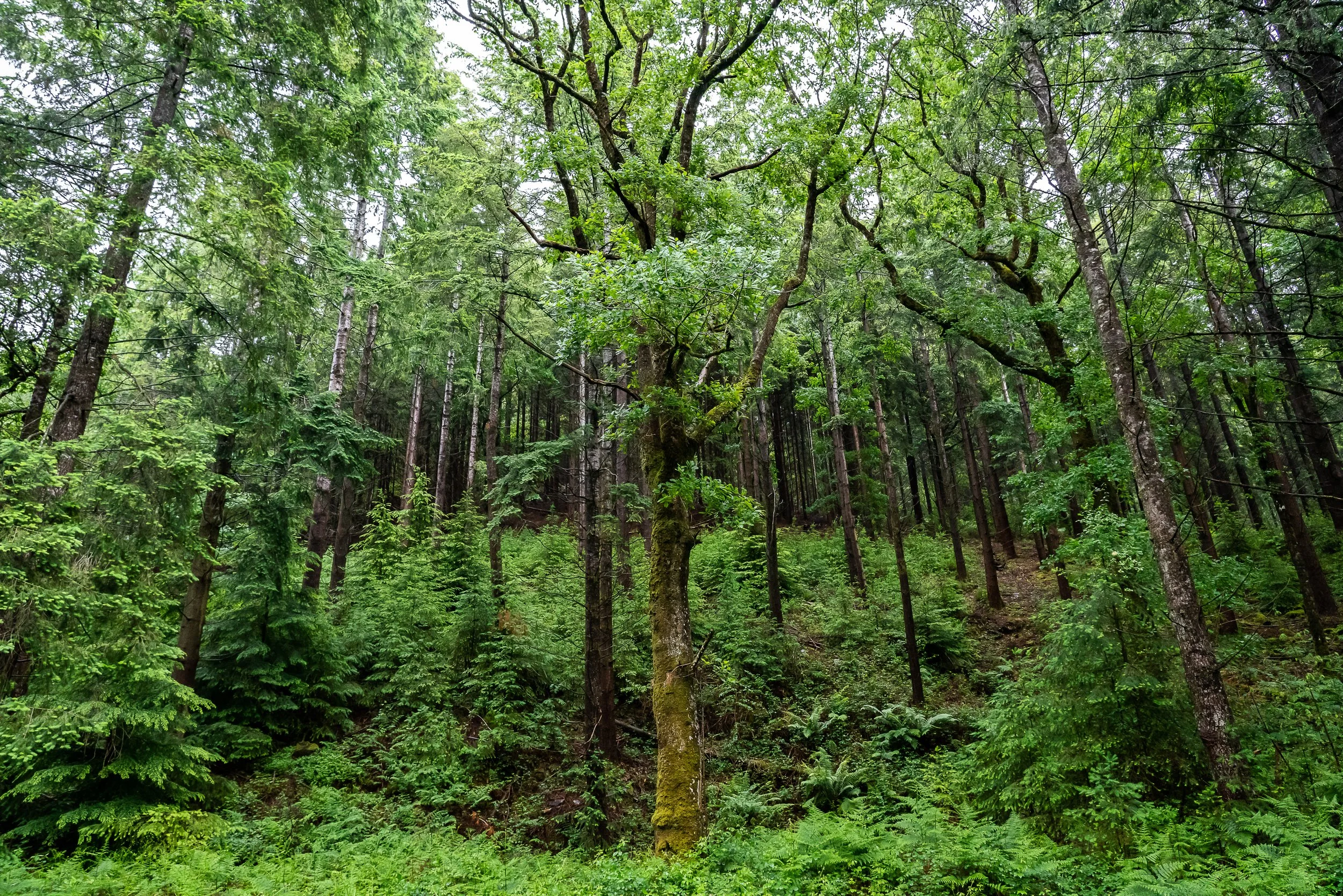
Native flora bounces back after the shade-casting conifers are removed. Credit: Ben Lee/WTML
ANCIENT WOODLAND
An estimated 30% (69.89 km2) of ancient woodland within temperate rainforest landscape are considered high priority for restoration and expansion initiatives.
Only 15% of ancient woodland in the temperate rainforest areas are legally protected by statutory designation of a Site of Special Scientific Interest (SSSI).
Through our Challenge Fund funded by Species Survival Fund we have supported landowners across the rainforest zone with free ancient woodland assessments. These assessments help identify ecological pressures - such as invasive species, regeneration potential, and canopy condition – and result in a management plan tailored to each site where we outline the best approach to restoring and protecting the woodland. Our outreach team can tell you more.
During these assessments, we identify threats to ancient woodland such as the evergreen understory shrub Rhododendron ponticum, the most damaging invasive non-native species in temperate rainforests. It spreads quickly, blocks light, prevents natural regeneration and creates dense monocultures that suppress native species. Through the Challenge Fund, we support sites where targeted Rhododendron removal is opening the woodland floor and allowing ferns, lichens and young native trees to return. By combining ancient woodland assessments with practical, funded interventions, we are helping landowners take confident steps towards long-term ancient woodland restoration. Read more about this work here.
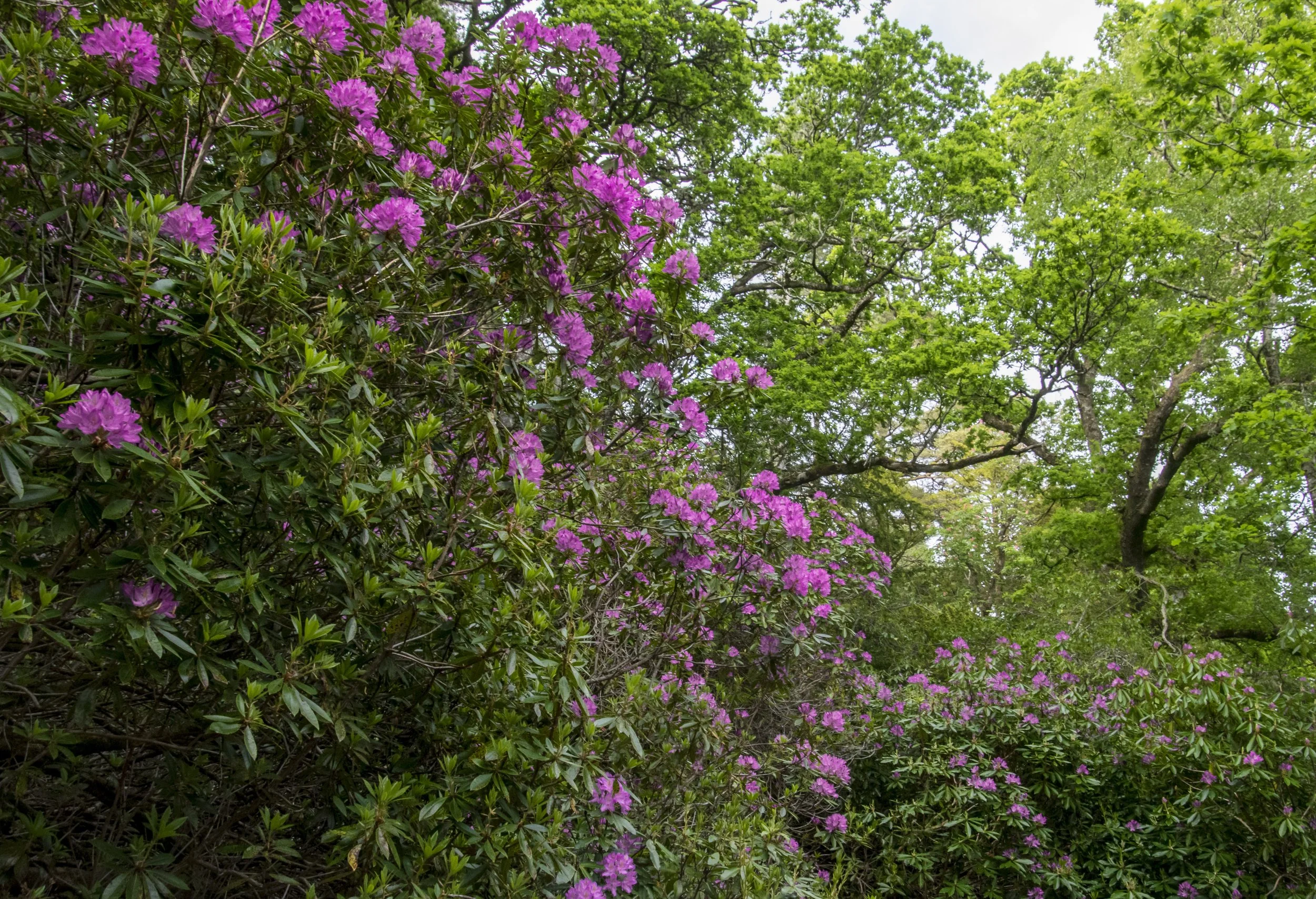
Rhododendron ponticum spreads rapidly thorugh our native woodlands which can cause probelms for native wildlife and rainforest species. Credit: Caz Austen/WTML
TREE PLANTING
Most woodland in the temperate rainforest landscape of SW England are small woodland patches, averaging 4.6 hectares
The Temperate Rainforest priority map indicates where restoration and expansion should be prioritised based on environmental factors such as rainfall, humidity, and connectivity; often within coastal or upland zones.
Many sites also lack a seed source (e.g. hedgerows or existing woodland patches), so would likely struggle to facilitate natural establishment without additional interventions such as tree planting and applied nucleation.
The temperate rainforest restoration priority opportunity map highlights that there are large areas that have high environmental suitability for restoration but where no existing woodland is present. For this reason, we are working with partners to create new rainforest habitat in areas where nature needs a helping hand. One example is our work to expand Wistman’s Wood on Dartmoor. By planting on the opposite side of the valley, known as Wistman’s Wood 2.0, we have begun to reconnect this fragmented habitat. The trees used for the project were grown by Moor Trees, using acorns and rowan seed collected directly from Wistman’s Wood. Using local seed gives young trees the best chance of thriving in the conditions their parent trees have adapted to over centuries.
To reach challenging terrain and increase the scale of woodland creation, we are also trialling innovative methods. Earlier this year, we carried out one of the UK’s largest drone-seeding trials, distributing 75,000 native tree seeds across steep slopes and hard to reach areas on Bodmin Moor. By using drones to disperse a carefully mixed seed blend of species such as oak, hazel, birch and alder, we hope to mimic natural regeneration and establish woodland in places where traditional planting is too costly or unsafe.
We also collaborate with PlantOne who help us run our youth volunteer days. These events give young people the opportunity to learn about woodland management by growing, planting and caring for thousands of young trees each year. We have brought locally sourced saplings into the landscape to enhance the expansion of temperate rainforests and to connect woodland to farmland.
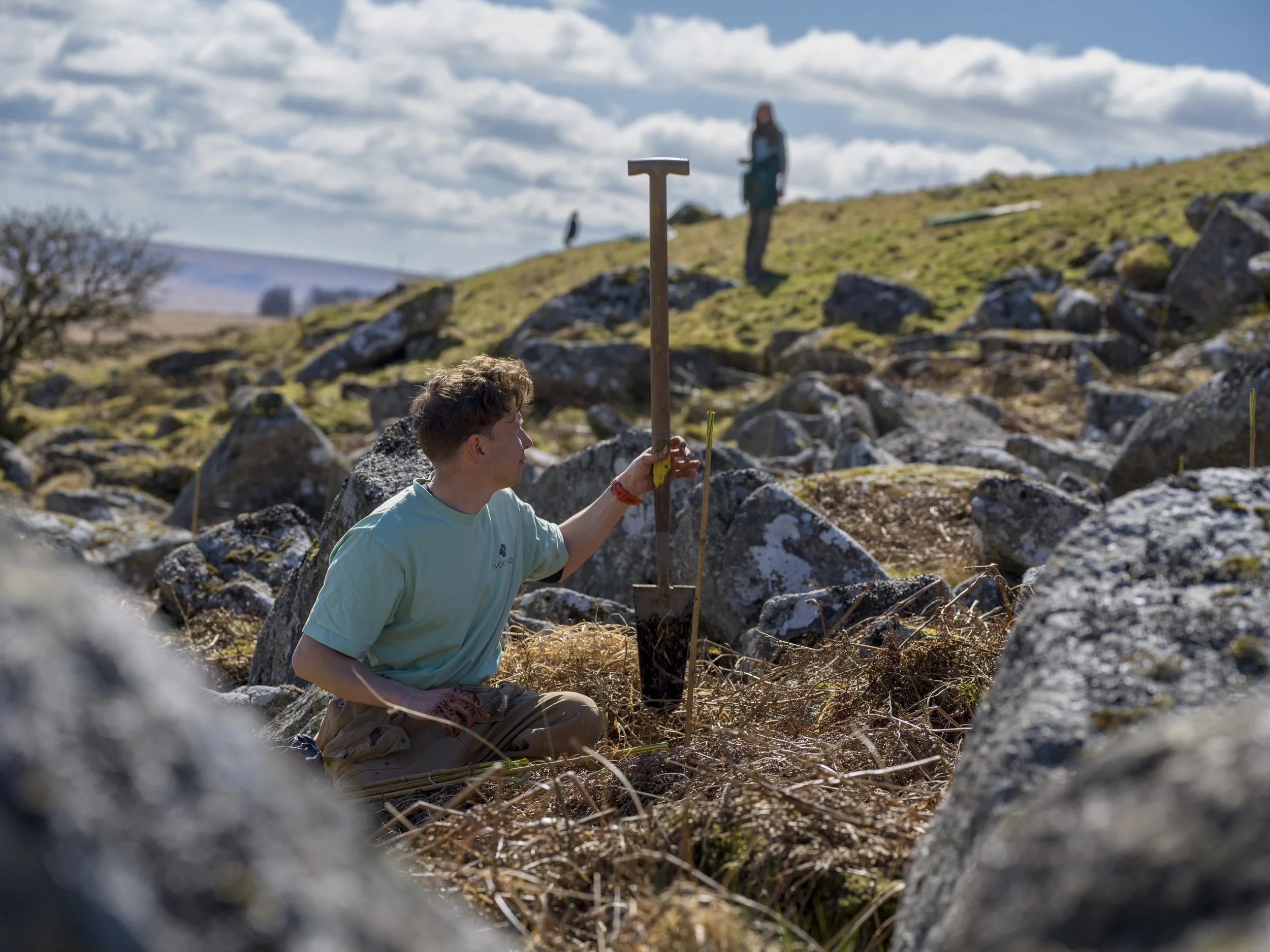
Tree planting at Wistman Wood 2.0 on Dartmoor. Credit: Charles Sainsbury Plaice.
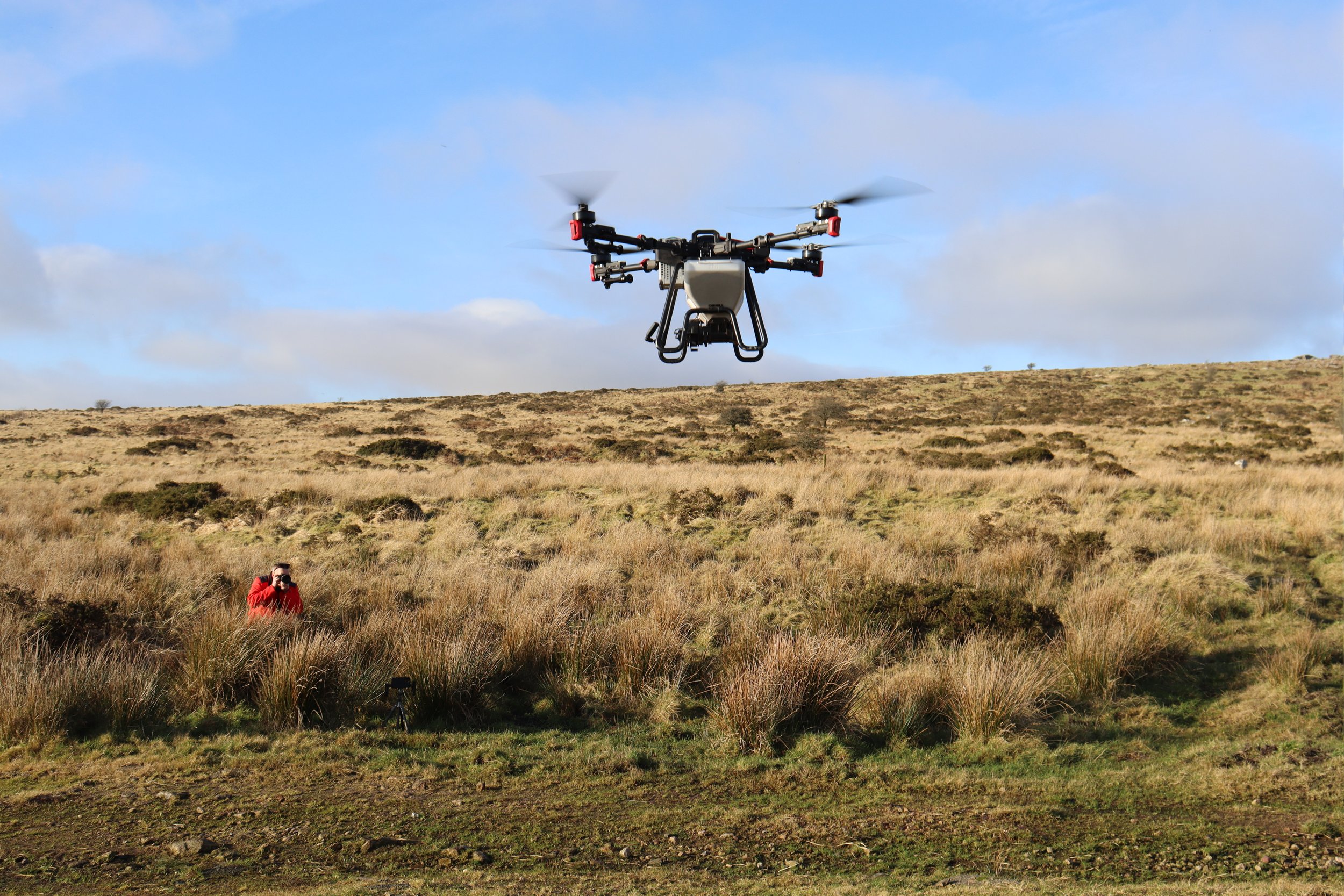
Drone seeding across Bodmin Moor. Credit: Bella Williams.
AGROFORESTRY
22.3% of wood pasture sites form the wider temperate rainforest landscape.
The report also identifies 723km² of land, around twice the size of Isle of Wight, in the South West that currently has no woodland cover but holds high potential for rainforest expansion. These areas represent some of the most important opportunities for restoring existing ancient woodland and creating new rainforest habitat.
We are actively working with landowners and farmers to create a rainforest landscape outside of the woodlands. ‘More joined up’ is one of the three core principles set out by the Lawton Review meaning we need not only bigger and better woodlands, but a network across the landscape. Hedgerows, alleys, shelterbelts, and parkland trees can help fix the gap. This is particularly important for epiphytes found only in temperate rainforests, as the spores of lichens, or plant matter from liverworts won’t be able to spread without a nearby tree to root itself to.
We work with farmers and landowners to offer free advice, and funding to plant trees on their land and ensure they fit with their objectives. If you are interested in getting support for tree planting, visit Landowners | Join Rainforest Restoration — Rainforest Recovery | Woodland Trust
In last year's tree planting season, we planted 81,550 trees through our funded MOREwoods scheme in the rainforest zone.
Hall Farm, one of our flagship sites, now occupied by tenant farmers, is a great demonstration site of how we can include trees in our field to create wildlife corridors. The farmers are planting close to 20,000 trees over one third of their farm, all with the idea that the trees will benefit the farming business in a variety of different ways. Alleys, wood pasture, parkland trees and hedgerows are just a few of the tree planting schemes.
The Duchy of Cornwall used our funding and expertise to plant alleys of trees that split up a five-hectare grazing block into five one-hectare blocks at one of its sites on Bodmin Moor. The alleys will create shade and shelter for the cows as well as additional browse.
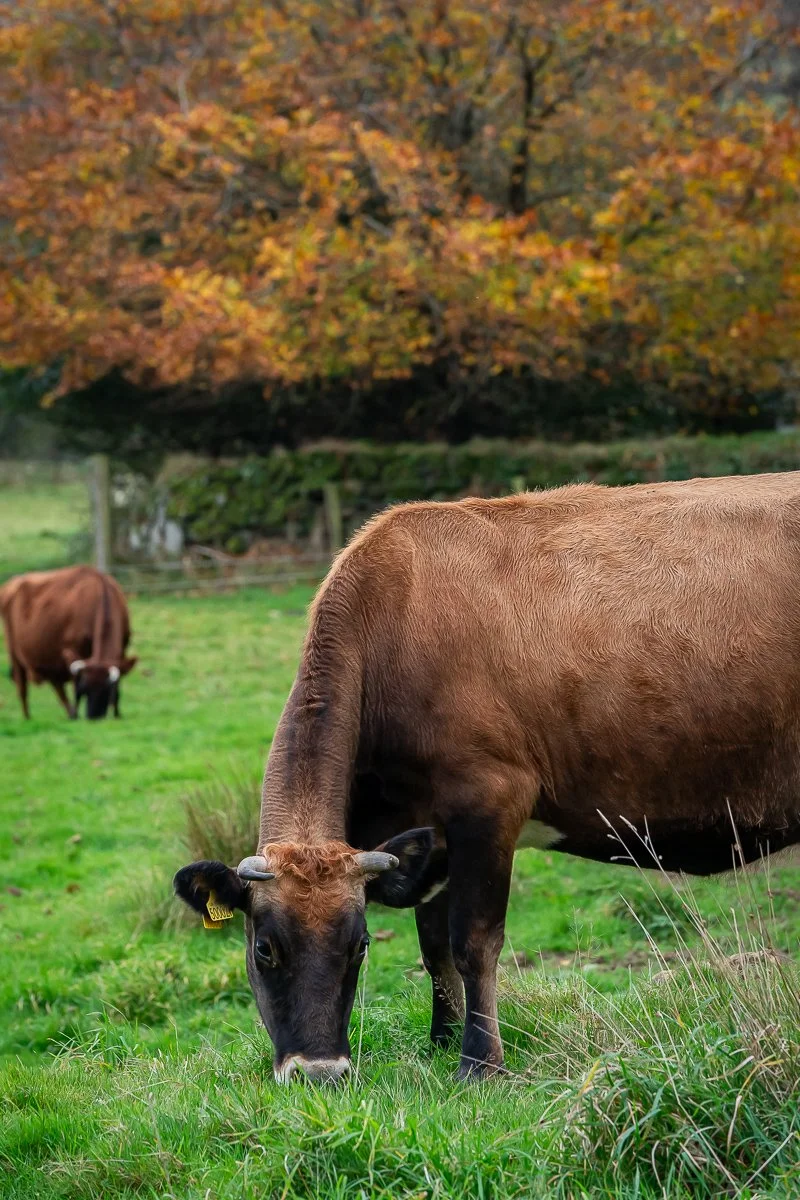
Cows grazing pasture surrounded by old hedgerows at Hall Farm,. Credit: Ben Lee.
CITIZEN SCIENCE AND RAPID RAINFOREST ASSESSMENT (RRA)
The report identifies that a key challenge is ensuring that local people, as well as the wider public, are invested in protecting and expanding these habitats.
Understanding the current condition of our temperate rainforest is essential for planning its future. In 2025, we have been running landowner demonstration days and volunteer training sessions using the RRA, a tool designed to evaluate the health of a rainforest based on indicator species, structure and threats.
Volunteers have since helped baseline rainforest sites, gathering key data for landowners and contributing valuable information. Citizen science not only improves our understanding of rainforest health but also helps inspire and empower local communities to get involved in their protection. Many landowners who attended demonstration days have since begun restoration work themselves, having seen firsthand the value of their woodland.
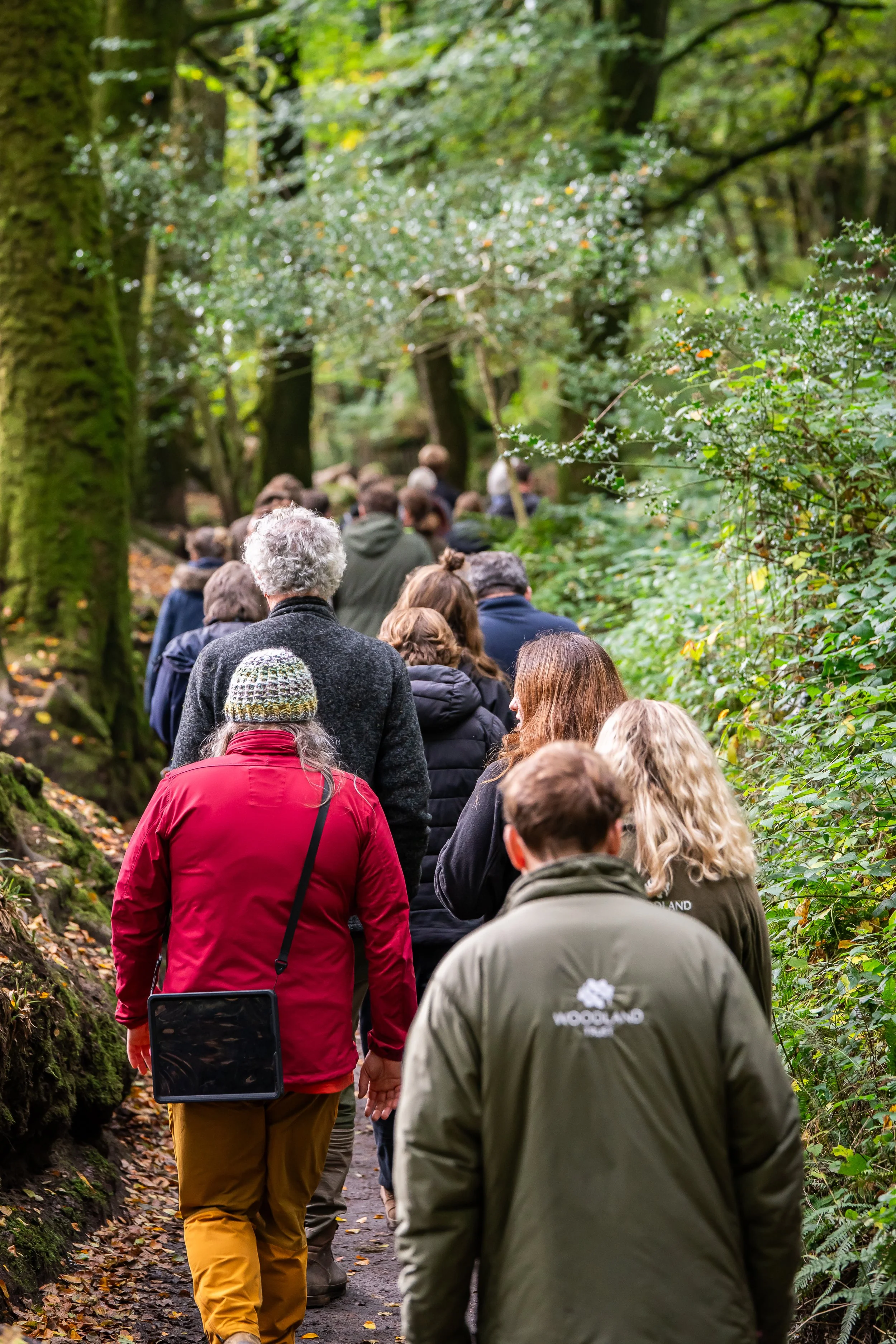
Landowners gathered in woodland to discuss rainforest restoration interventions. Credit: Ben Lee.
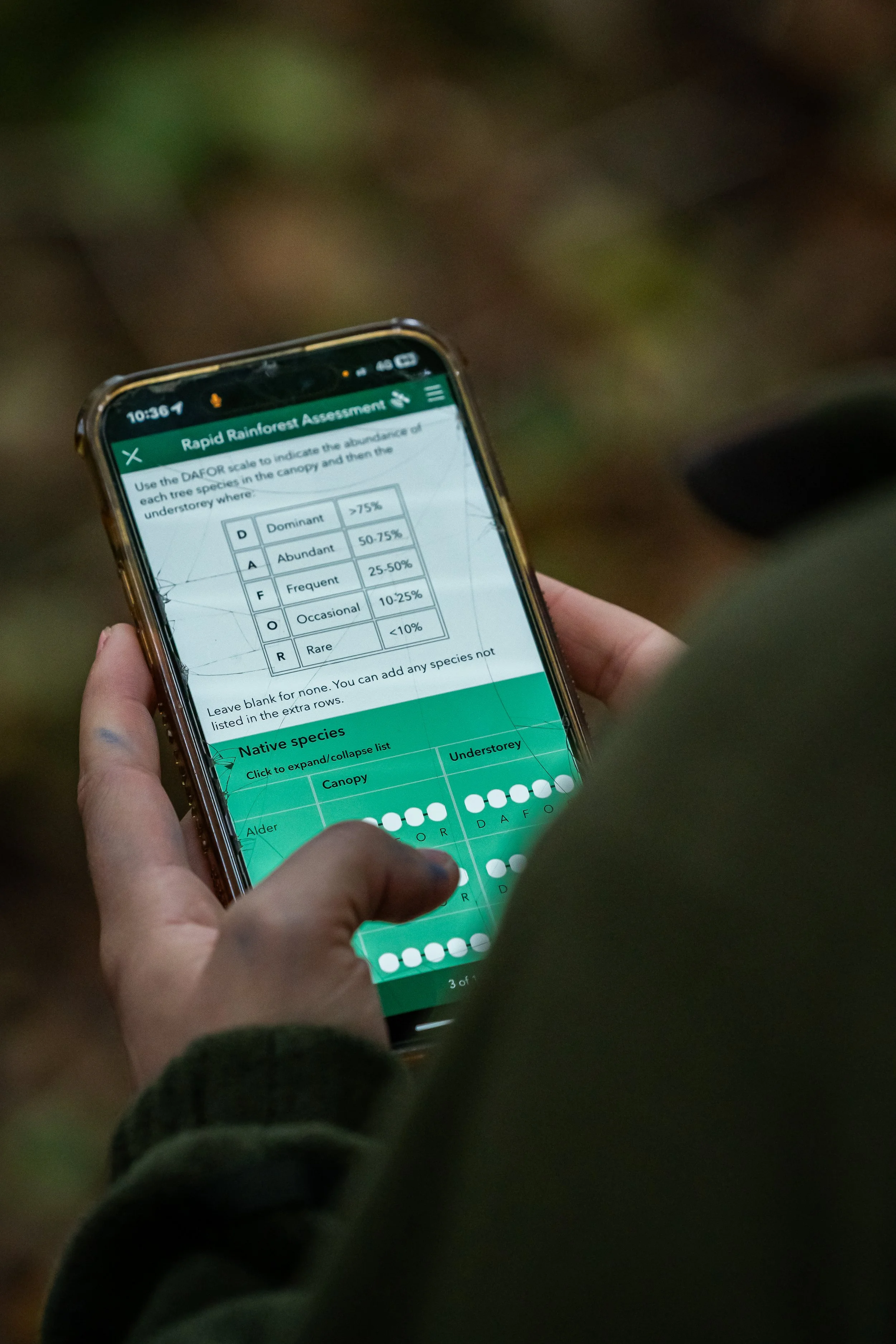
Using the Rapid Rainforest Assessment Tool to understand the woodland composition better. Credit: Ben Lee.
To this end, the potential benefits of temperate rainforest for local communities and the wider landscape need clearly communicating, both in terms of cultural value, ecosystem service provision and monetary value. Our hope is that by analysing and breaking down the report, we have provided a clear outline of our work and aspirations for the future of temperate rainforests in the South West of England and the rest of Britain.
Our rainforest recovery work received a massive boost thanks to funding from the National Lottery Heritage Fund's Species Survival Fund. This funding has now ended, and we urgently need support to continue our restoration work. Please donate to our rainforest appeal.
The report was funded by the Woodland Trust, thanks to support from players of People's Postcode Lottery, with funds awarded by Postcode Green Trust. Laura Chow, head of charities at People's Postcode Lottery, said: “It's fantastic that players of People's Postcode Lottery have supported this important report, shining a light on the temperate rainforest in South West England, and the recommendations made to protect and restore this important habitat for the benefit of climate, biodiversity and people.”
A summary document produced by the Thousand Year Trust with contributions from the British Lichen Society can be found on the SWRA website along with the full report and interactive map.
