
Europe’s First Temperate Rainforest Research Station
Written by: The Thousand Year Trust
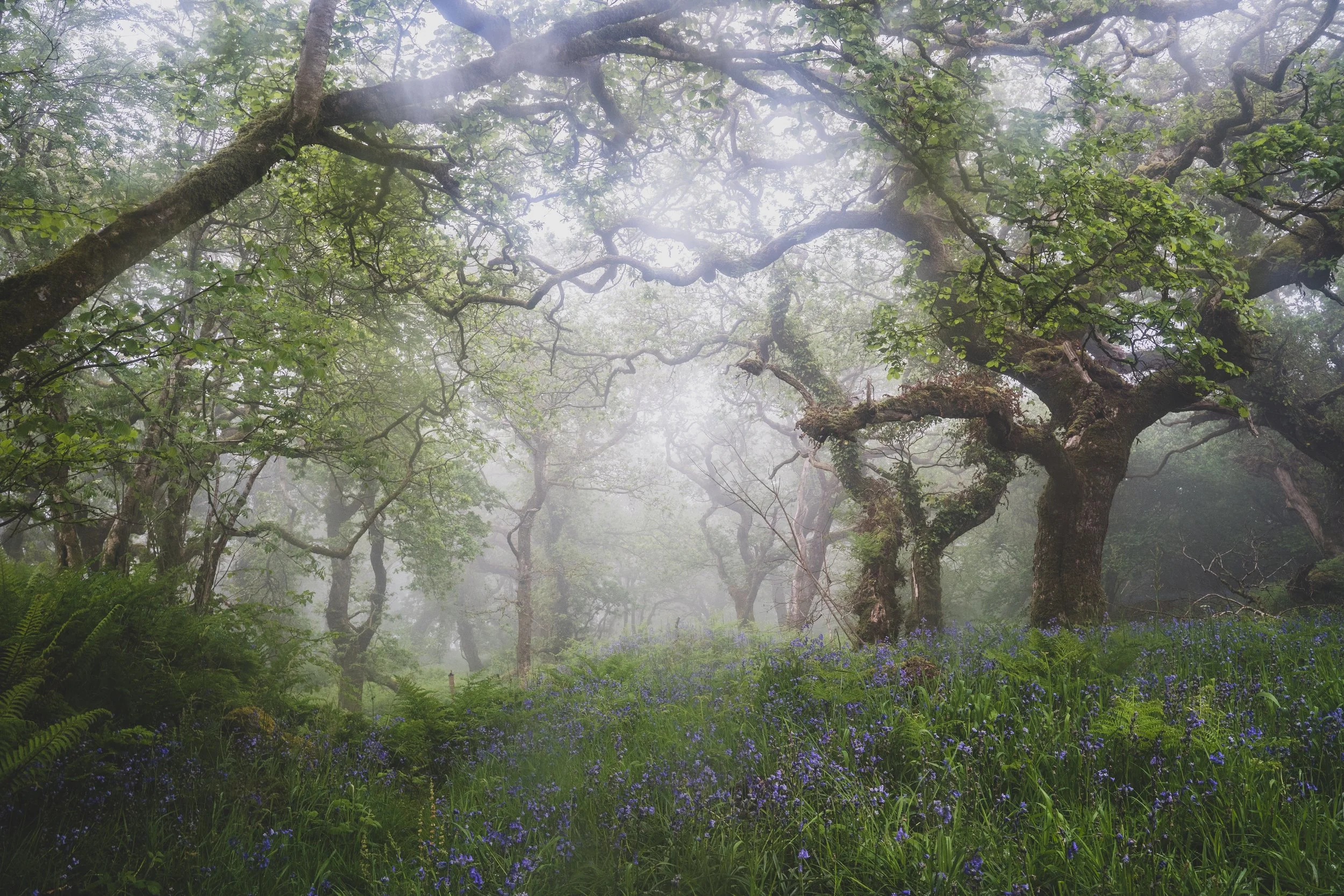
Bluebells covering the rainforest floor in the heart of Bodmin Moor. Credit: Cameron Goodhead, Thousand Year Trust.
Morning light filters through the leaves of ancient oak trees, moisture clings to lichen-covered branches, and the scent of wet earth rises from the soil. A small team of researchers move carefully through the undergrowth - collecting samples and tracking the subtle rhythms of the forest.
This ancient woodland is one of only very few surviving fragments of Britain’s lost temperate rainforest. There is so much that we don’t know about these mysterious forest habitats, and we seem to have largely forgotten that these lush rainforests once shrouded our western seaboards.
Our vision is to help catalyse the movement to restore Britain’s temperate rainforests by creating Europe’s first dedicated research station right in the heart of our site on Bodmin Moor. We envisage a year-round hub for long-term and interdisciplinary science. A hub that unites researchers, students, conservationists, and our local farming community.
The architectural significance of this research station will expand the impact of our work, reaching and inspiring others living outside the walls of science. To drive change, we need everyone on board, and we hope this beautiful building will unite through excitement and beauty.
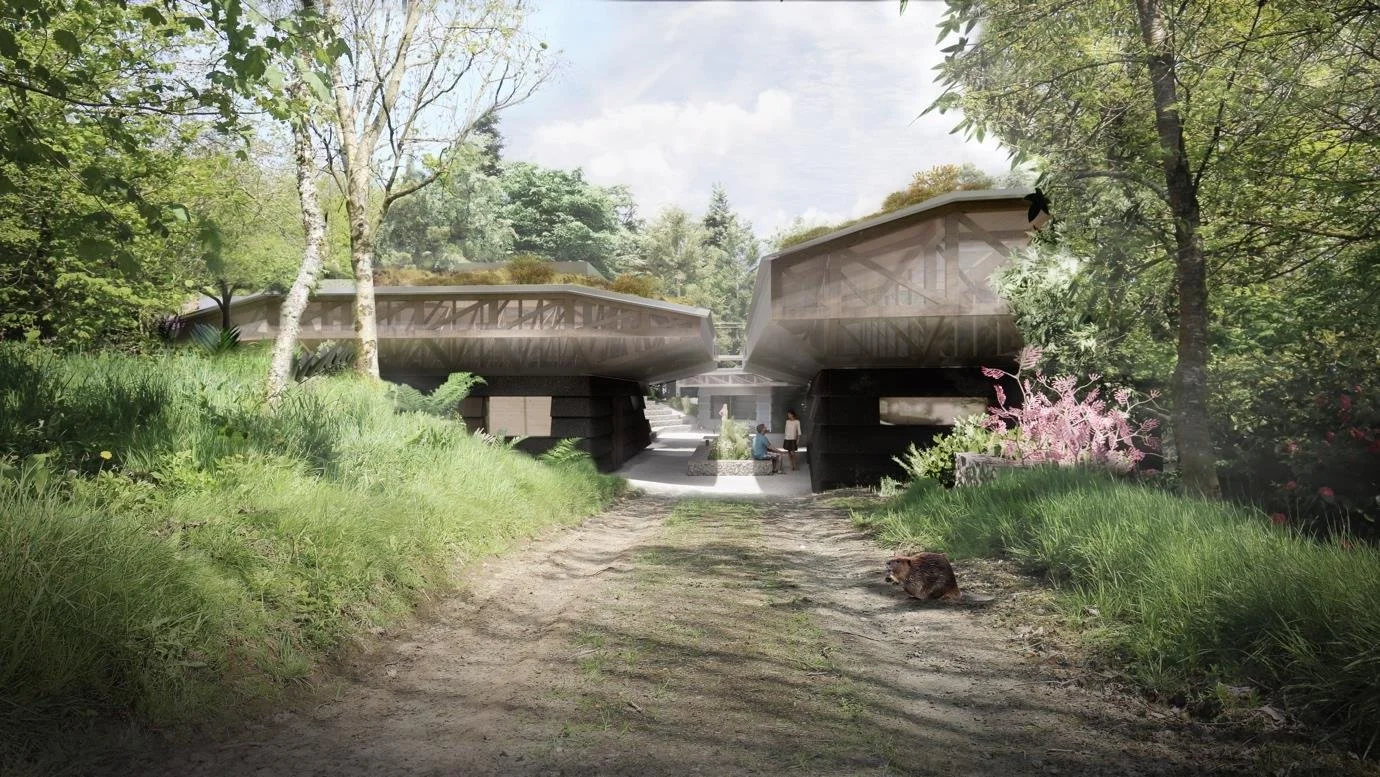
Rendered image of the TYT research station and community hub. Credit: Unknown Works
Research station design
We’ve been working with award-winning architects at Unknown Works to bring our vision to life. The building itself will be constructed from local wood sourced by the Woodland Trust, drawing inspiration from the ecosystem that surrounds it, with a water system drawn from on-site reserves. Solar panels by our tree nursery will fuel the station’s electricity and keep the lights on. At night, our considerate lighting system will minimise external light from the station, which is important to protect the Dark Skies status of Bodmin Moor and minimise interference with nocturnal animal behaviour.
Inside the station, our building is made up of three key areas. Fieldwork lodging will accommodate up to eight people, adjacent to a state-of-the-art workstation with storage for research equipment and biological samples collected from the forest. The community hub houses the kitchen, workshop space, and areas for gatherings, supporting both engagement with external stakeholders and connections with our local community.
A living roof will mimic the canopy of the temperate rainforests and provide a home to a diversity of ferns, lichens and bryophytes. Not only will the roof cap the beauty of our station, but serve as a functional research site for small-scale experimental plots – a truly living roof!
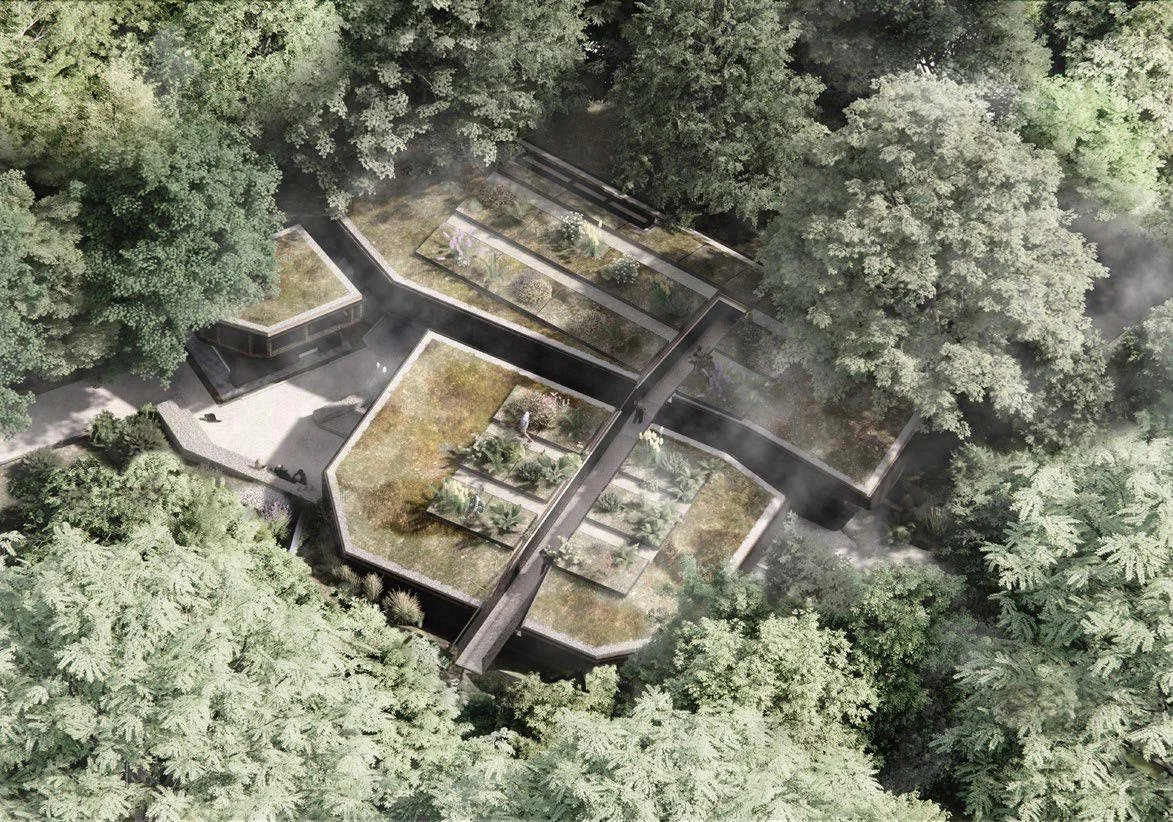
An accessible green roof is a test bed for ground-breaking research. Credit: Unknown Works
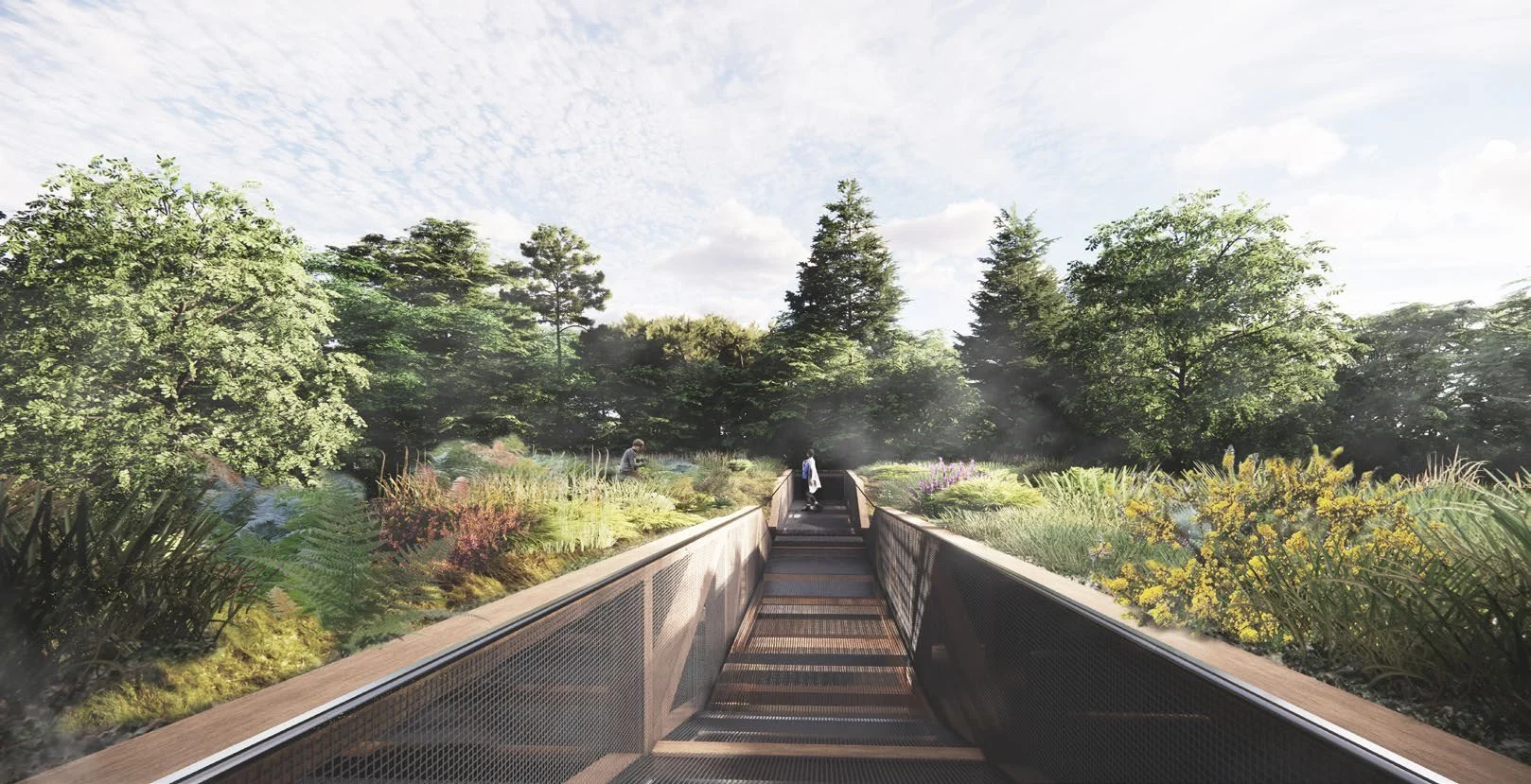
Sunken bridge allows access to the roof for all visitors. Bringing the public close to real time research. Credit: Unknown Works
Our landscape
The research station will be based on our 300 acre blueprint site at the edge of Bodmin Moor, Cabilla Manor Farm. At its heart lies an ancient oak woodland, which has been carbon-dated at over 3,500 years old and designated a Site of Special Scientific Interest for its exceptional diversity of bryophytes.
The ancient oak rainforest is surrounded by secondary oak woodland and upland farmland. This patchwork of different land covers makes Cabilla a unique living laboratory, providing opportunities to study both the Ancient and secondary woodland as well as the challenges and innovative solutions to expand the rainforest.
Our research on the site focuses on supporting scientists across two key strands: building a robust scientific evidence base to showcase the invaluable role of our rainforests in supporting biodiversity, climate, and people, and exploring innovative and practical approaches to protect, restore and expand these rare habitats. Over the past few years, more than 20 student research projects from universities including Exeter and Plymouth have contributed insights into the ecological value of our rainforests, the threats they face, and the wider socio-ecological landscape in which restoration takes place. Establishing a permanent research hub will build on this foundation by creating a space where ongoing and future studies can connect, complement one another, and generate integrated, actionable knowledge through collaboration.
‘In the end, we will conserve only what we love, we will love only what we understand, and we will understand only what we are taught.’
- Baba Dioum
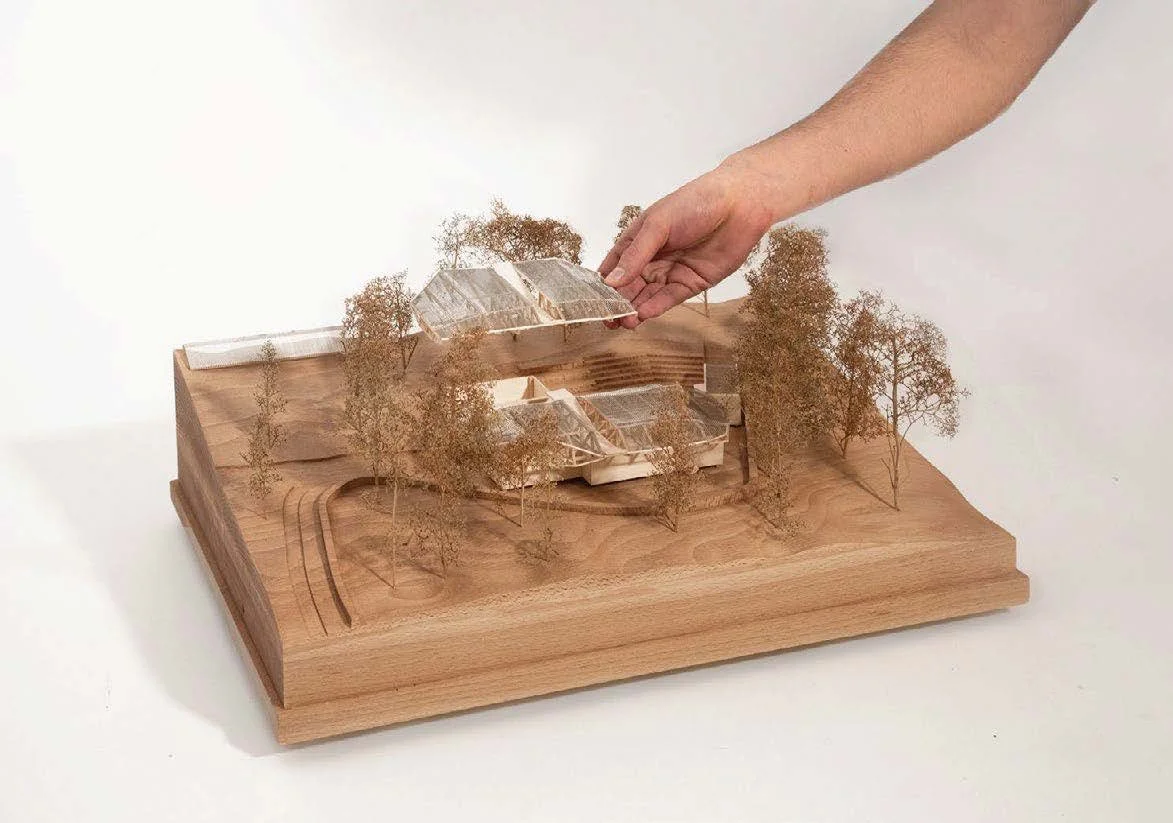
Scale model of the Rainforest Research Station. Credit: Unknown Works
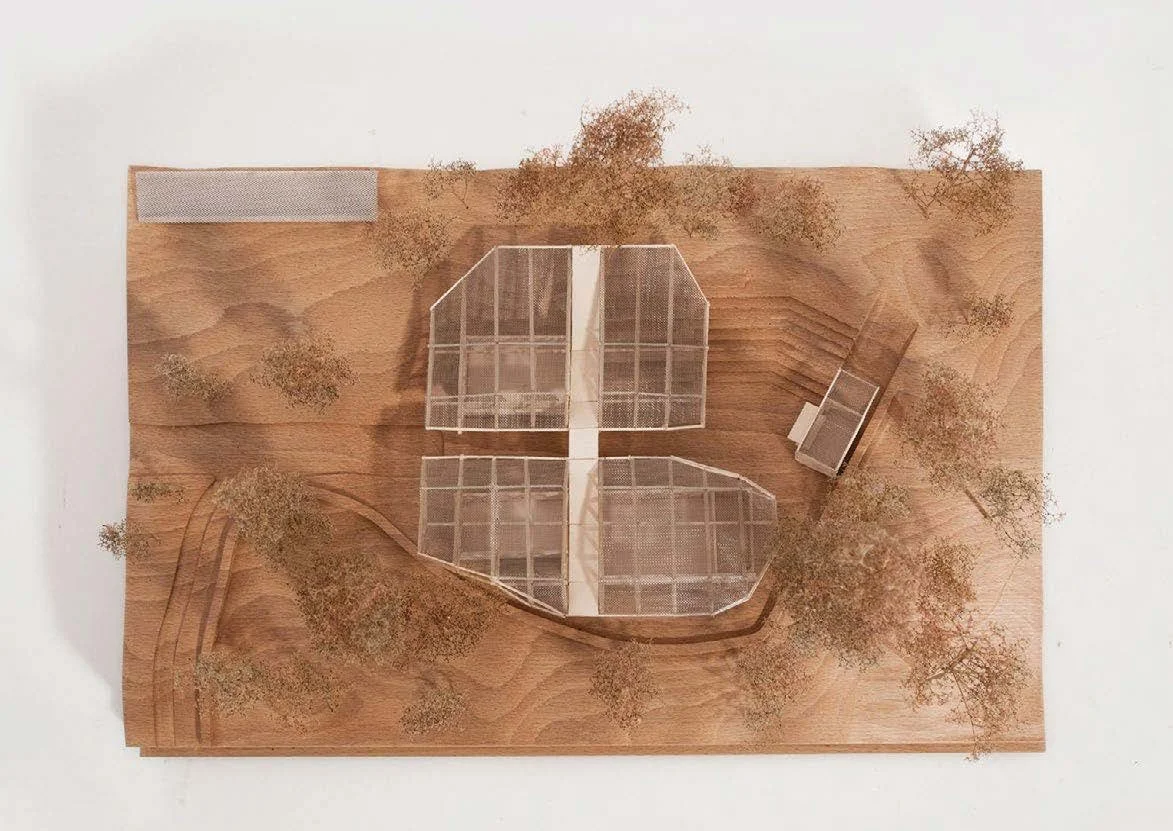
Section and Plan drawings of the Rainforest Research Station. Credit: Unknown Works
A thousand-year vision
Our name is inspired by the longevity of the Sessile oak, a paramount species in our rainforests. These beautiful trees can take 300 years to grow, live and thrive for over 400 years and take 300 years to slowly die, rot and return their goodness to the soil. We believe that if we are truly to heal our natural habitats, we need to think like an oak tree - over a thousand-year timespan.
The research station will be the centrepiece of creating this long-term legacy, bringing scientists, conservationists and communities together to study, protect and restore these rare habitats. With planning permission granted and initial funding secured, we are ready to take the next steps. There is still much to do, and we invite you to be part of this journey - together, we can build a lasting legacy of stewardship and knowledge for generations to come. Find out how to get involved on our website.