
Rainforest Restoration Grant - The Challenge Fund
Written by: Alejandra Hart
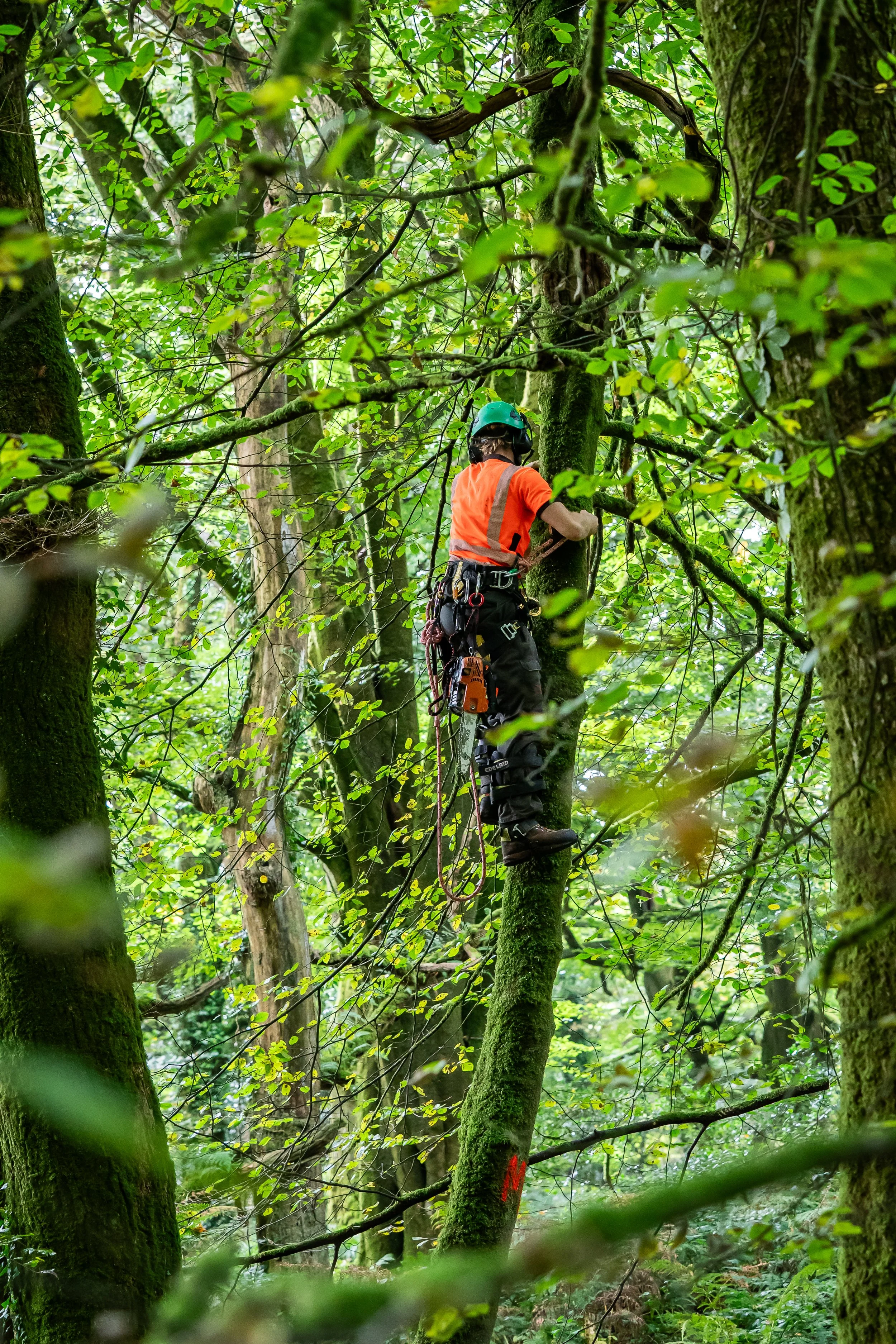
Selective felling at the Golitha Falls rainforest restoration demonstration day. Credit: Ben Lee
The Woodland Trust’s Challenge Fund is a competitive process designed to enable landowners to restore temperate rainforest and ancient woodland across the South West of England. Many woodlands in Devon, Cornwall, and parts of Somerset are in poor condition and require targeted management to recover their biodiversity and long-term resilience. The process provides practical guidance alongside funding support to enable restoration that is effective and sustainable.
The Challenge Fund is part of our outreach work within the Woodland Trust’s Rainforest Recovery Priority Treescape. Priority treescapes help us focus restoration where it is most needed. In the South West, this includes the temperate rainforest zone across Devon, Cornwall and parts of Somerset. You can see the full temperate rainforest zone here.
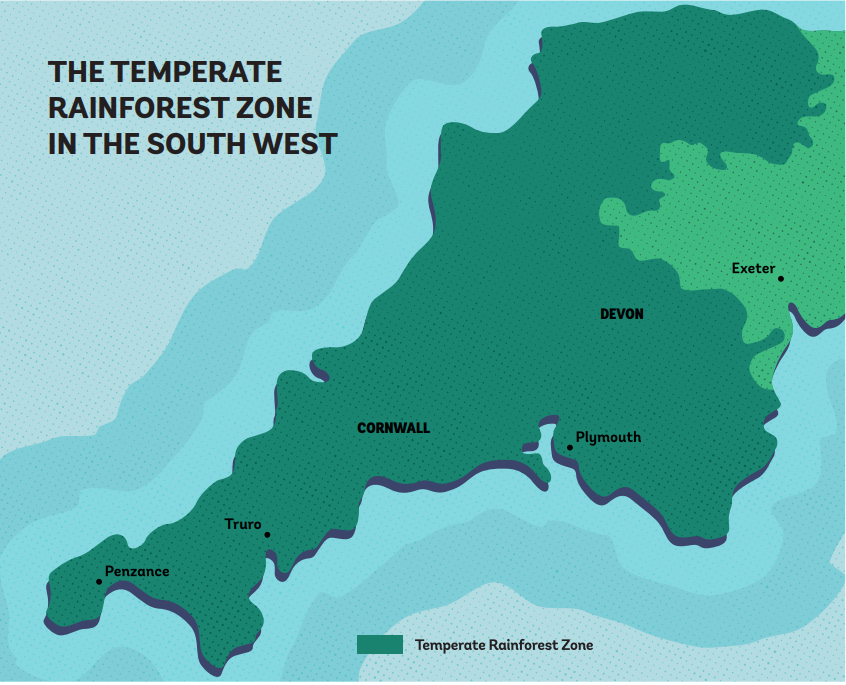
Temperate rainforests are rare habitats that support extraordinary biodiversity, including lichens, mosses, fungi, invertebrates and woodland bird species. Much of the remaining temperate rainforest in the South West survives in fragmented and often vulnerable sites with limited statutory protection.
Over time, these woodlands have become congested or degraded through plantation planting, inappropriate management, and invasive species. In some cases, woodland structure has become too uniform, limiting the diversity of habitats needed to support rainforest species.
Active management, such as selective felling and removal of invasive species, can significantly improve ecosystem function and resilience. Carefully managed grazing can also play an important role in maintaining structural diversity. The Challenge Fund is designed to remove financial and logistical barriers for landowners, enabling them to carry out this work with confidence.
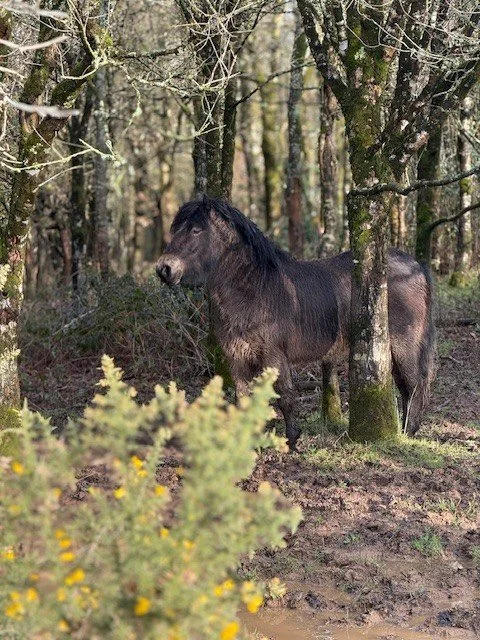
Exmoor Pony at Rewilding Coombeshead, where grazing is used to help restore structural diversity in temperate rainforest woodland supported by the Woodland Trust Challenge Fund. Credit: Mick Bracken
Woodland Assessment
The first step in accessing support is our Woodland Assessment. This maps key woodland features, including ground flora, remnant trees, and deadwood, and identifies current threats affecting the site. Recommendations are tailored to each woodland, enabling landowners to plan restoration in a targeted and effective way.
“The assessment gave us the tools to pinpoint our management and a list of prescriptions to tackle areas where features were in decline. It was a really good starting point for restoring the woodland to what it should have been 200 years ago.” - Mark Bowden, Woodland Manager
For sites that show strong potential for improvement, we carry out a further stage of detailed financial planning. This builds on the assessment by costing recommended operations and considering both potential timber income and available grant support. This stage, known as site accounting, helps landowners understand the financial implications of restoration and prepare for a potential application to the Challenge Fund.
Challenge Fund grants have already supported a wide range of restoration work, including improving woodland access for management, removing invasive trees, restoring glades through controlled grazing, and creating or maintaining important habitat features such as standing and fallen deadwood.
We have produced a short film showcasing projects in Devon funded through the Challenge Fund. The film demonstrates how the ancient woodland assessment informs restoration planning, shows interventions in practice and highlights the long-term ecological benefits of restoring temperate rainforest habitat.
The process
If you are a landowner in the South West, you may be able to access support through the Challenge Fund.
The first step is to get in touch with the Woodland Trust’s Outreach team to discuss your site and whether it could benefit from a Woodland Assessment. This provides a detailed map of your woodland’s features and pressures, alongside practical management recommendations.
Following the assessment, and where appropriate, we work with you to develop a plan of restoration work based on the site’s needs and identify where funding support may be available. This is known as site accounting.
Landowners can then apply to the Challenge Fund to support the recommended interventions. Funding decisions are competitive and take into account the scale of the project, the landowner’s contribution and the expected ecological benefits. Through this approach, we aim to improve woodland condition, reconnect fragmented habitats and support long-term sustainable woodland management.
Projects are assessed based on ecological need, practical feasibility and long-term impact. Throughout, we provide guidance to help ensure that any work is both ecologically effective and financially sustainable.
“We would not have undertaken this work without the Challenge Fund. Nothing in woodland happens quickly but now we can see results within our lifetime” - Rupert Lane
Restoration through the Challenge Fund helps secure the future of temperate rainforest and ancient woodland in the South West. By acting now, landowners can restore these rare habitats for future generations, protect biodiversity, and contribute to more resilient woodlands.
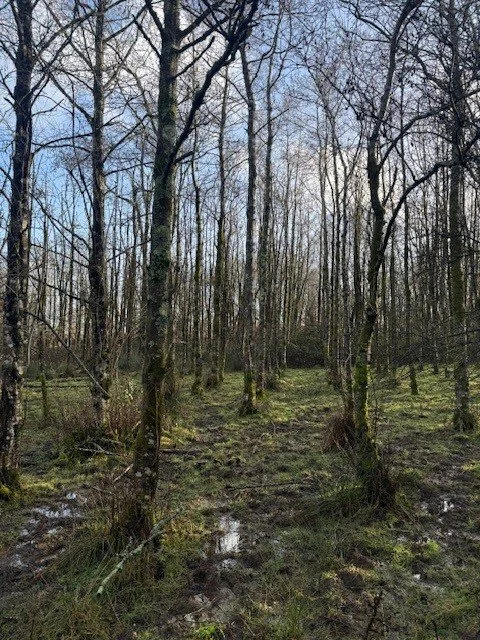
Before - Uniform plantation structure at Coombeshead prior to intervention. Credit: Mick Bracken
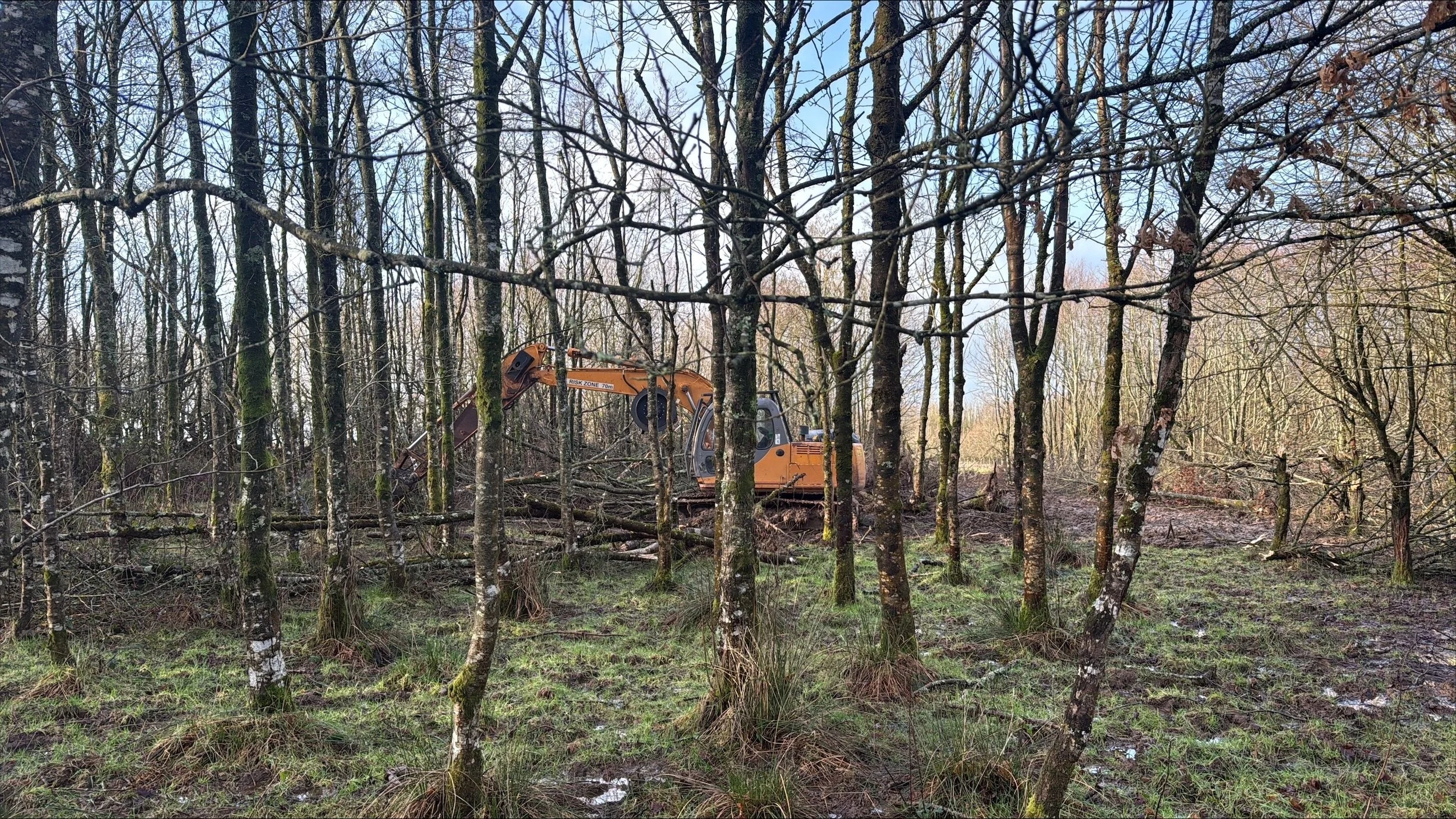
During - “Mechanical mammoth” intervention reshaping woodland structure. Credit: Mick Bracken
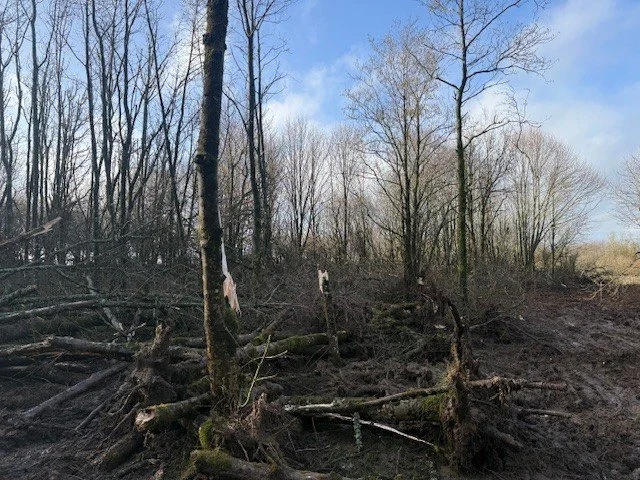
After - Post-intervention mosaic of open ground, debris and standing woodland. Credit: Mick Bracken

Rainforest Recovery is the South West strand of The Rainforest Restoration Project. It is being led by the Woodland Trust in partnership with Plantlife. This project is funded as part of the Government's Species Survival Fund. The fund was developed by Defra and its Arm's-Length Bodies. It is being delivered on behalf of Defra by The National Lottery Heritage Fund.