
FROM TREES TO SEAS: How rainforests shape the health of our estuaries
Written by: Alejandra Hart
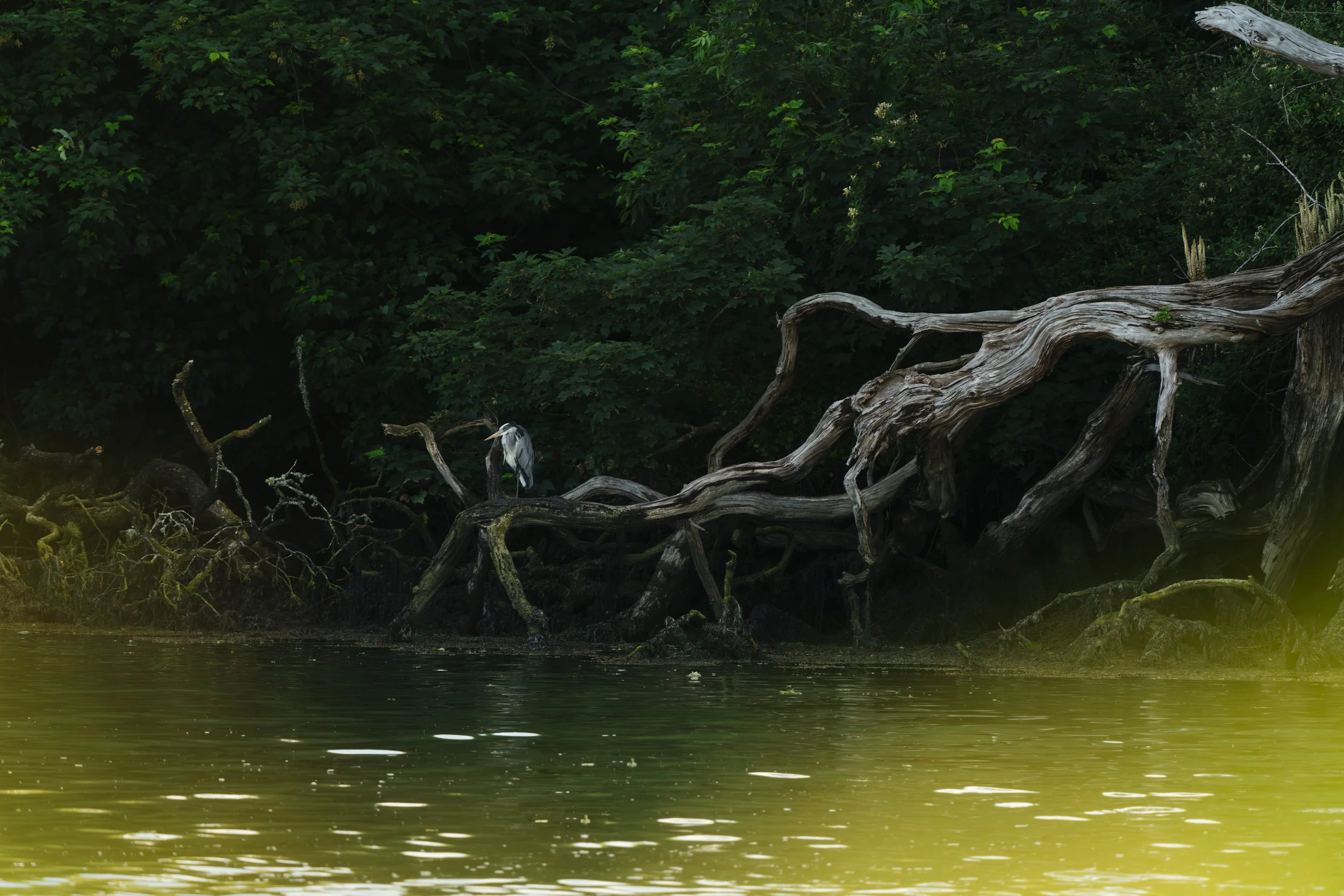
The tangled roots of estuarine woodland provide shelter for young fish, crabs and other wildlife, creating underwater nurseries where freshwater and saltwater meet. Credit: Jasper Abel
What happens on land does not stop at the shoreline.
Rain falling through forests, farmland and towns carries the imprint of those landscapes on its journey to the sea, flowing through streams and rivers before reaching our estuaries and coastal waters. Along the way, woodlands can slow water, stabilise soils, trap sediment and influence the nutrients reaching our oceans.
New research commissioned by the Woodland Trust and carried out by Dr Benjamin Phillips and Dr Emily Duncan from Apex Science and Conservation LLP provides compelling evidence that woodlands are linked to healthier estuaries across Great Britain.
The report, From Trees to Seas, analysed 185 estuaries across England, Scotland and Wales alongside thousands of biodiversity surveys for fish, phytoplankton and benthic invertebrates. The findings reveal a clear pattern: estuaries in better ecological condition are associated with more woodland in their catchments, particularly ancient woodland and woodland growing alongside rivers and estuary margins.
Many of Britain’s estuaries and coastal waters are under growing pressure, failing to meet ecological standards due to pollution, habitat loss, nutrient overload and changes to natural water flows. Restoring woodland in the right places could help reduce some of these pressures by slowing runoff, trapping sediment and improving water quality before it reaches the sea.
This is a story about connection. Rivers, woodlands, estuaries and oceans are not separate systems, but part of one living network linked by water, nutrients and life itself. The research suggests that restoring Britain’s temperate rainforests could play an important role in recovering the health of our rivers, estuaries and seas.
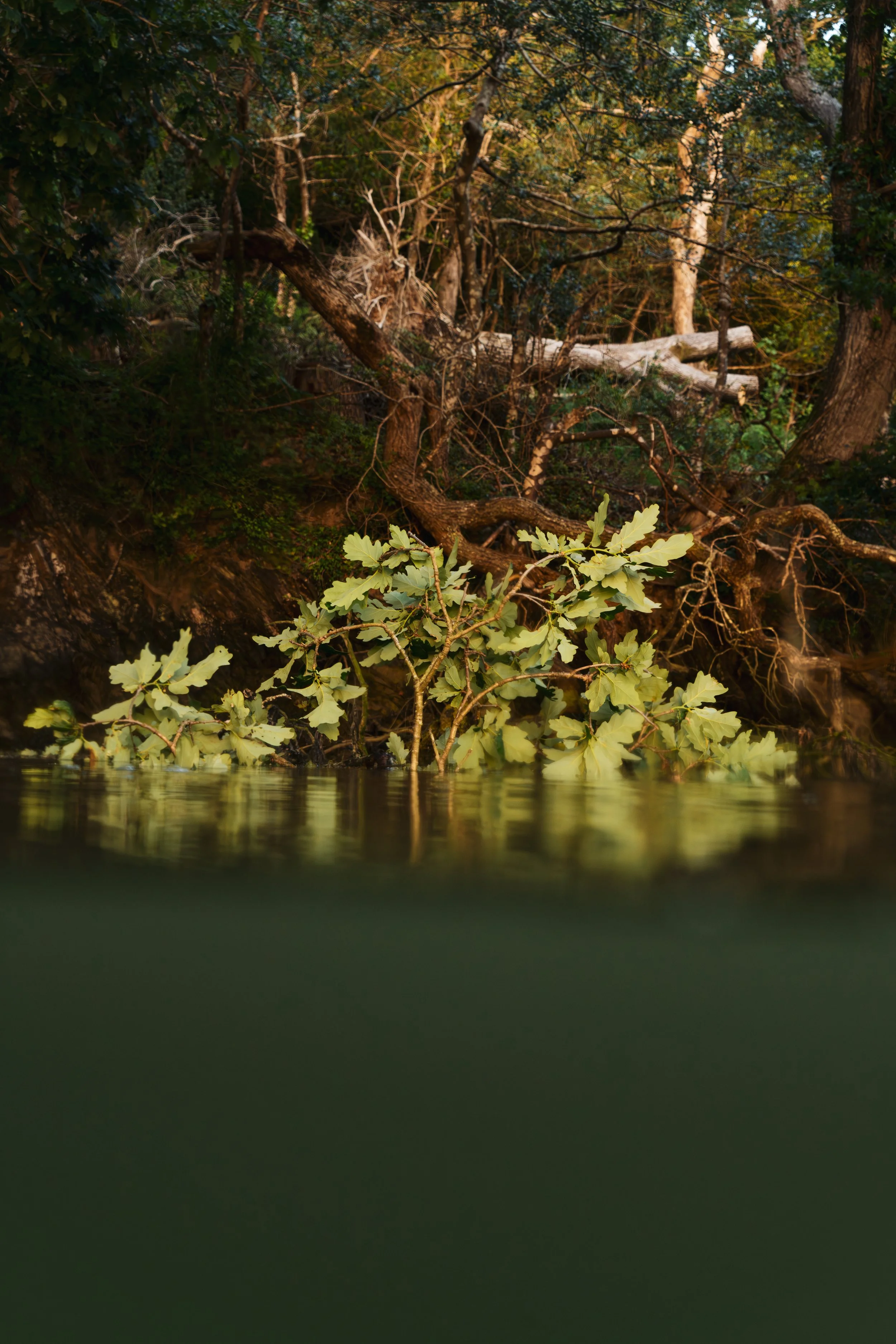
The connection between forests and oceans isn't only through shade or habitat. Organic molecules produced in forest soils can help deliver bioavailable iron to coastal ecosystems. Credit: Jasper Abel
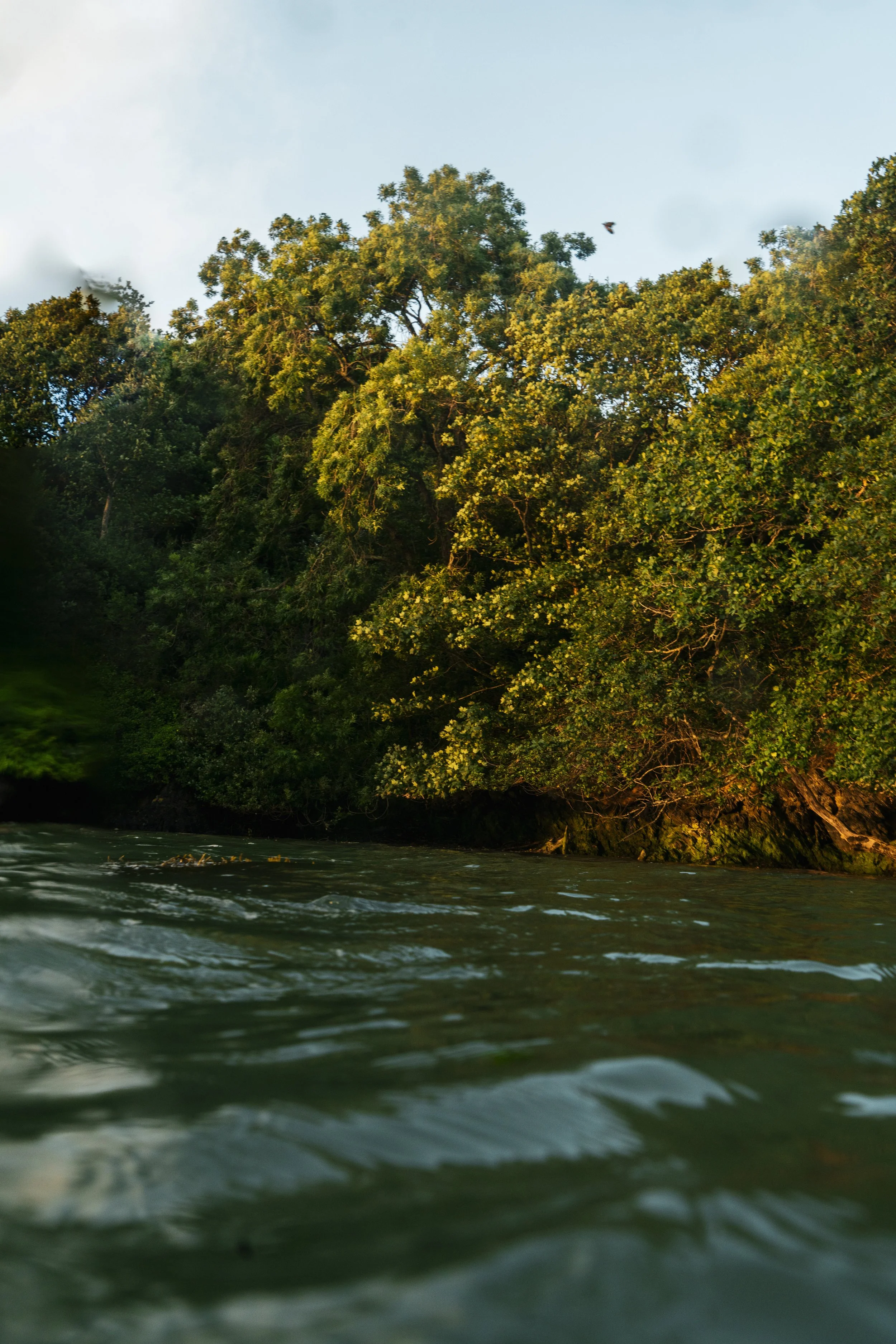
Seen from the water, the forest becomes part of the estuary. Credit: Jasper Abel
1. WOODLAND IS CONSISTENTLY ASSOCIATED WITH HEALTHIER ESTUARIES
Across all 185 estuaries studied, woodland emerged as one of the clearest land-based signals associated with better ecological condition.
The relationship was not simply about the amount of woodland present. The position and type of woodland mattered too. Estuaries in good ecological condition were more likely to be associated with woodland that remained connected to rivers, streams and estuary margins, suggesting that woodland can exert its strongest influence where it interacts directly with the movement of water through a catchment.
Although estuary health is shaped by many factors, the consistent association between woodland cover and ecological condition highlights the importance of looking beyond the shoreline when considering the health of marine and coastal environments.
2. RIPARIAN ANCIENT WOODLAND EMERGES AS ONE OF THE STRONGEST INDICATORS OF ESTUARY HEALTH
Among all the land cover types studied, riparian ancient woodland - woodland growing beside rivers, streams and estuary edges - emerged as one of the strongest indicators associated with healthier estuaries.
These wooded corridors appear especially important because they sit directly along the pathways through which water, sediment and nutrients move from land to sea. Their roots help stabilise soils and riverbanks. Their soils act like sponges, slowing and filtering water before it flows downstream. Their canopies shade rivers, helping regulate water temperature and create more stable conditions for freshwater life.
In catchments where riparian woodland remains intact, estuaries were more likely to be in good ecological condition.
For example, the River Yealm estuary in Devon is surrounded by an almost continuous belt of woodland, including substantial ancient woodland close to the shoreline, and is classified as being in good ecological condition. The River Fowey in Cornwall, one of the Woodland Trust’s priority catchments, shows a similar pattern, where relatively high woodland cover near the estuary is also associated with healthier conditions.
The research also revealed that catchment scale is the most accurate scale to assess links between terrestrial and marine health. That is because woodland is most effective when it forms part of a functioning catchment system, rather than existing as isolated fragments.
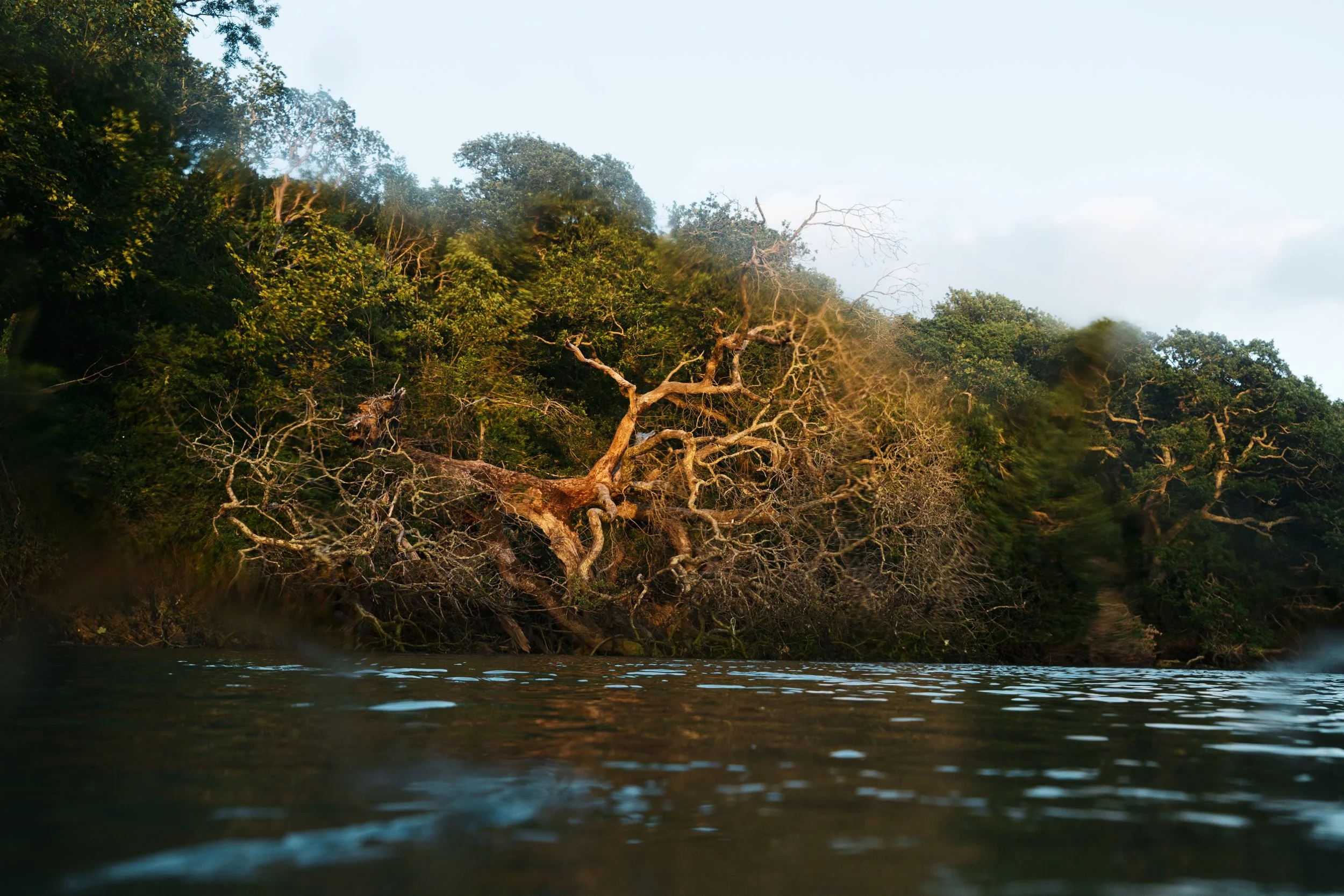
Where forests meet the tide, tree roots help create rich nursery habitats that support the next generation of estuarine life. Credit: Jasper Abel
3. ESTUARY HEALTH DEPENDS ON THE WHOLE CATCHMENT
To understand the health of an estuary, we must look upstream, across the entire catchment: the rivers, tributaries, soils, wetlands and woodlands that shape the flow of water through the landscape.
Healthier estuaries were often associated not only with woodland, but with catchments that retained wider ecological function: lower levels of urbanisation, less intensive agriculture, more semi-natural habitat and healthier hydrological processes.
Across much of Britain, however, these catchment systems no longer function as they once did. Centuries of deforestation, drainage, agricultural intensification and urban growth have altered how water moves through the land. Rain that once filtered slowly through woodland soils is now often channelled rapidly downstream, carrying excess nutrients, sediment and pollution into rivers and estuaries.
The report suggests that many of the natural systems that once connected woodland, river and sea have been disrupted over time. In functioning catchments, forests help regulate the flow of water, nutrients and sediment from source to sea. When woodland is lost and catchments become fragmented, these natural relationships begin to weaken.
Forests are therefore not separate from rivers and estuaries, but part of the wider living systems that help keep catchments resilient and ecologically connected.
Credit: Jasper Abel

Credit: Jasper Abel
4. WOODLAND–ESTUARY RELATIONSHIPS ARE CLEAREST IN LESS MODIFIED LANDSCAPES
In Scotland, where catchments generally contain more semi-natural habitat and lower levels of urban and agricultural pressure, 88% of estuaries were classified as being in good ecological condition. In England, only 8% reached the same standard.
In heavily degraded catchments, the ecological influence of woodland becomes harder to detect beneath layers of nutrient pollution, wastewater inputs, hydrological alteration and habitat loss.
Woodland alone cannot compensate for untreated sewage, industrial pollution or intensive agricultural runoff. But where catchments remain more intact - or where woodland still survives along rivers and estuary margins - its influence becomes much easier to see.
The findings suggest that woodland acts not only as a contributor to healthier estuaries, but also as an indicator of landscapes that still retain stronger ecological function overall.
In other words, the more disrupted a catchment becomes, the harder it is for the natural relationships between forest, river and sea to function as they once did.
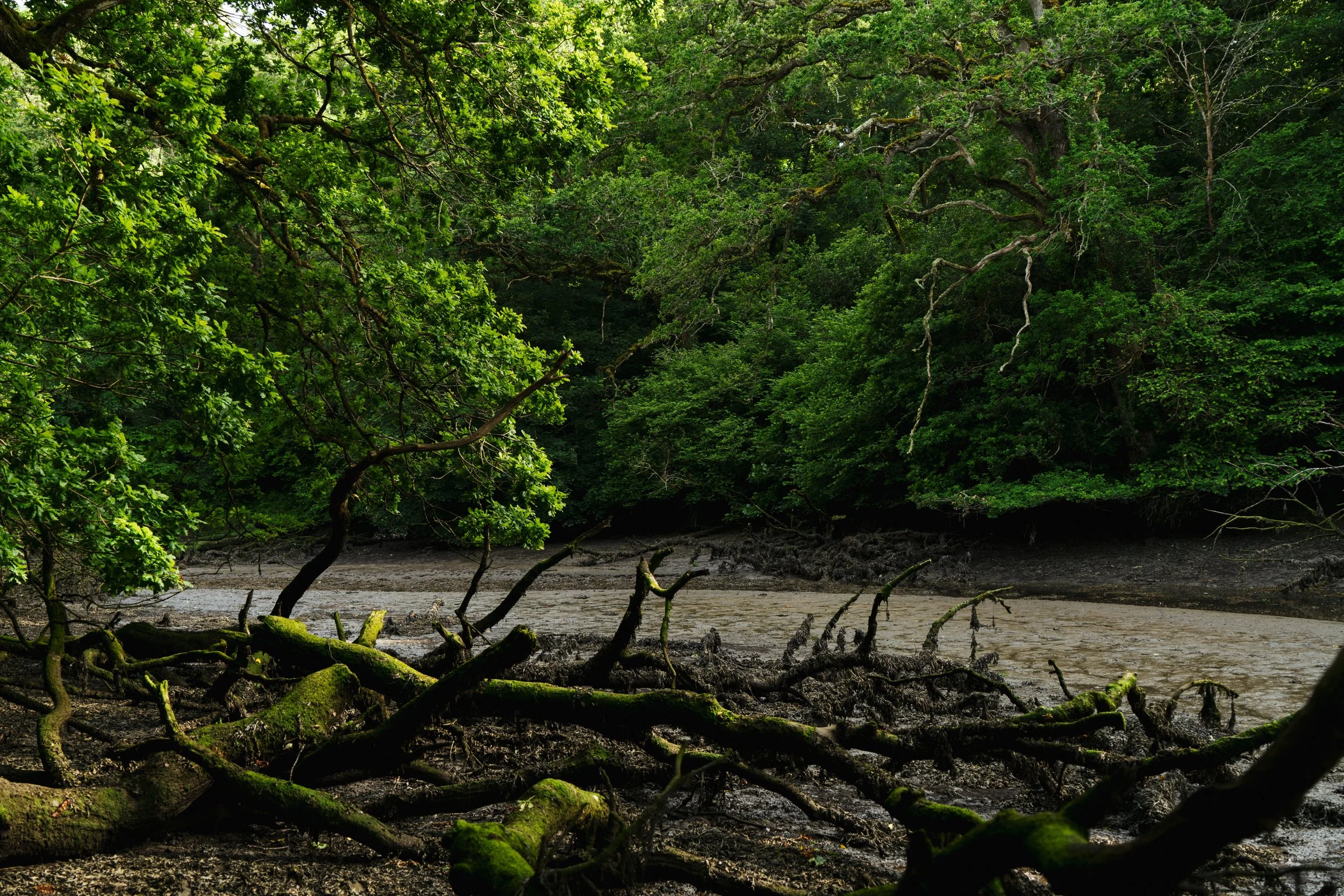
Frenchmens creek, Helford estuary. Credit: Jasper Abel
5. BRINGING CATCHMENTS BACK TO LIFE
The report is careful not to oversimplify the relationship between woodland and marine health.
Some degraded estuaries still support surprisingly high biodiversity, while some estuaries in relatively healthy ecological condition may show lower recorded species richness. Estuaries are shaped by many interacting forces, including tides, salinity, habitat diversity, pollution, hydrology and geography.
Relationships between woodland and biodiversity were therefore more variable and scale-dependent than those observed for ecological condition. Yet across this complexity, woodland - particularly riparian ancient woodland - repeatedly emerged as one of the strongest land-based signals associated with healthier estuary systems.
The message, therefore, is to restore woodland where it can play the greatest ecological role: along rivers, floodplains, erosion-prone slopes and the pathways through which water moves across the landscape.
The research recommends:
Protecting and restoring riparian ancient woodland
Expanding woodland along rivers and streams
Strengthening woodland networks across catchments
Linking woodland recovery with wider river and estuary restoration
Carrying out more research into the connections between woodland, plankton and marine food webs
In Japan, more than 1,000 legally recognised Fish Forests are protected for the benefits they provide downstream to estuaries and fisheries. These forests are recognised as vital parts of interconnected land-sea ecosystems, helping support plankton productivity, nutrient cycling and fish populations.
In places like the Helford estuary in Cornwall - where ancient oak woodland still wraps around sheltered tidal creeks - we may already be seeing glimpses of how these land-sea relationships could work in Britain.
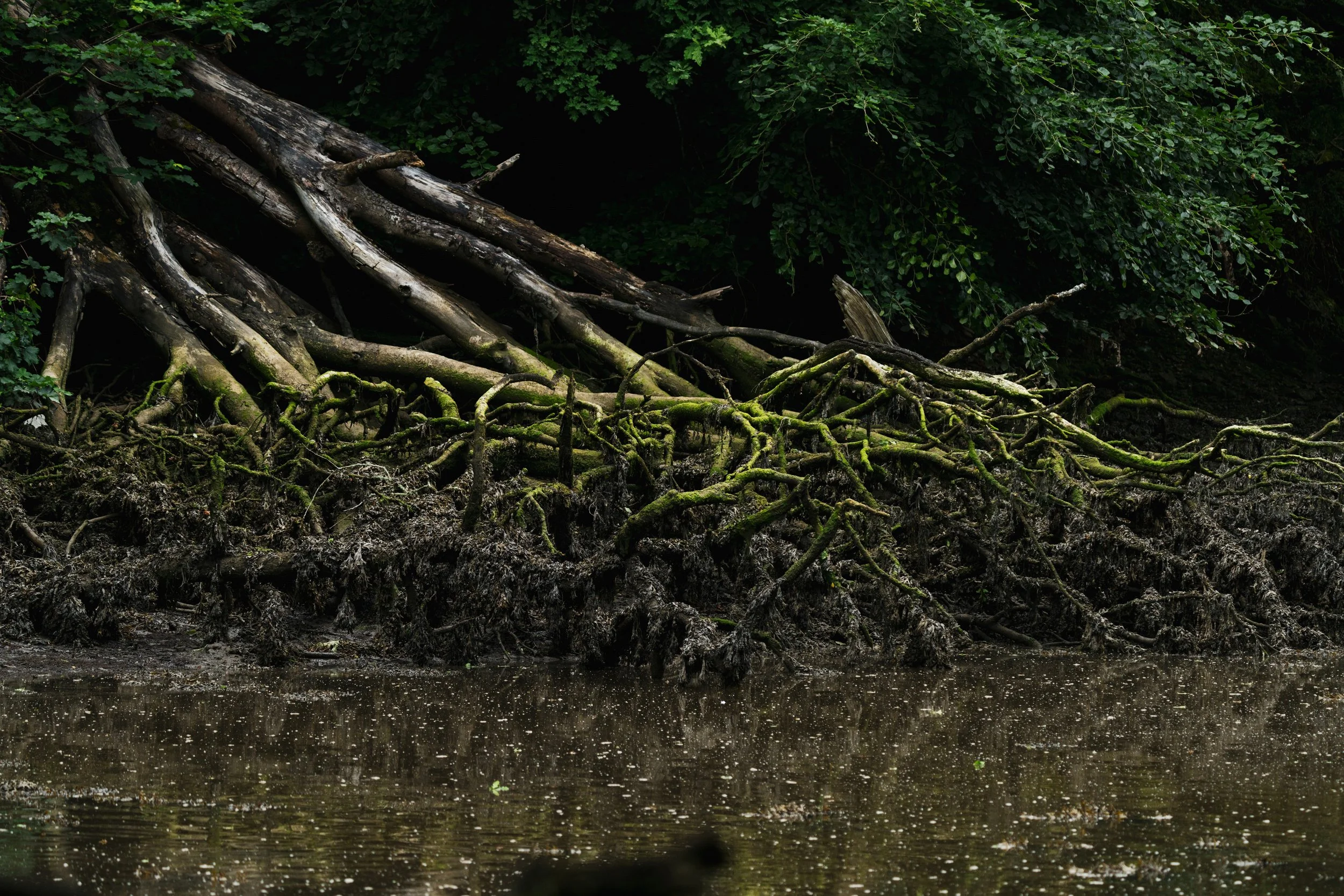
Britain's closest equivalent to a mangrove: estuarine woodland whose submerged roots offer food, shelter and refuge for aquatic wildlife. Credit: Jasper Abel
This research marks the beginning of a new way of thinking about rainforest recovery in Britain.
For too long, forests and oceans have been treated as separate ecosystems. But, if we want cleaner seas, healthier estuaries, more abundant fish populations and greater climate resilience, we must begin upstream. We must restore the systems that slow water, rebuild soils and reconnect fragmented habitats from catchment to coast.
The Woodland Trust and the South West Rainforest Alliance aim to triple temperate rainforest cover across Devon and Cornwall by 2050. This new research strengthens the case for linking rainforest recovery with estuary and ocean restoration as part of one connected vision for nature recovery.
Download and read the full report here.