
Written by: Alejandra Hart
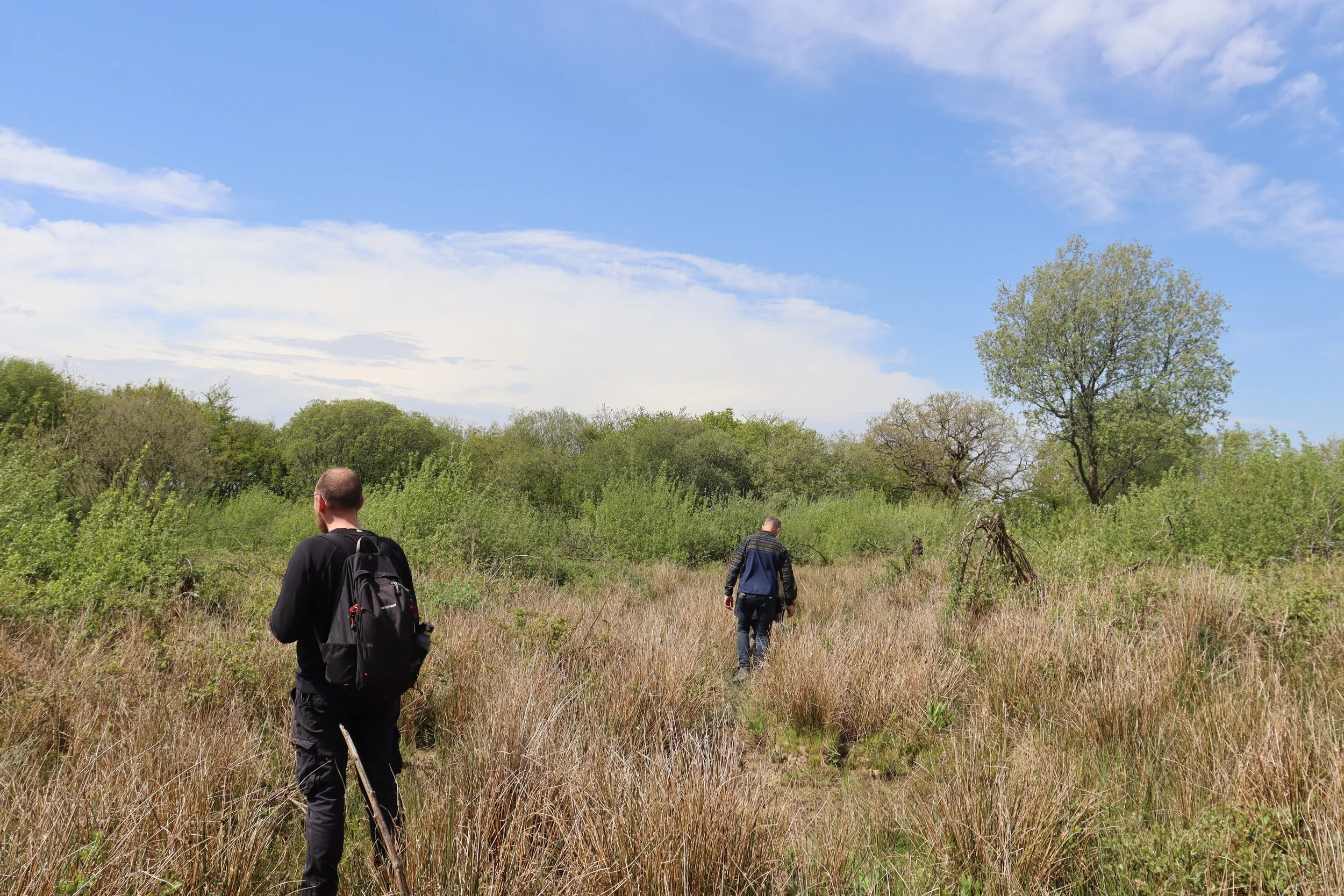
Woodland regenation requires high levels of light, and this is what mechanical mammoths can provide. Credit: Danielle Semple
Mechanical Mammoths: Relearning How Woodlands Regenerate
Restoring a woodland is often imagined as a quiet process. Trees are planted, fences are put up, and over time nature is left to recover. But many of our woodlands did not evolve in stillness. They were shaped by movement, pressure, and disturbance. Large herbivores once pushed through trees, broke branches, opened the canopy, and created space for new growth. That constant shifting helped form the varied, layered structure that defines a healthy forest.
Today, that force is largely missing. In its place, many woodlands have become more uniform. Trees grow close together, often of the same age and species, with little light reaching the ground, limiting the opportunity for regeneration. In temperate rainforests, where structure underpins everything from lichens to woodland ecology more broadly, this uniformity can limit how these systems function.
Mechanical mammoths are one way of reintroducing that missing process. The idea is to recreate the kind of disturbance that would once have been caused by large herbivores, particularly species such as the straight-tusked elephant, which was three times the size of an elephant. Using machinery, like diggers, sections of woodland are broken up in a controlled way. Not to remove woodland, but to change its structure and allow regeneration to begin again.
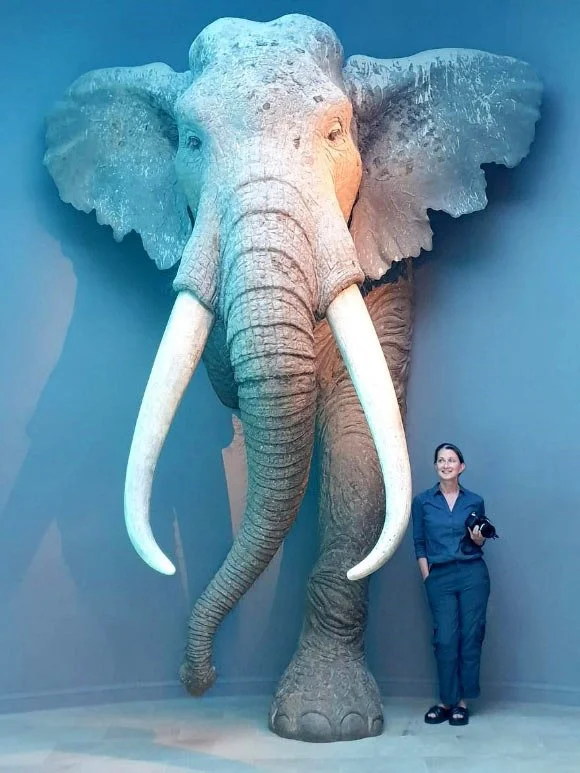
A recreation of the straight-tusked elephant that was roaming our lands only 115,000 years ago. Credit: Lutz Kindler, LEIZA.
Starting at Grendons
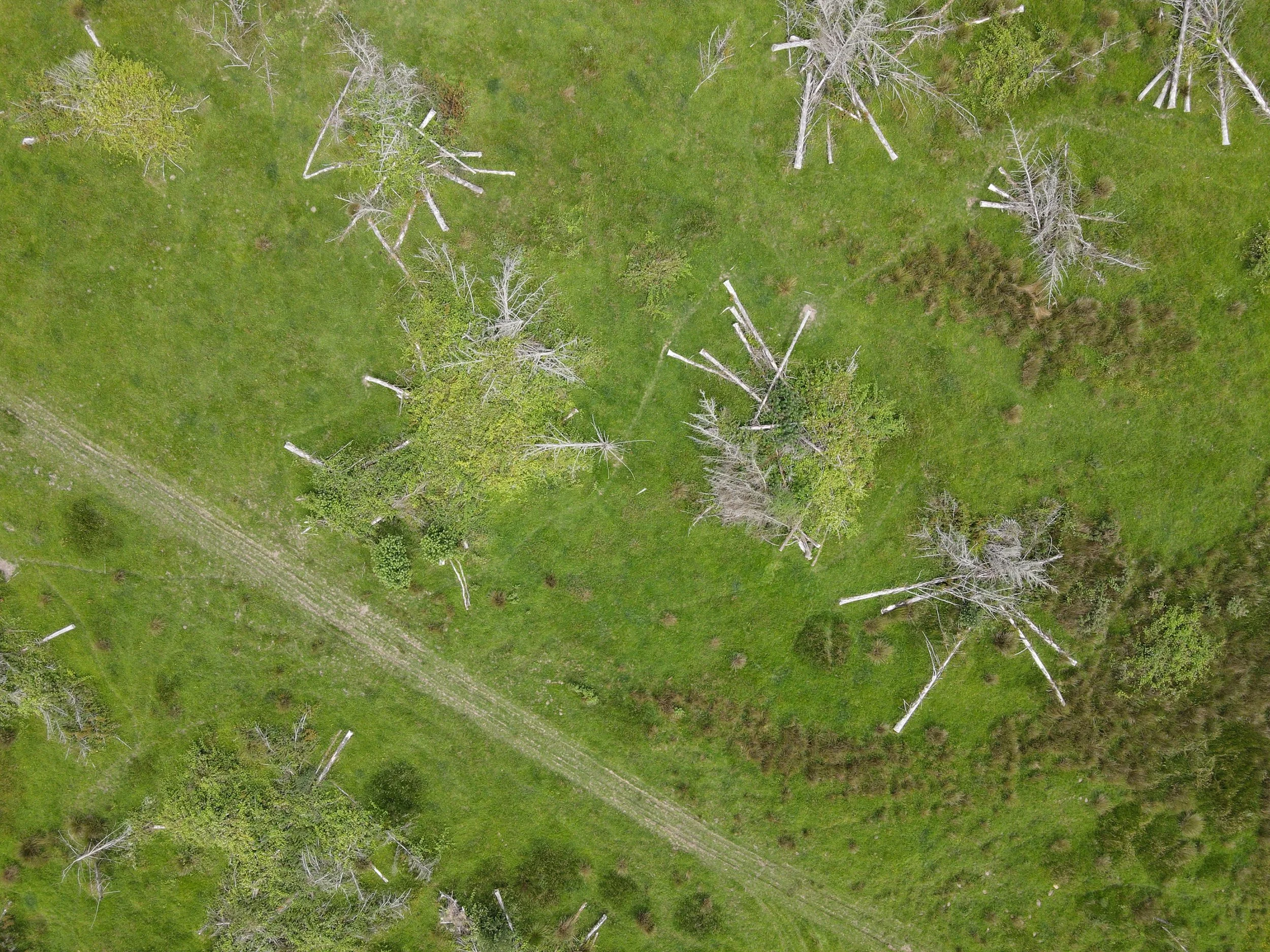
The first trial of this approach took place at Grendons, in Witheridge where the woodland was made up of 30 year old ash. Here, areas of woodland were deliberately broken up to move away from a closed and uniform structure. Around eighty percent of the canopy was disturbed within defined plots. Trees were pushed over and left on site, with the material arranged to create dense and complex areas of woody debris and deadwood habitat.
Between these areas, open strips of ground were created. These thoroughfares allow grazing animals to move through the woodland and bring light down to the soil. Some trees were left standing beyond these areas, maintaining sections of closed canopy. A baseline drone survey was also carried out to support long term monitoring.
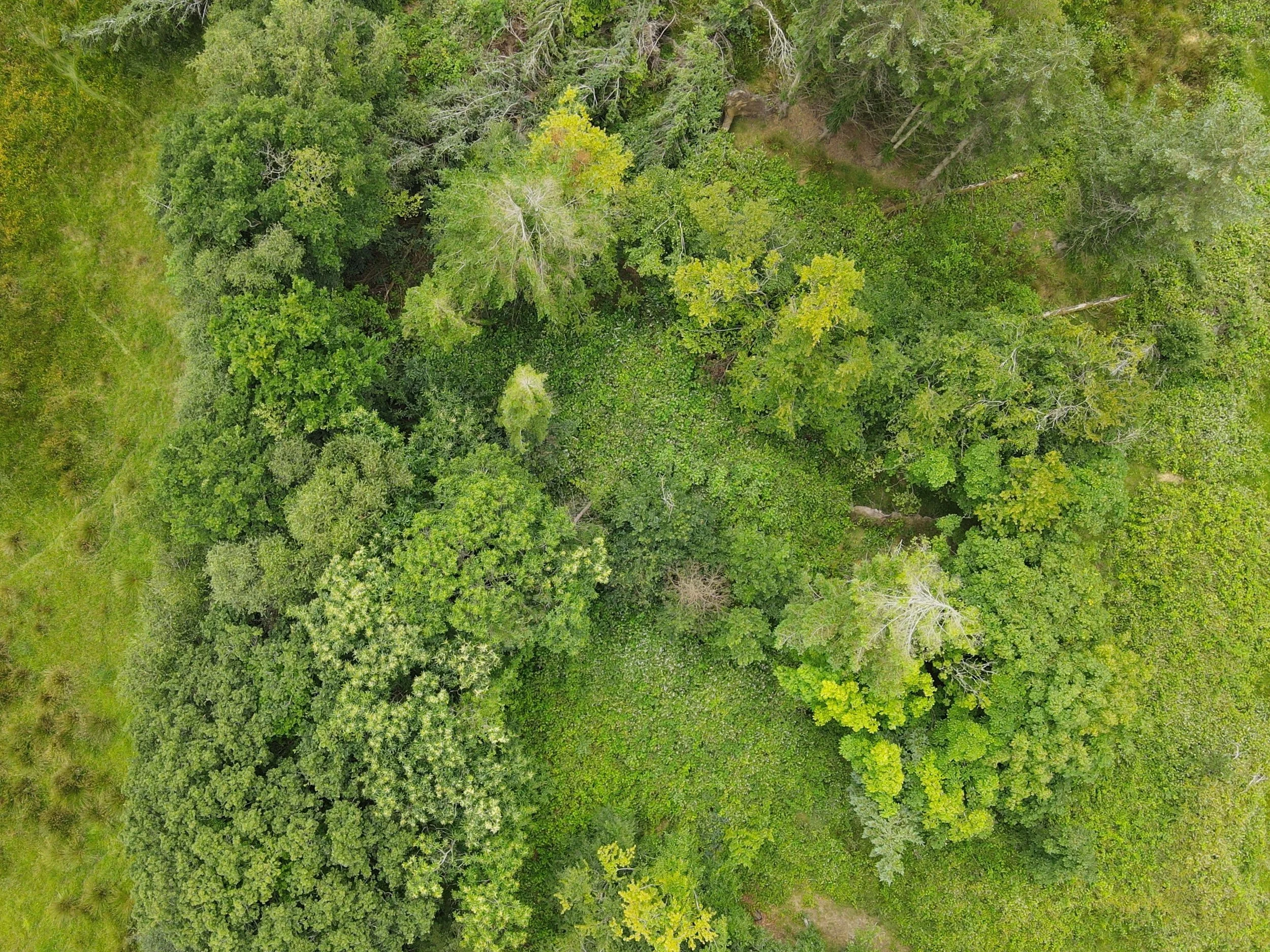
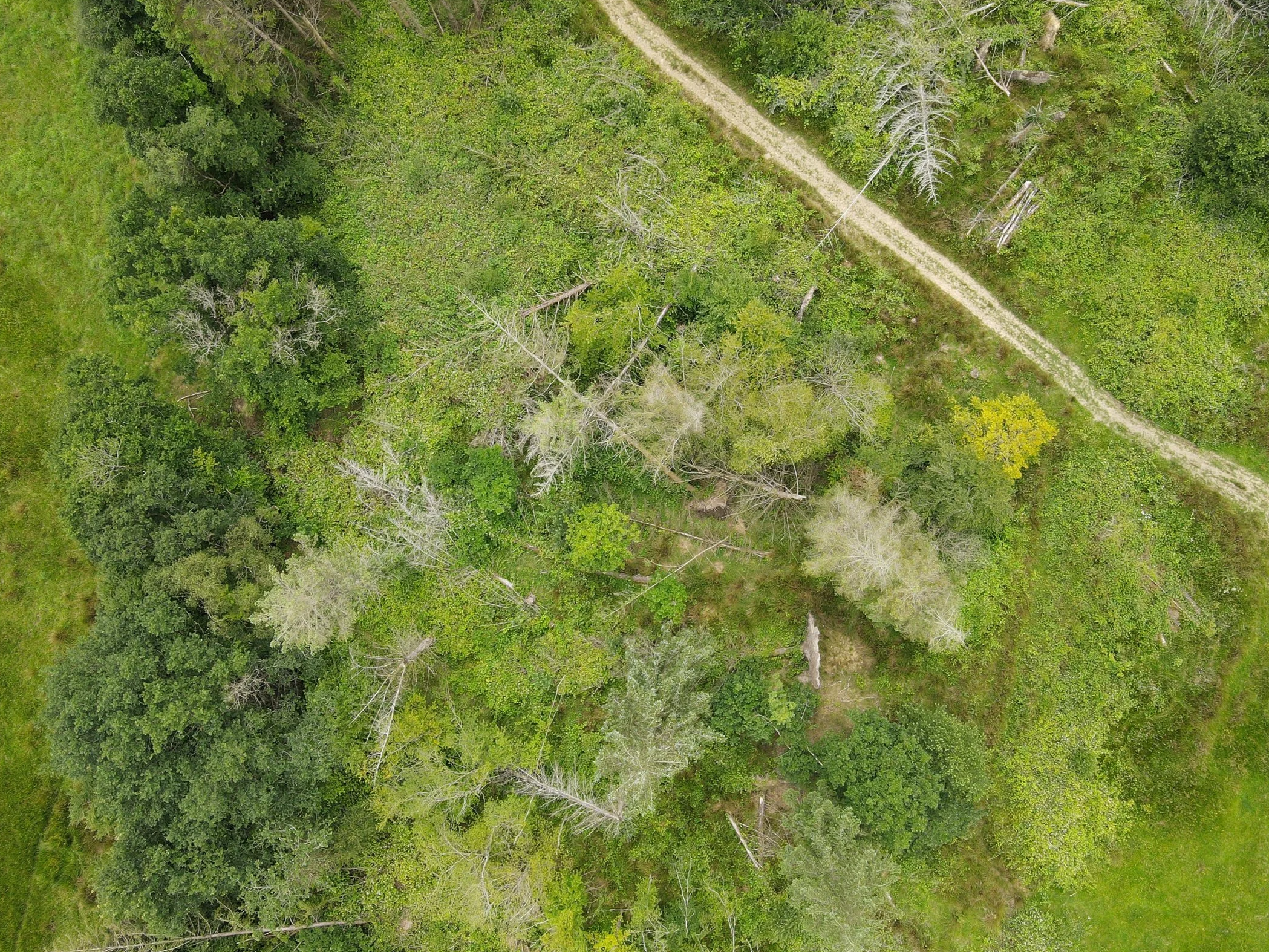
What this creates is a woodland made up of three distinct structures. Open ground, deadwood, and woodland. Rather than one condition dominating, these sit alongside each other, creating different opportunities for regeneration. Early observations have already shown coppice regrowth within the disturbed areas, suggesting that once structure changes, the woodland begins to respond.
Taking the next step at Coombeshead
At East Coombeshead in Devon, the same approach is now being developed further as part of a wider rewilding project. The woodland here was planted around twenty-five years ago and has had no management since. Trees were planted in single species groups, typically between twenty-five and fifty per group, resulting in a consistent and relatively closed canopy.
The site sits within a landscape already shaped by grazing animals, including rare breed cattle, Exmoor ponies, and water buffalo. While these animals influence the ground, they do not significantly alter woodland structure. Mechanical mammoths are being used here to introduce that structural change.
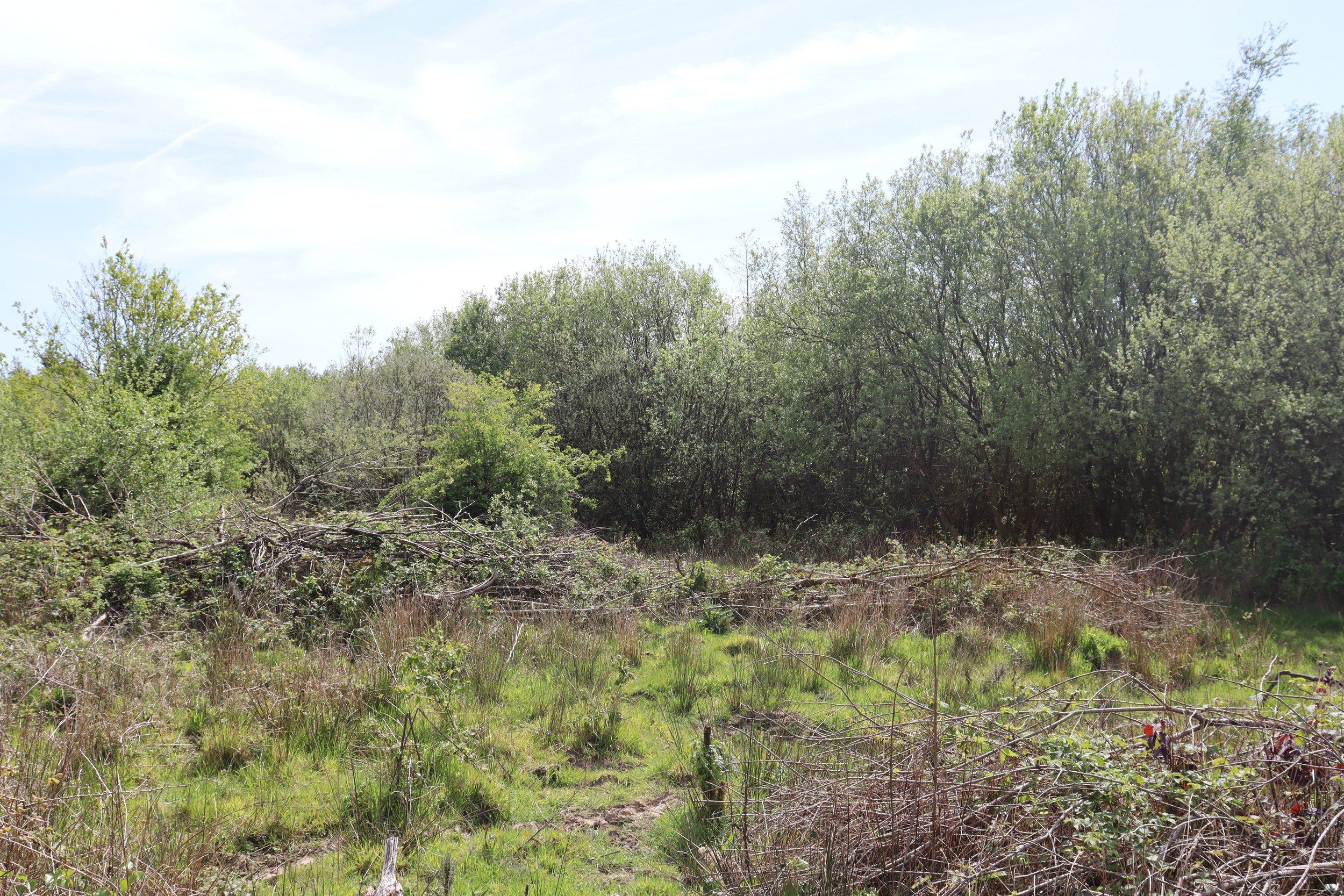
In early 2026, sections of the woodland were broken up using a tracked digger. As at Grendons, the aim was to create a pattern of different conditions rather than a single outcome. Open ground was created in the form of thoroughfares. Trees were pushed over and left as woody debris. Other areas were left as closed canopy.
Woodland debris and deadwood has been left to create new habitat and also act as tree nursuries. Credit: Eti Meacock.
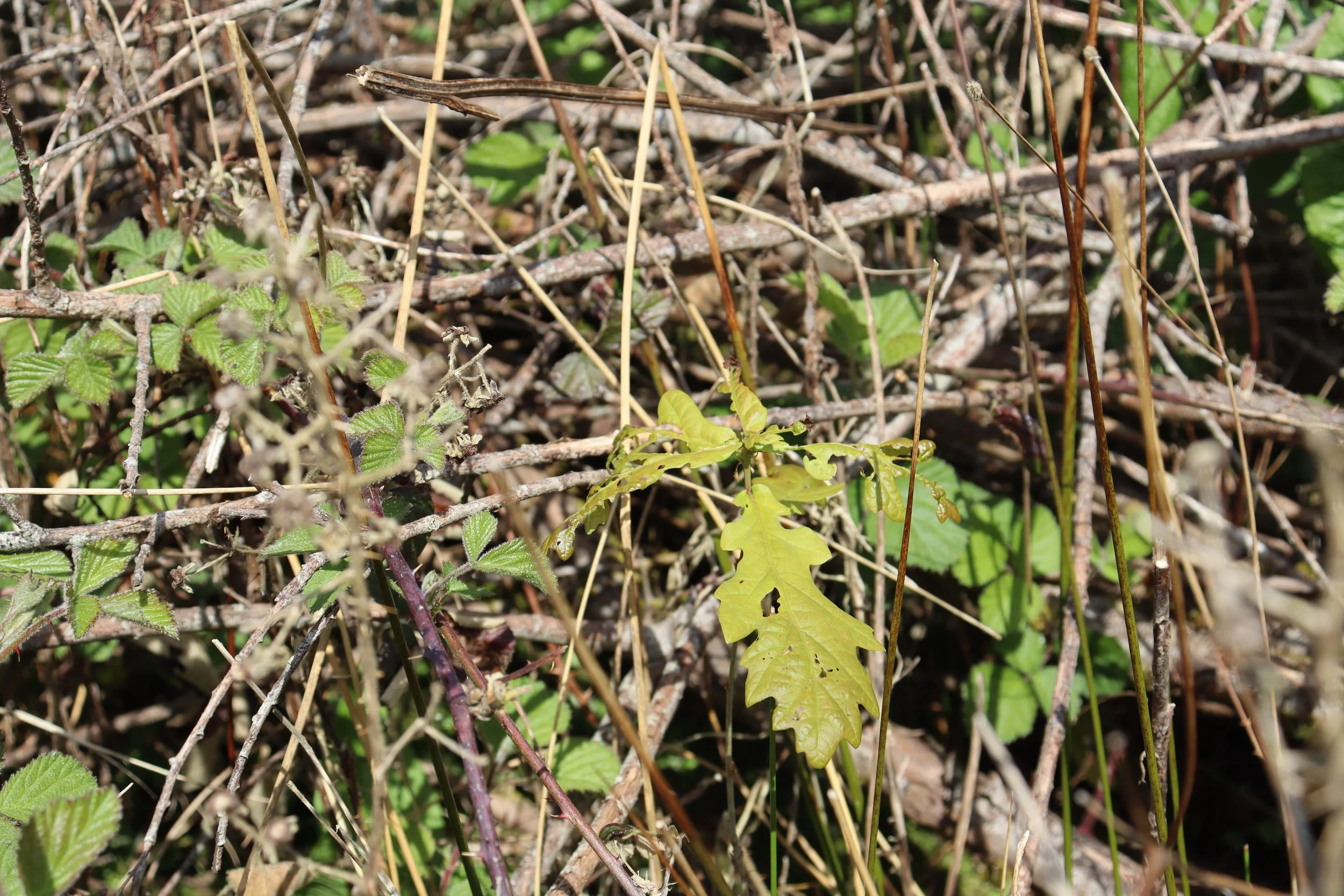
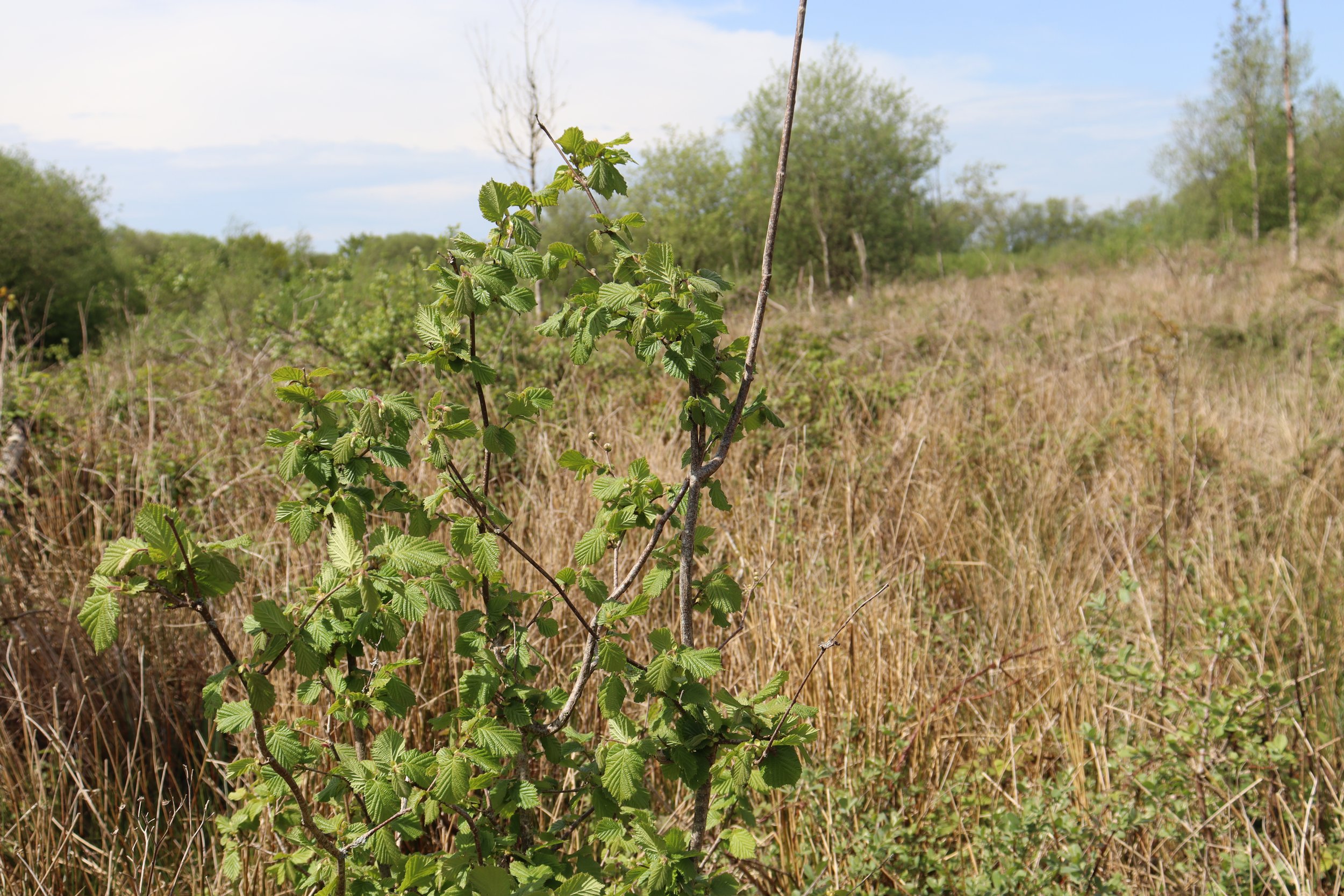
Each of these conditions plays a different role. The open ground will be lightly grazed and is expected to support the regeneration of species such as oak, hazel, and hawthorn. The areas of woody debris provide shelter from grazing, where coppice regrowth and shrub species, particularly those spread by birds, are more likely to establish. The remaining woodland, now more open in places, allows increased light and airflow, creating suitable conditions for species such as lichens.
Because the woodland is young and contains few trees of reproductive age, natural seed sources are limited. To address this, drone seeding is being used across parts of the site, including both open areas and woody debris. Tree seeds including oak, hazel, and hawthorn were distributed across the site. Some areas will be left unseeded, allowing comparisons to be made as regeneration develops.
This process will be monitored closely, particularly how regeneration responds to grazing. Over time, areas may be enclosed to allow young trees to establish beyond browsing pressure, while other parts of the woodland may be broken up to continue the cycle.
A process, not a single outcome
Mechanical mammoths is not about creating one ideal woodland structure. It is about restoring a process. By introducing disturbance, alongside grazing and regeneration, the woodland begins to change in different ways at the same time. Open ground, shelter, and canopy all play a role.
In temperate rainforest, this variation is important. Different species depend on different conditions, and structural diversity supports that range. Lichens, in particular, respond to subtle shifts in light and airflow, while other species depend on protection and continuity.
Mechanical mammoths offer a way to begin rebuilding that complexity in woodlands where it has been lost. Not as a fixed solution, but as an ongoing experiment in how these systems respond when key processes are reintroduced.
Across the temperate rainforest zone, many woodlands face similar challenges of uniform structure and limited regeneration. Exploring approaches like this helps build understanding of how these systems can recover over time.
Follow our rainforest restoration work to see how projects like Grendons and Coombeshead are helping to shape the future of temperate rainforest.