
REWETTING AVON VALLEY WOODS
Written by: Alejandra Hart
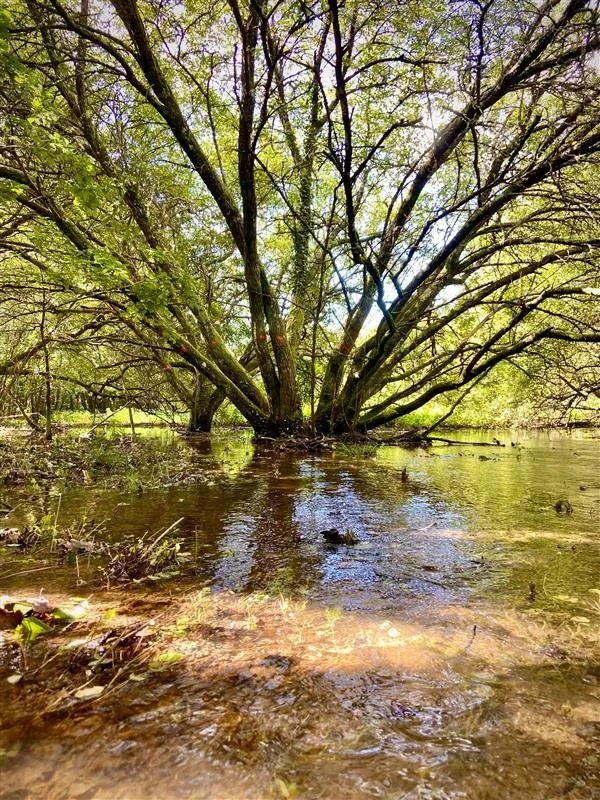
A willow surrounded by water at Avon Valley Woods. Credit: Joe Middleton
When you walk through Avon Valley Woods, water seems strangely absent. Tor Brook runs narrow and swift, shaped over generations by human efforts to keep the water moving quickly and away from the floodplain. The floodplain beside it lies dry and compacted, more accustomed to carrying water away than to holding it. For a woodland that should be damp and spongey, where moss carpets and lichens feed on humidity, the missing element is obvious.
In August 2025, our Estate Team at the Woodland Trust began work on one of the largest rewetting efforts we have ever undertaken in the South West. The aim is to re-establish the connection between Tor Brook and its historic floodplain, and in doing so, to create around two hectares of new wetland habitat. The interventions themselves are carefully planned and implemented: leaky dams of logs and branches, woody debris placed strategically in the channel, deflectors to redirect water, and lowered banks to let the brook spill sideways instead of racing forward.
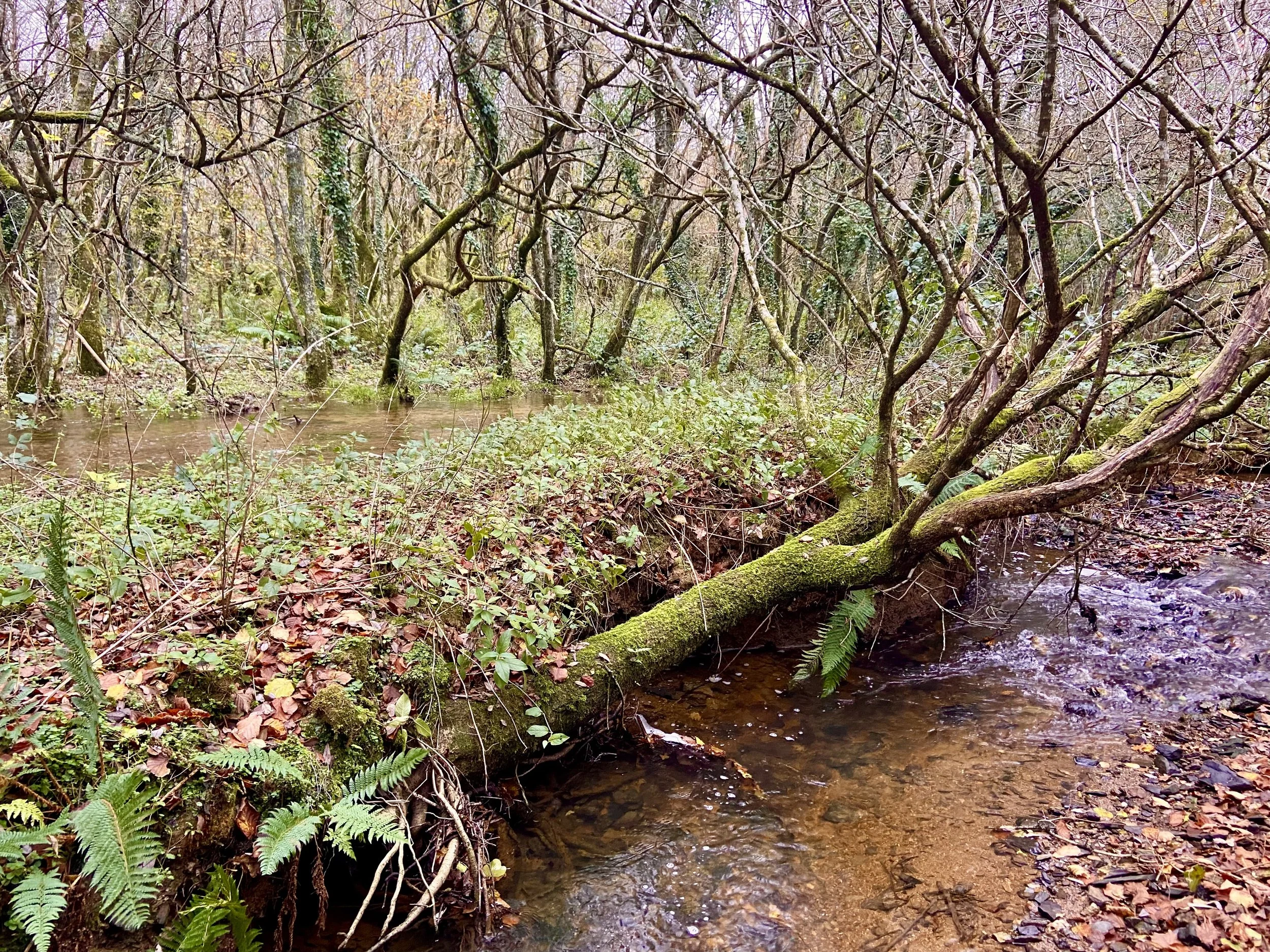
Water flowing on two different levels: the original stream bed and the new flow above it. Credit: Joe Middleton
Joe Middleton, who manages the site, describes the plan in clear terms:
“At Avon Valley Woods in South Devon we have an exciting project to create natural flood management features in the Tor Brook, reconnecting it with its historic floodplain, and potentially achieving a large area of floodplain storage, rewetting and creating up to 20,000 m² (or 2 Ha) of new wetland habitat. Leaky dams, woody debris, flow deflectors and bank lowering will slow the flow of the water, providing flood-alleviation, reducing downstream sedimentation, increasing soil moisture and humidity, protecting against summer drought, whilst improving biodiversity and creating a mosaic of rich habitats for wildlife.”
Even in these first days, you can see how water begins to respond differently. It pools briefly behind a barrier, it swirls sideways into a hollow, it slows. The logic is simple: if water lingers, the woodland can begin to hold it again, and the conditions that temperate rainforest species need can start to return.
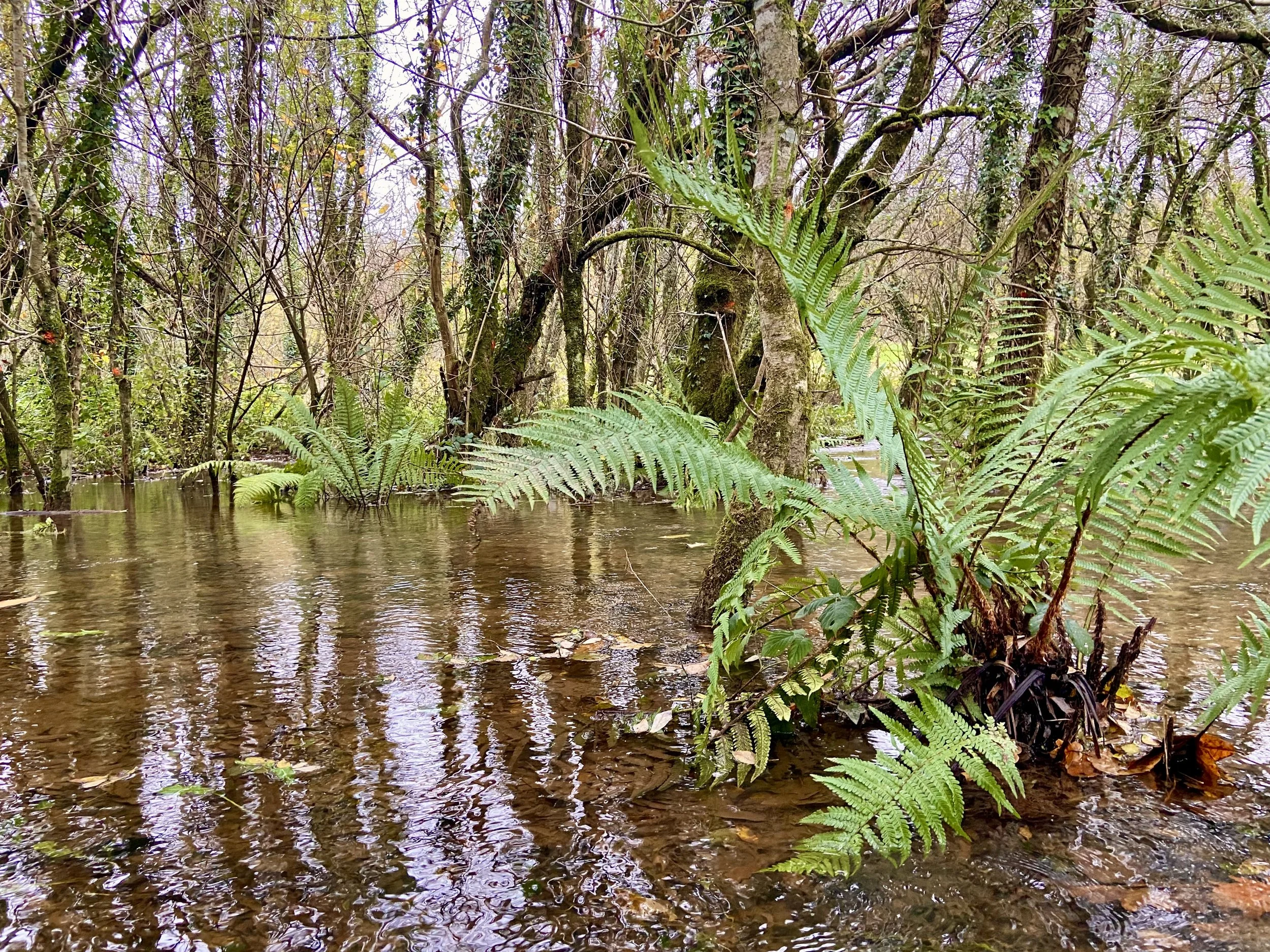
Water flowing on two different levels: the original stream bed and the new flow above it. Credit: Joe Middleton
Yet there is little that feels certain. The history of the land is long, and its draining has been thorough. Centuries of reshaping rivers for agriculture and industry have trained both soils and people to expect speed and dryness. To talk of “rewetting” is to admit how much has been lost, and how much work is required simply to tip the balance back.
Sam Manning, Rainforest Recovery project officer, frames this against the wider picture of both climate instability and ecological loss:
“Our landscape is one of the most drained on earth, with our rivers and land having been highly altered by humans historically. By rewetting and restoring our lost Temperate Rainforests, we can protect our environment and communities from the flooding and drought which climate change is making increasingly more common and severe. We can also protect our freshwater and marine environments, and create habitat for declining keystone fish species, such as salmon. This rewetting project is the largest scale the Woodland Trust has ever undertaken in the South West, and we have ambitious plans to carry out even larger projects in the future, and use this as a best-practice demonstration from which others can learn how to restore their rivers and rainforests.”
The ambition is clear: this is not a small trial, but a step change. Two hectares of floodplain may not sound vast, but within Devon’s valley woodlands it represents a significant intervention. The early shifts support wetland plants, invertebrates, and amphibians, while also helping to slow water flow, reduce downstream flooding, and maintain soil moisture for surrounding land and communities. By the end of the year, these interventions should start shaping a woodland that is more resilient and connected, benefiting both wildlife and people.
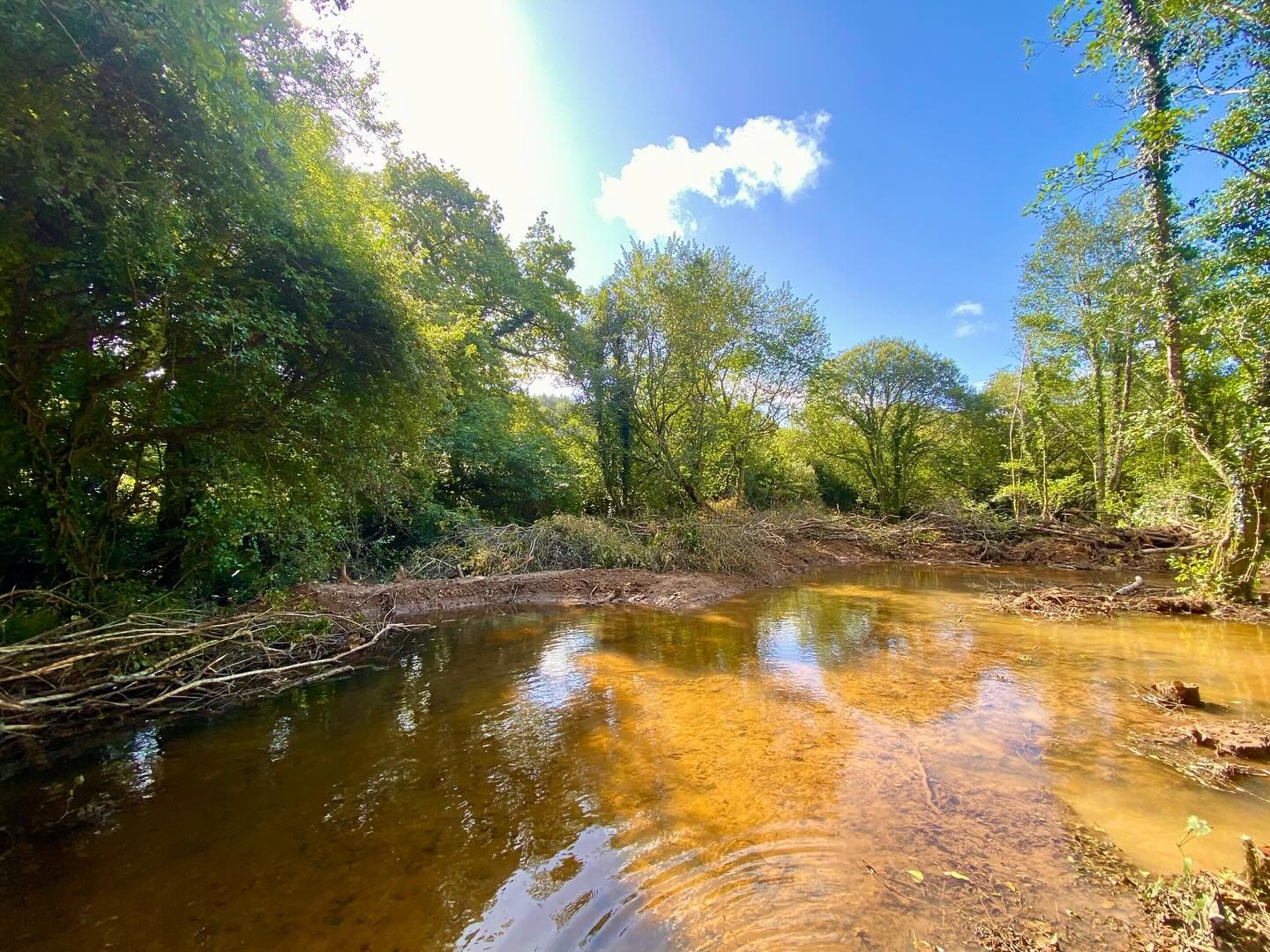
Natural Flood Management at Avon Valley after only two weeks. Credit: Joe Middleton
As we continue to restore Avon Valley Woods, we are not only reviving a vital piece of temperate rainforest but also investing in a future where communities and ecosystems are better equipped to handle the challenges posed by a changing climate. For now, the process has begun, and with it, a new story in the valley: not of rushing water leaving the land behind, but of water tentatively returning to stay.

Rainforest Recovery is the South West strand of The Rainforest Restoration Project. It is being led by the Woodland Trust in partnership with Plantlife. This project is funded as part of the Government's Species Survival Fund. The fund was developed by Defra and its Arm's-Length Bodies. It is being delivered on behalf of Defra by The National Lottery Heritage Fund.