
Written by: Danielle Semple
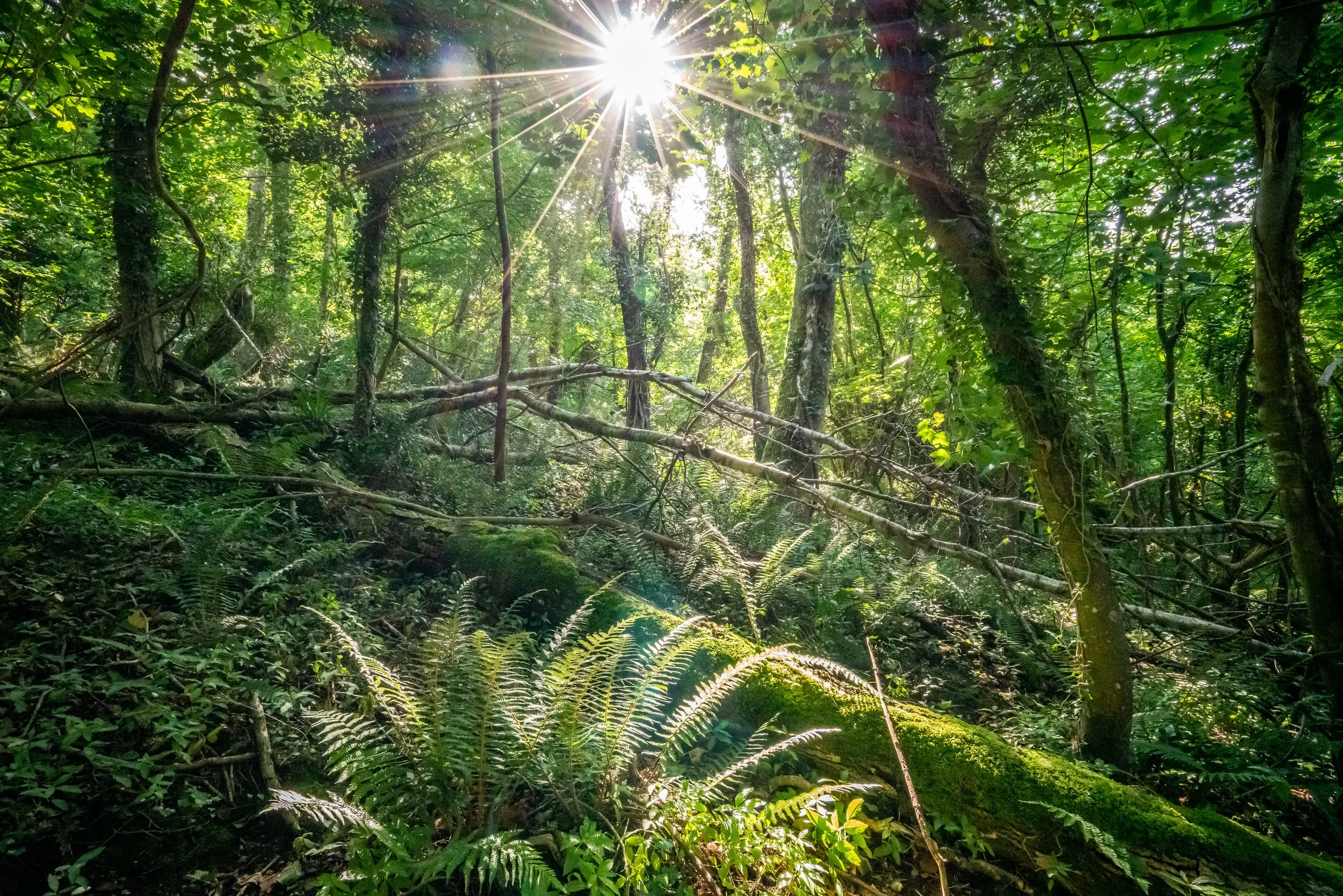
Deadwood of all types is an incredibly important habitat in woodlands and something we are trying to increase in diversity and abundance. Credit: Ben Lee.
This spooky season, we are doing a deep dive into deadwood, why it is important, and what we are doing to create this habitat. You'll be left with a hauntingly good idea of the role it can play in our woods.
It may not be the first thing you think of when walking in the woods, but fallen branches, rotting stumps and dead trees are the lifeblood of any woodland. Decaying wood recycles essential nutrients back into the soil, provides food and nurseries for rare animals, and hosts spectacular collections of fungi.
A healthy woodland should have roughly a lorry load of deadwood per hectare, which is roughly 3-4 standing dead trees, and 3-5 fallen logs (snags) of greater than 20 cm diameter in an area bigger than a football pitch. It can come in many forms, and should be made up of a mix of:
Fallen deadwood - Naturally fallen branches, toppled trunks, as well as felled wood, gradually release their nutrients into the woodland floor as they decompose. Once they're unlocked, these same nutrients can be reused by living trees and other plants for new growth.
Standing deadwood - The rarest kind of deadwood is that of dead trees which still stand. Dead trees can be vulnerable to high winds and the tendency for human caretakers to 'keep things tidy', but those allowed to remain in place offer incredibly valuable habitat for wildlife that can live nowhere else. Living trees may also retain large sections of deadwood.
Decaying stumps and roots - A considerable amount of wood is found beneath the ground in the large, woody roots that anchor trees in soil.
Rotting heartwood - A natural part of the lifecycle of veteran and ancient trees is the hollowing of their trunks, caused as older heartwood begins to decay at their centre. Depending on the species, a tree can live for hundreds of years while actively decaying in parts, with living wood continuing to support the tree towards the outside of its trunk.
As we restore our woodlands, adding this missing layer of deadwood is crucial. We can do this in many ways:
Leaving deadwood on the ground after felling. This is useful in steep woodlands where timber is hard to extract.
Ring barking trees young trees to create standing deadwood
Leaving tree stumps to decay.


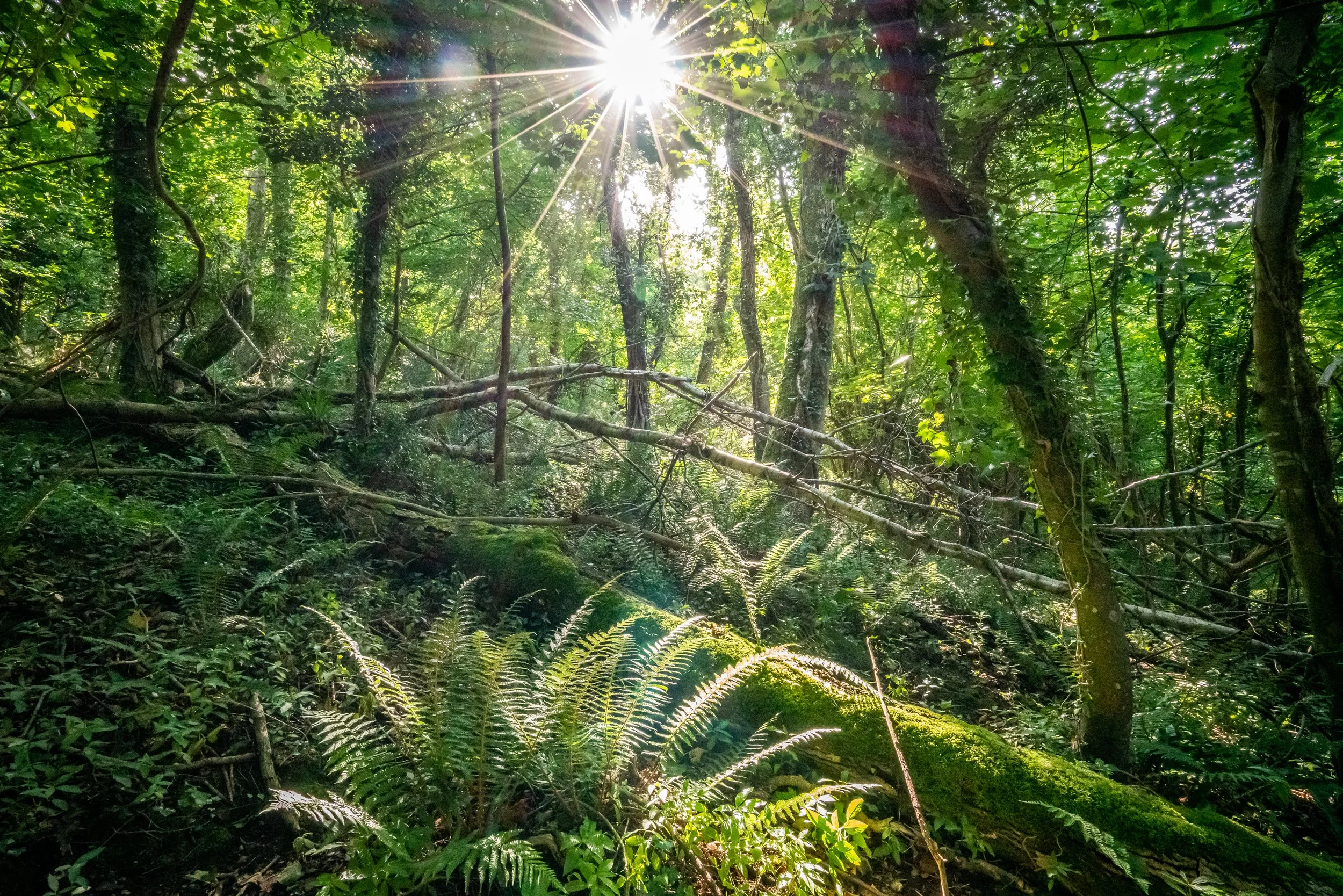
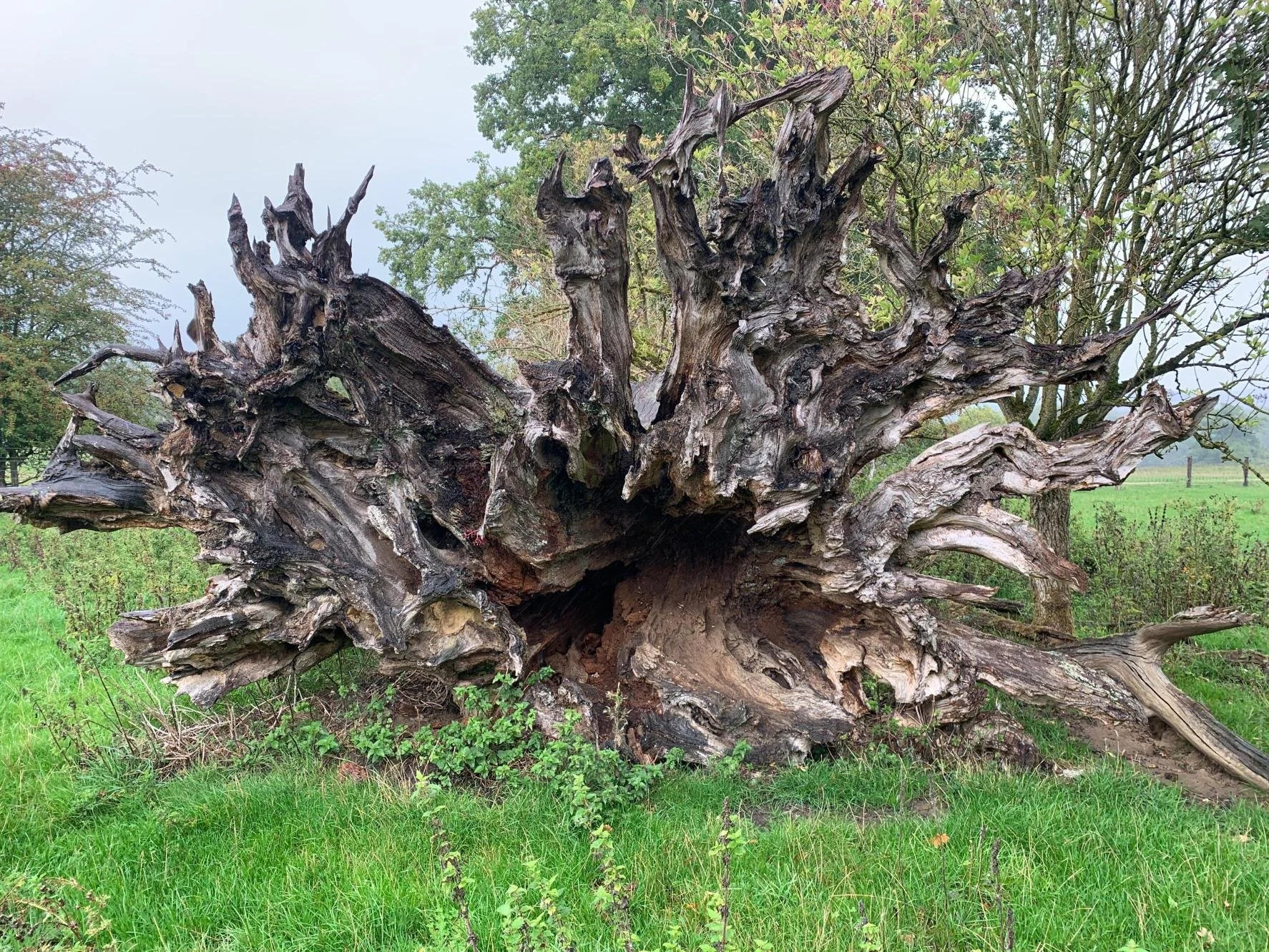
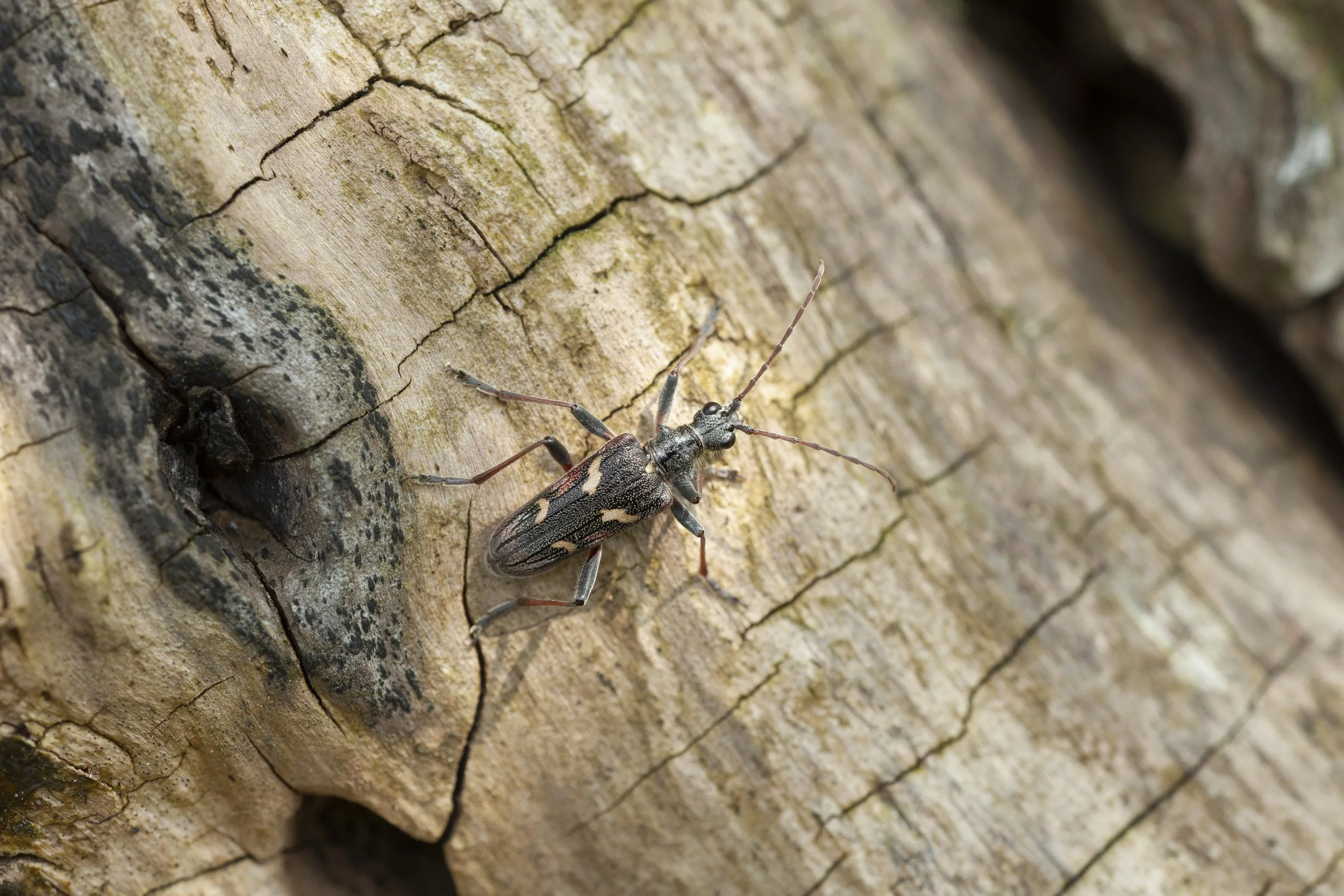
Many different species rely on deadwood. Saproxylic beetle species rely on deadwood for the development of their larvae. Derived from the Greek sapros meaning ‘rotten’ and xylon meaning ‘wood', up to 650 UK species are thought to need deadwood at some point in their lifecycle. Their grubs often feed on wood softened by fungal decomposition, or on the fungal bodies themselves. By burrowing into wood as they go, they are also given some protection from predators.
Woodland birds, such as woodpeckers, will prefer to peck at deadwood where these beetles are hiding. They have evolved strong beaks, long tongues and behaviours to help them extract invertebrates from deadwood.
Several bat species use crevices beneath bark created by woodpeckers or rot holes in trees for roosting, hibernating and even breeding. Older trees are important roosting sites as they tend to contain more deadwood and damaged areas which offer safe, dry cavities.
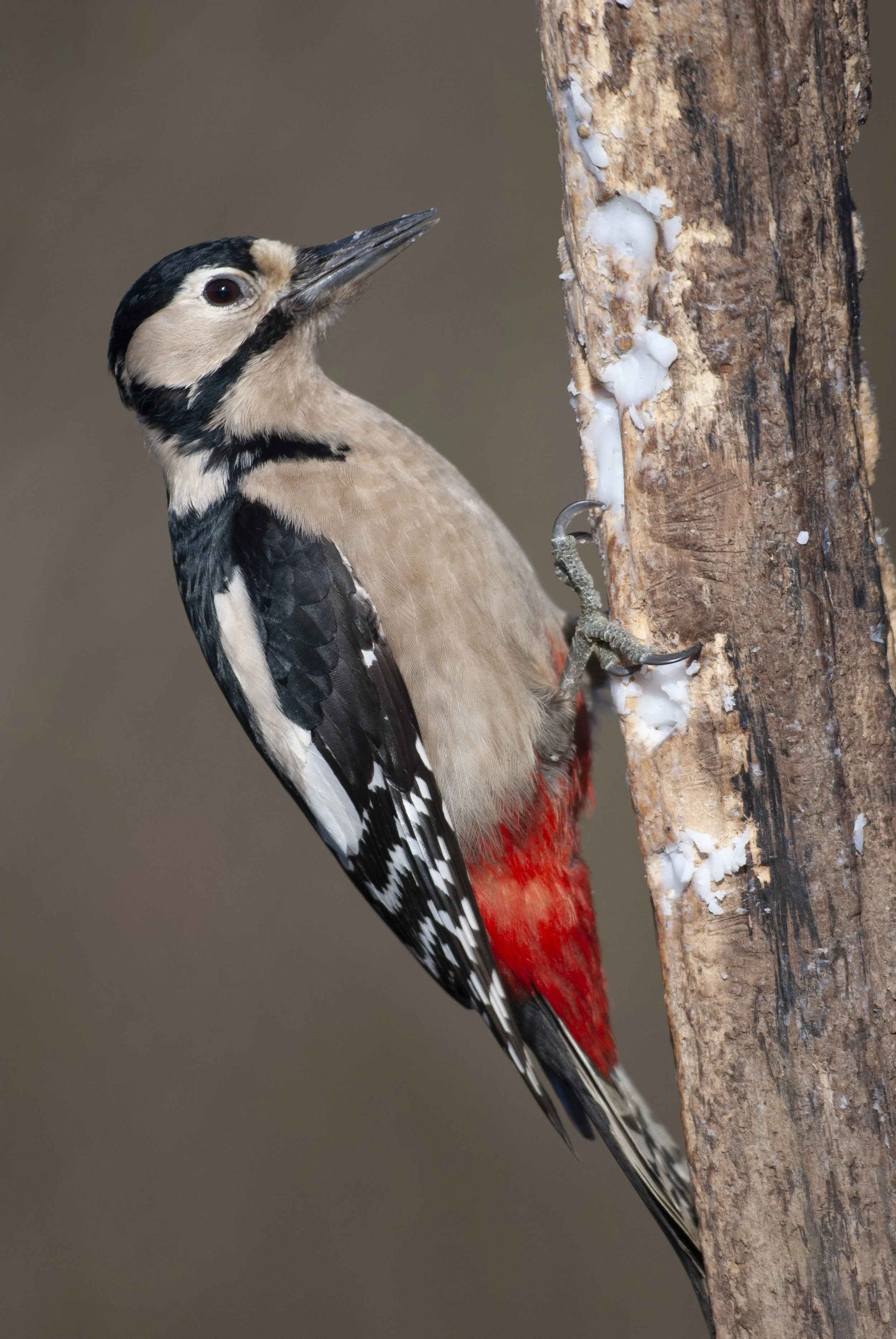

Across woodlands, there are often large gaps between the ages of trees. Some are less than a hundred years old, and some are 400+ years old. The older a tree gets, the more species it can support as it starts to develop 'veteran features' such as dead branches, decaying cavities and rot holes. We can bridge the gap between the old trees and young through a technique called veteranisation.
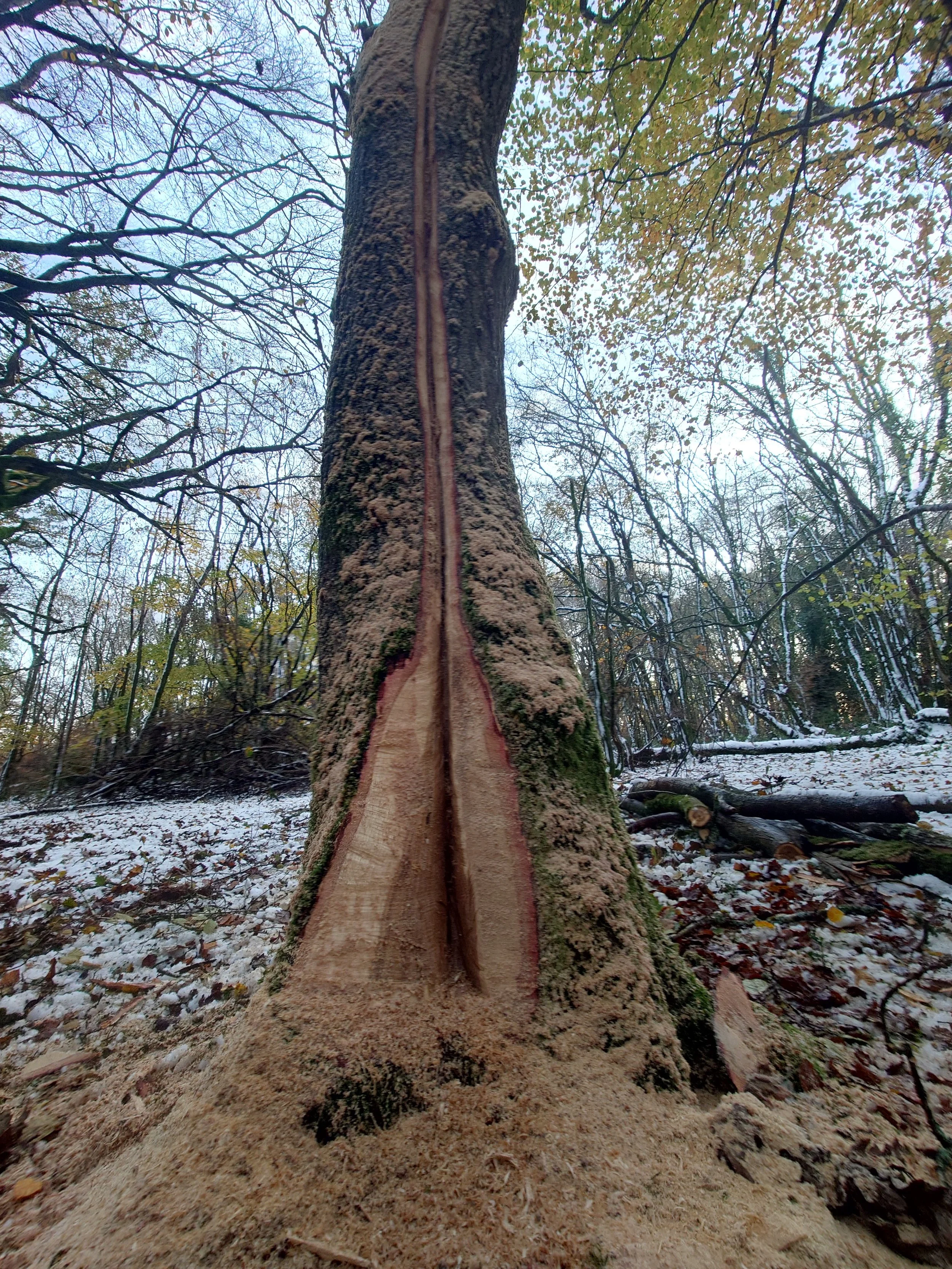
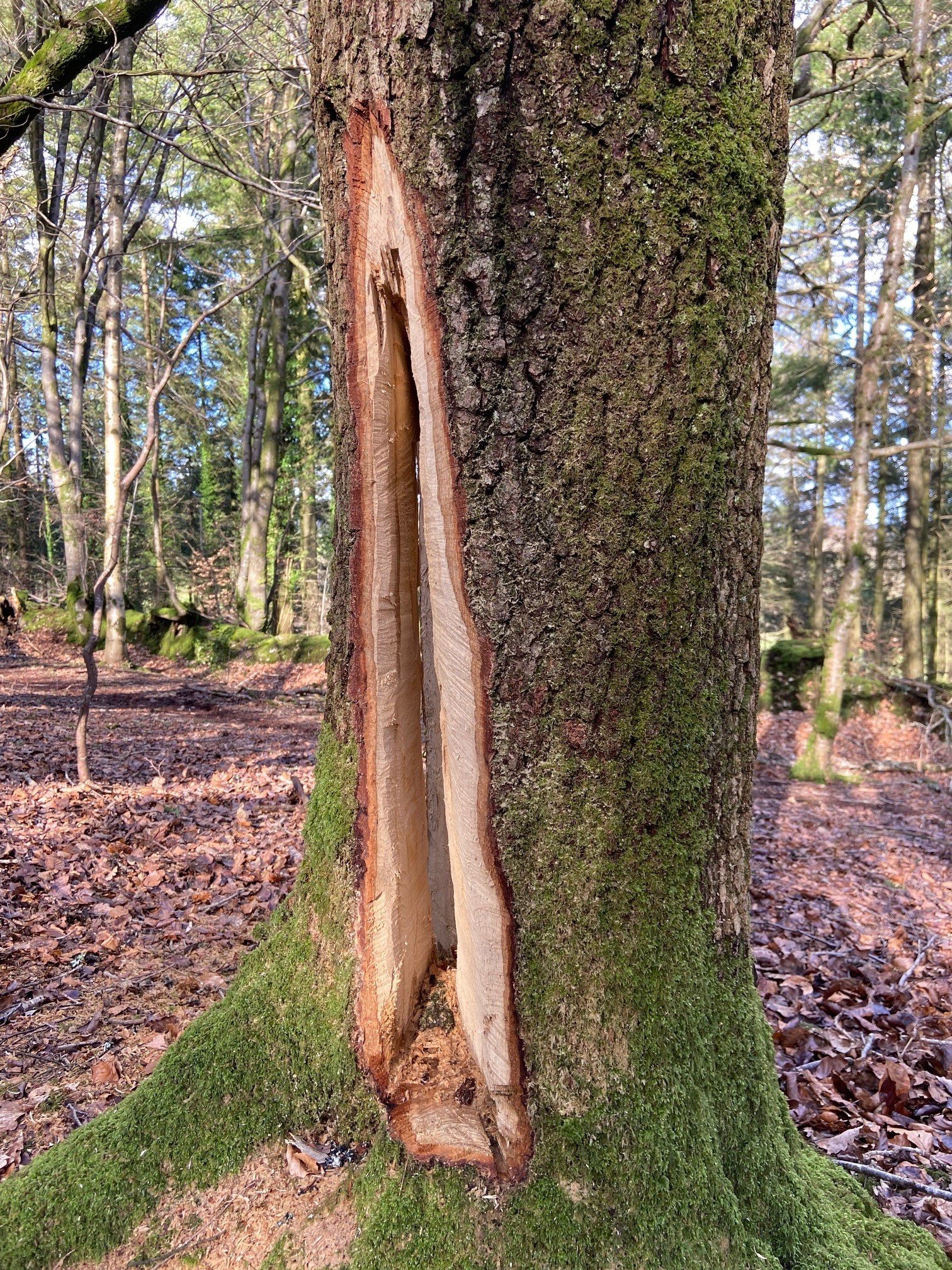
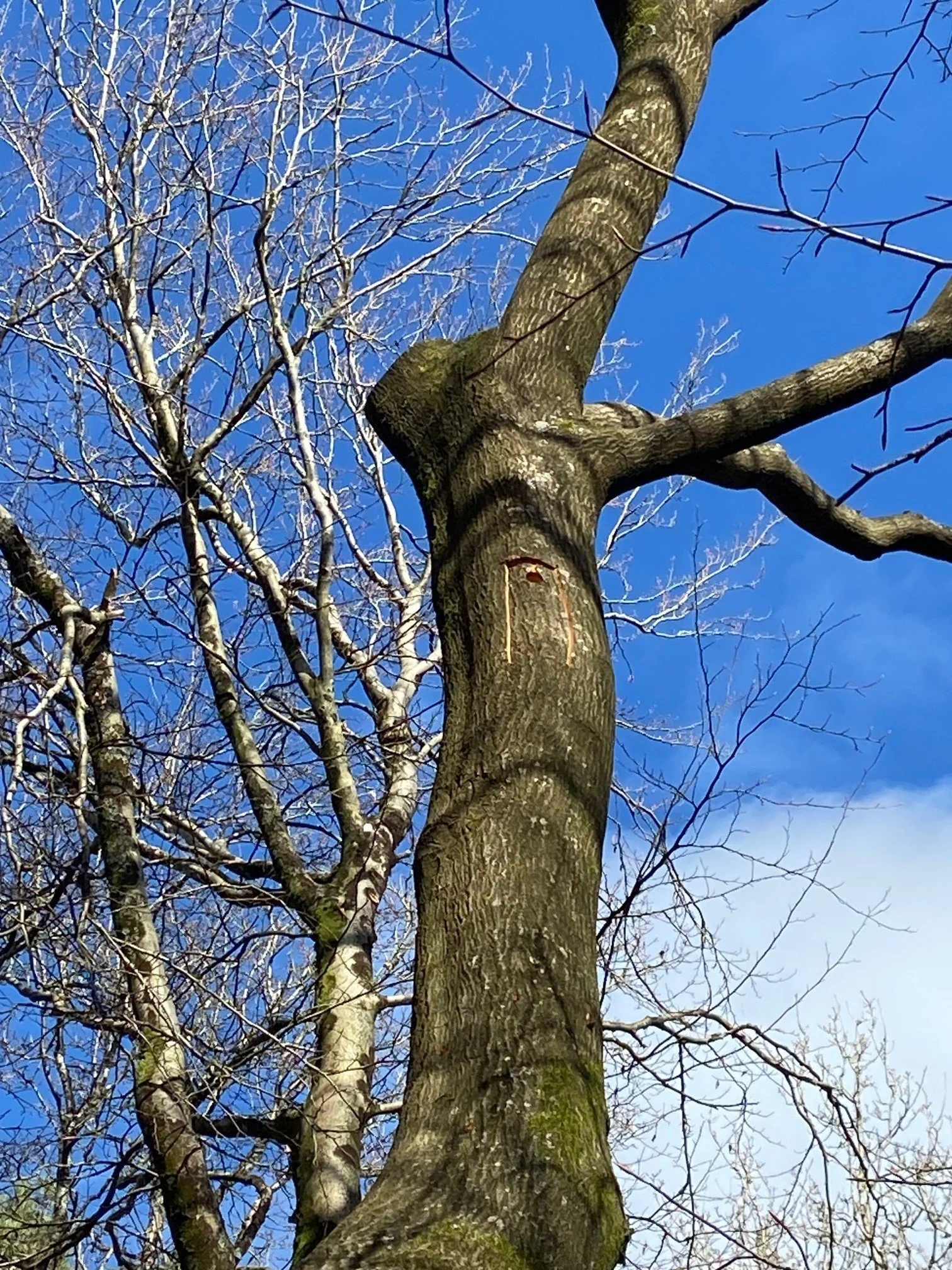
Veteranisation is where younger trees are intentionally ‘damaged’ in a way which may speed up the development of valuable habitats that would otherwise only be found on ancient and other veteran trees. The idea behind it is to try to mimic nature using tools. The techniques should not kill the trees but instead encourage the decay process to develop at a younger age, thus potentially shortening the development time for habitats usually only found in old trees. This technique would never be done on an ancient or veteran tree.
Examples of this process are creating holes, nooks and cracks where water can pool, fungi can colonise and beetles can crawl. Below are some pictures to highlight these can be done created creatively:



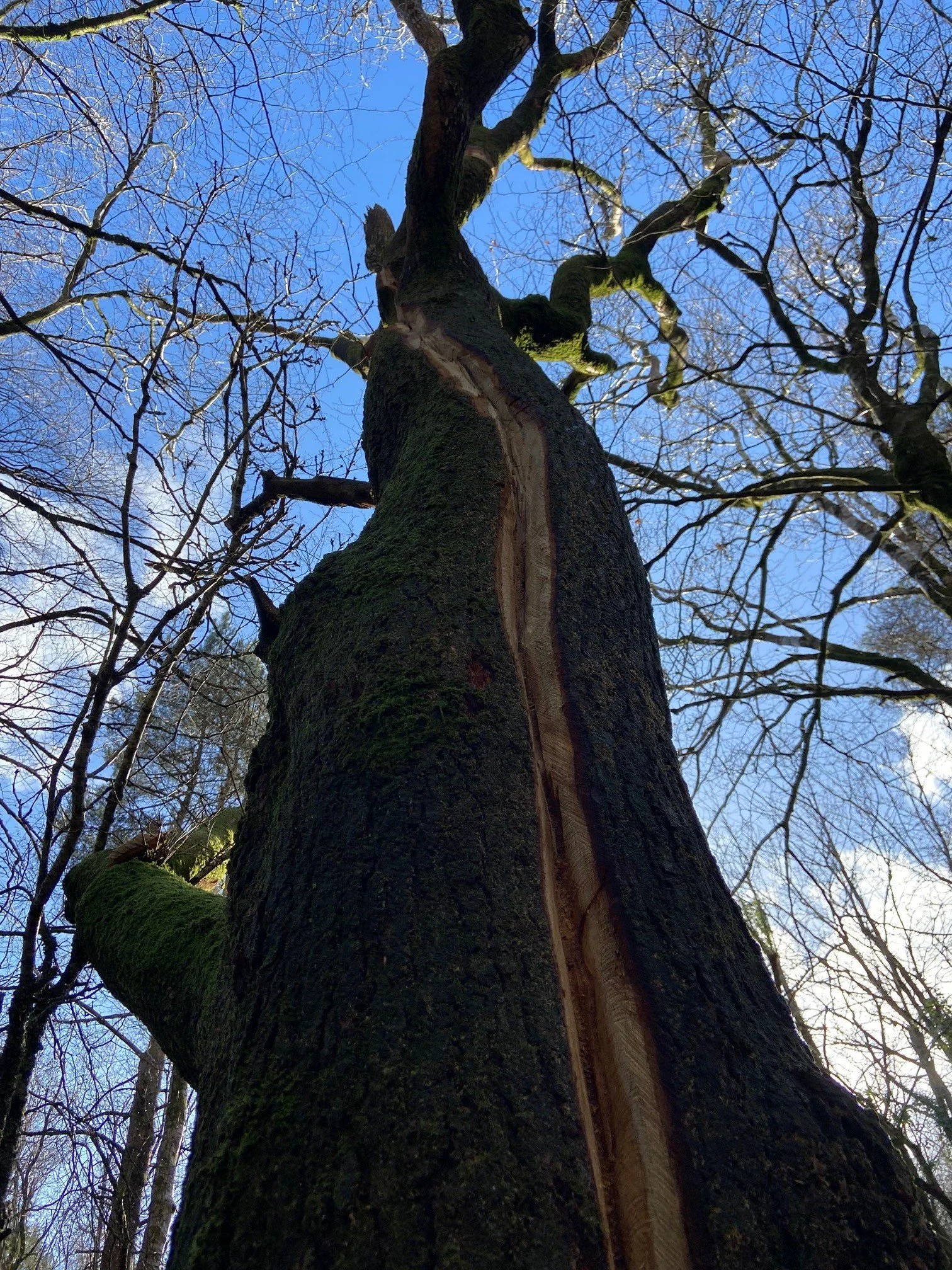
This helps fill a missing gap in the habitat selection for niche birds, beetles, and bats.
On woodland creation sites, like Yonder Oak, there are no trees old enough to create veteran features. This means we have to be more creative, and this has led to the creation of Frankenstein trees.
Thanks to funding from Screwfix, we were able to undertake restoration work which involved removing beech trees that were casting shade on the forest floor. This allows light to reach the forest floor, allowing a more diverse woodland to re-establish. The beech trees travelled to their new home at Yonder Oak to be created into what has become Frankenstein trees.
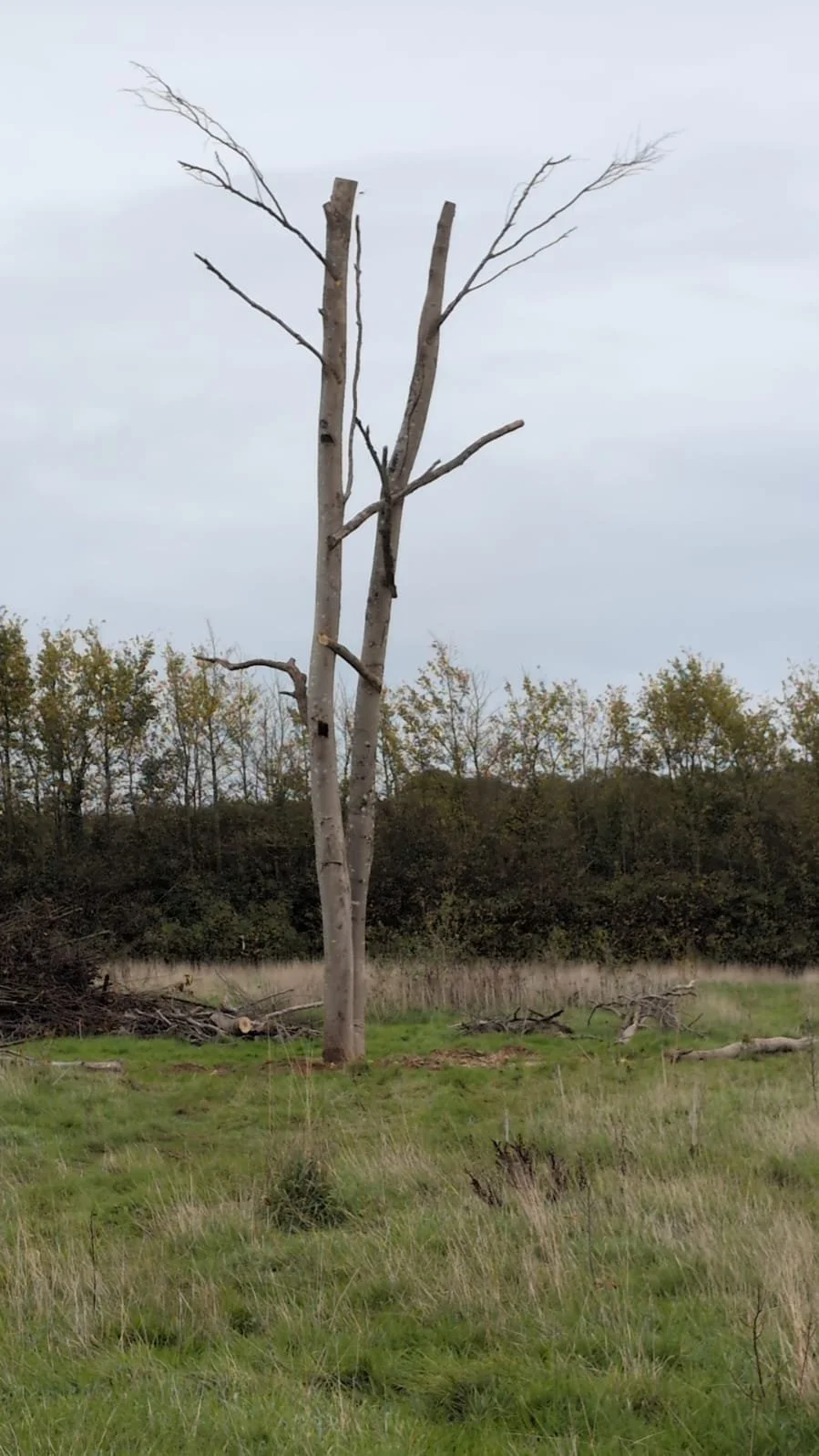
Frankenstein trees are made of beech trunks and branches bolted together to make perch posts for birds of prey as well as creating standing deadwood.
Credit: Sam Hamer
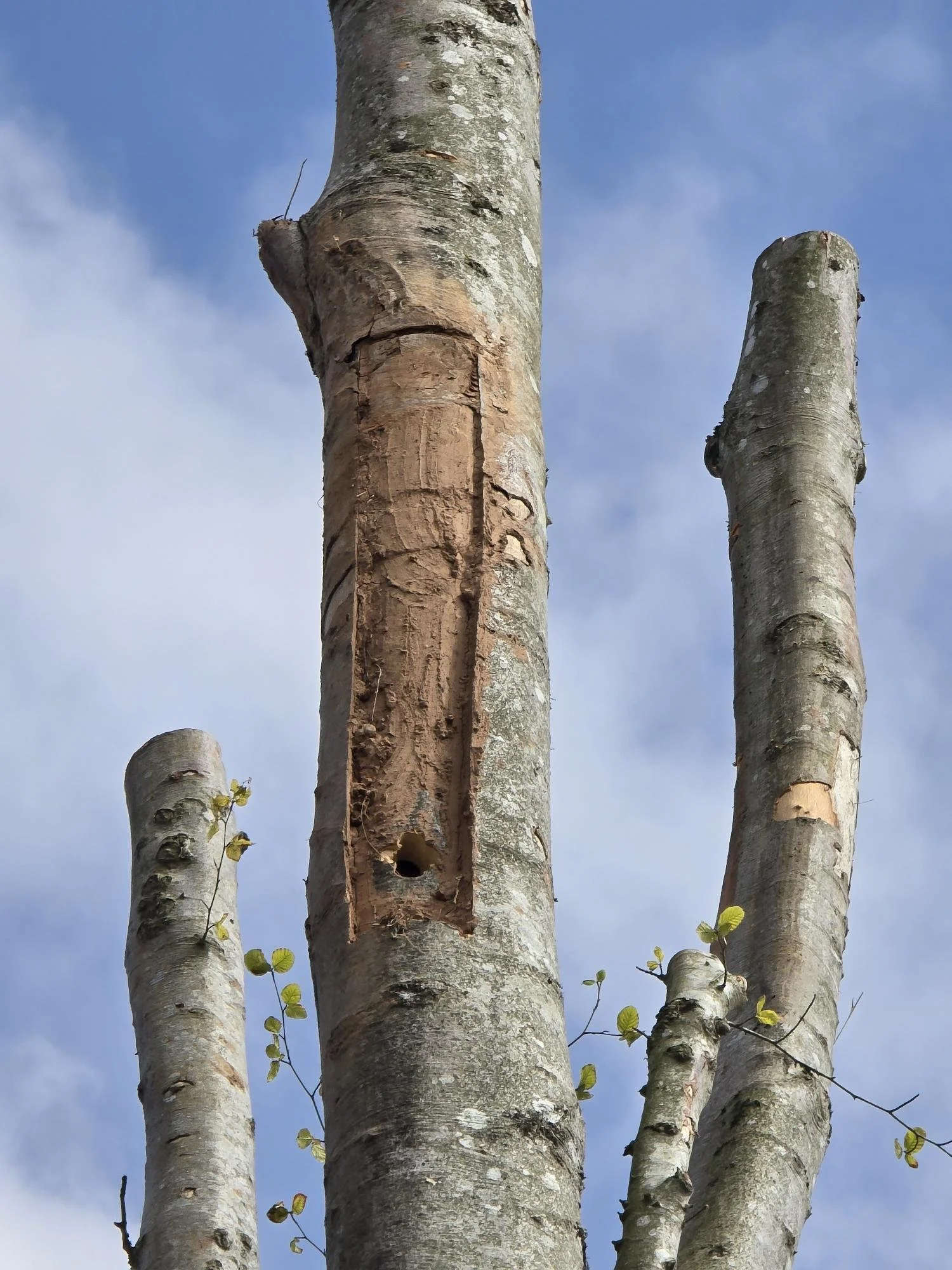

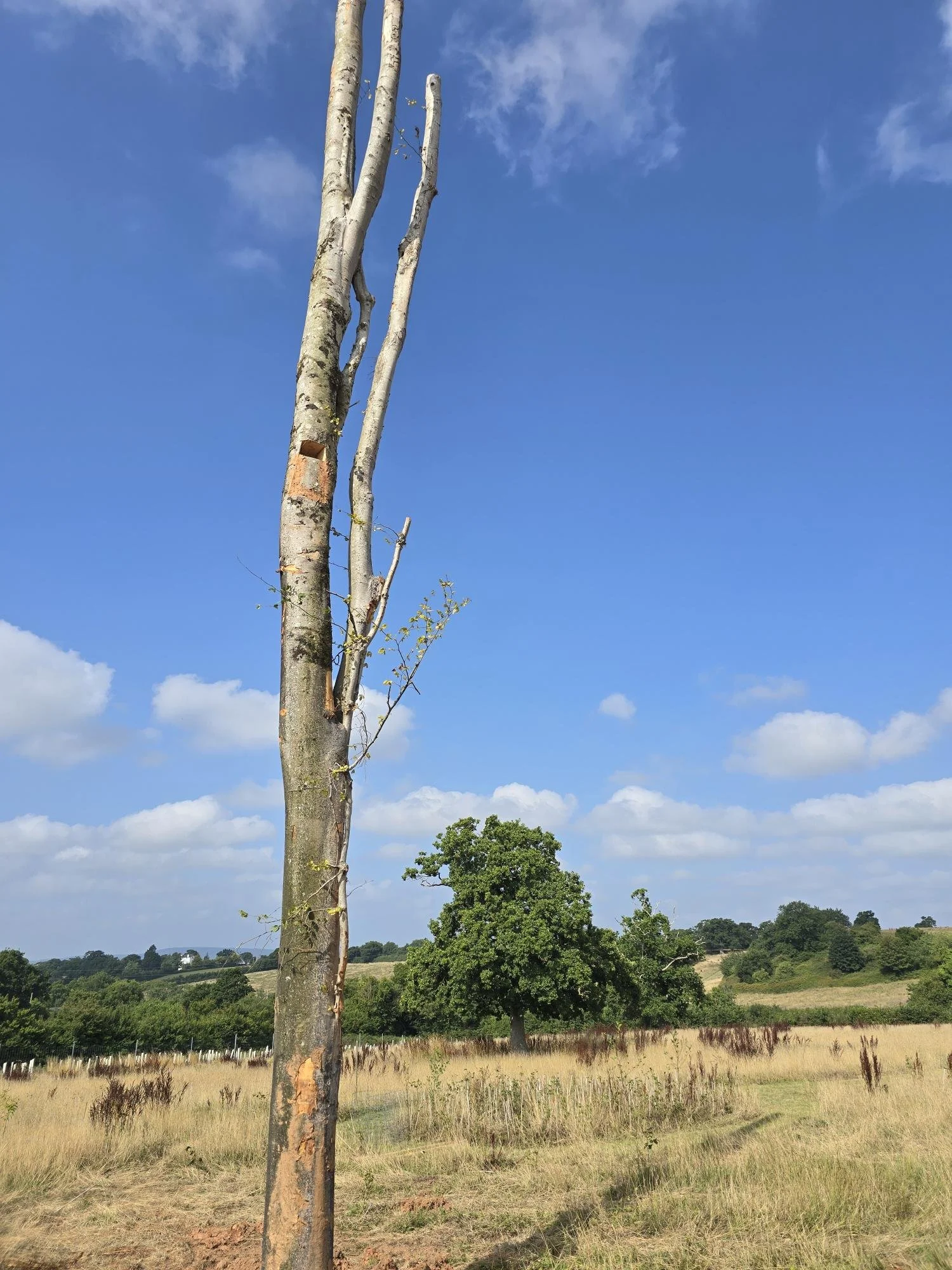
We placed these large beech trunks vertically in the ground and bolted on branches to re-create a dead standing tree. We have therefore created this rare habitat for deadwood specialists, with the aim of increasing biodiversity on site.
A consequence of these new Frankenstein trees is that we have made perch posts for birds of prey. This is very handy as we have created the perfect habitat for voles after planting lots of young trees onsite, and voles happen to be a favourite snack of the birds of prey. These voles love hiding in the long grass and nibbling the bark of the saplings. The birds of prey have a great vantage point from their new perch post and can keep the population of voles under control.
These trees will decompose slowly, returning essential nutrients to the soil and creating new habitats for fungi, beetles and insects.
A single tree can offer so much in its lifetime, providing food and shelter for wildlife, as well as multiple benefits for us too. And by quietly connecting us with nature, trees help us share stories and memories that are important, not just for our history and heritage, but also to us personally.
By planting a tree, standing up for one currently under threat or recording ancient and veteran examples to our Ancient Tree Inventory, you’ll be making sure the UK’s trees can keep on telling their stories long into the future.