
Stories of the South West’s Temperate Rainforests
Written by: Alejandra Hart
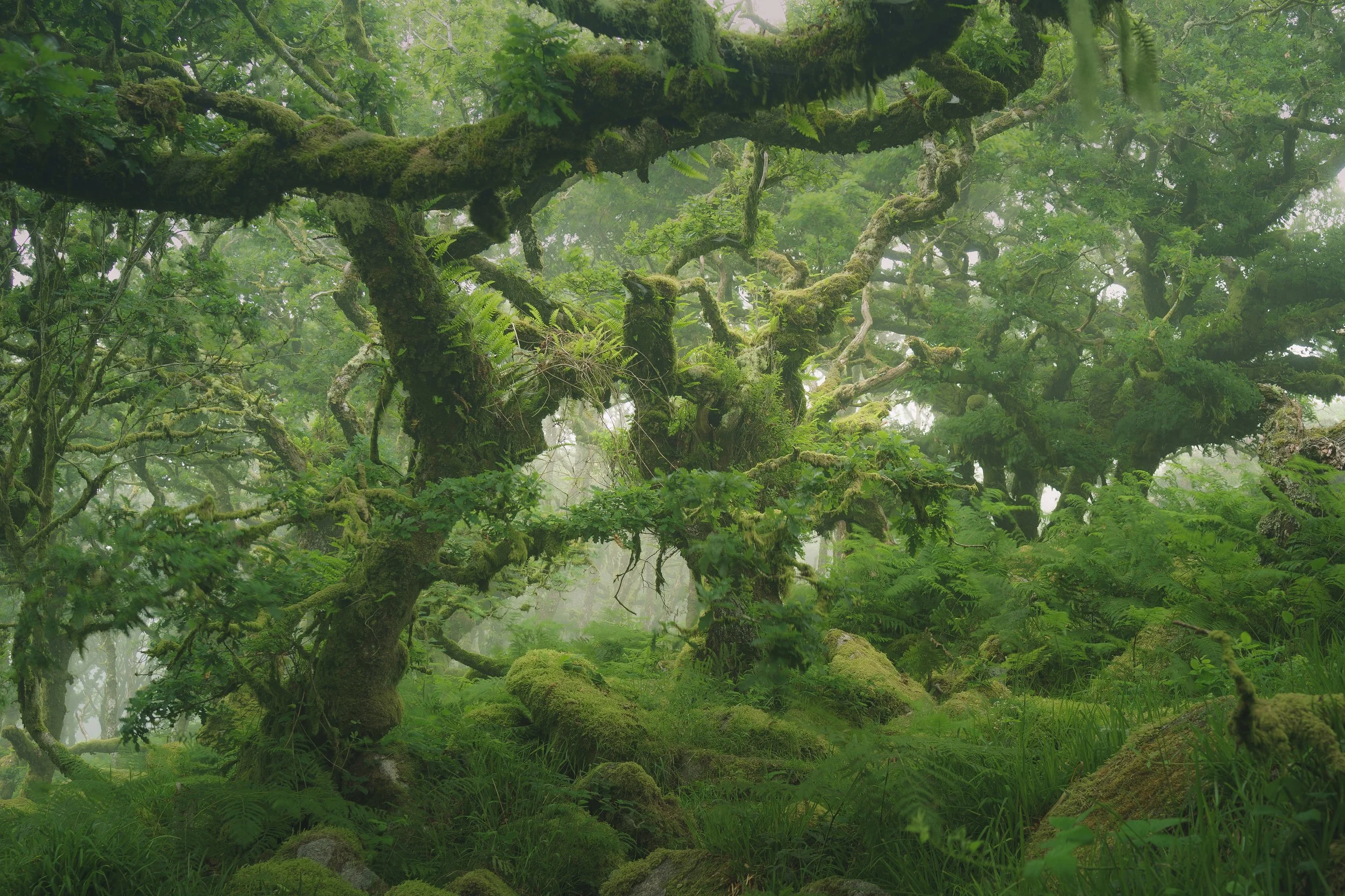
Ancient oak branches cloaked in moss and lichens in Dartmoor’s temperate rainforest. Credit: Lee Cooper
As winter turns to spring, temperate rainforests begin to wake. These biodiverse woodlands come alive with mosses brightening branches, lichens softening the bark of trees, and birdsong returning to the forest. Over centuries, they have been heavily affected by deforestation, grazing, and mining, leaving them fragmented and in need of recovery.
Restoration work is underway, but awareness is essential. People need to know these forests exist before they can help protect and restore them. At the Woodland Trust, we believe storytelling, art, music, and poetry are essential tools for raising that awareness. They bring the forest to life in ways that statistics and reports alone cannot.
Recovering the Rainforest Magazine
To capture and share stories from across our restoration work, we created the Recovering the Rainforest Magazine. It features contributions from ecologists, foresters, volunteers, and partners, highlighting both the wildlife and the people involved in rainforest recovery.
The cover, illustrated by local artist Emma Reith, brings together keystone temperate rainforest species including lichens, mosses, pine martens, beavers, and salmon. This beautiful illustration shows the links between forest, river, and sea and reminds readers that temperate rainforests are part of a wider ecosystem to which we are all connected.
The magazine is now available to read online here, and you can purchase a print of the cover here.
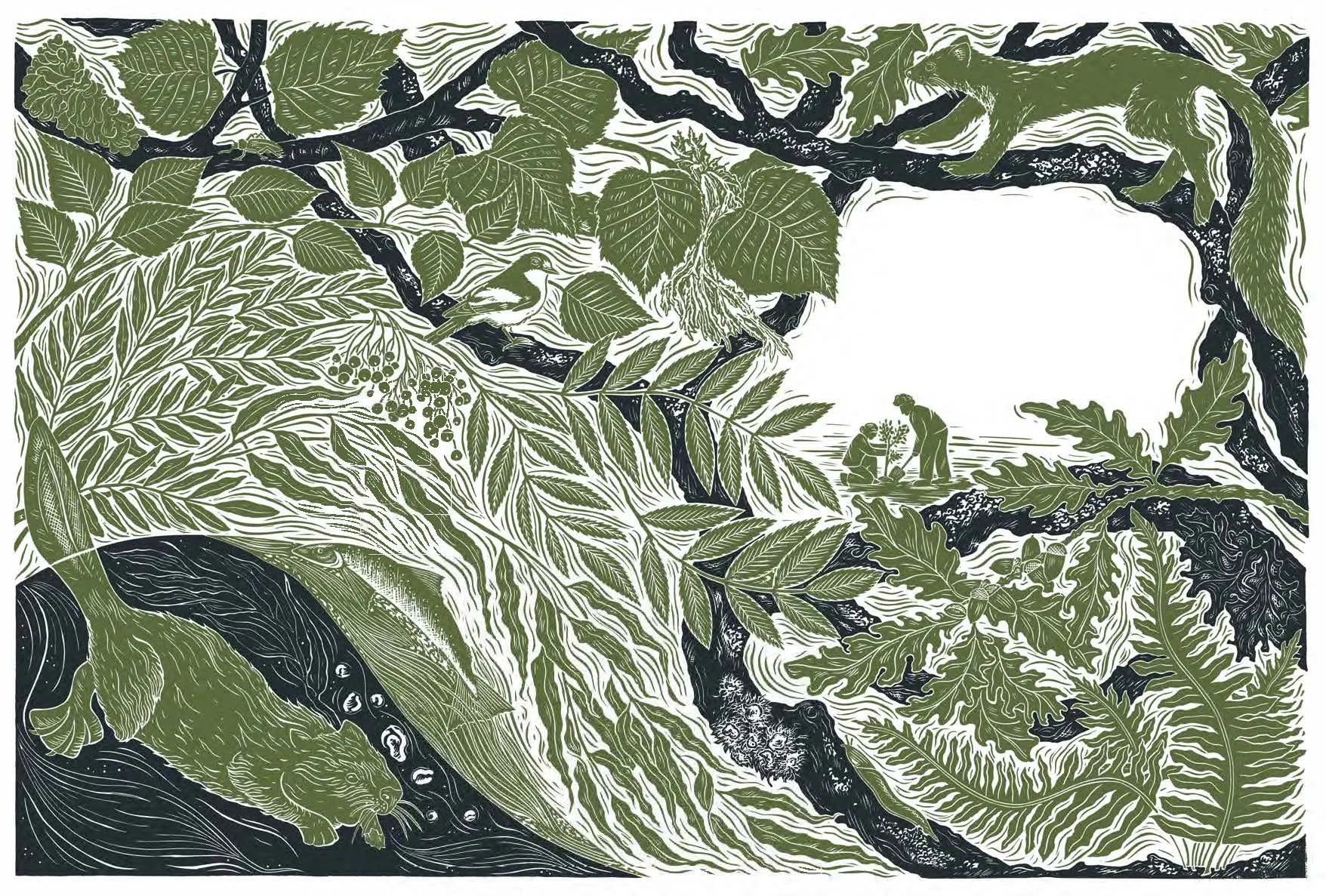
Cover illustration for the Recovering the Rainforest magazine by artist Emma Reith, featuring species found in Britain’s temperate rainforests. Credit: Emma Reith
The power of storytelling, art, music, and poetry
Creative communication is a powerful way to engage people with environmental issues. Narratives and storytelling help us understand complex ecological systems and connect emotionally with nature. Art and music make abstract environmental issues tangible, while poetry and narrative communicate urgency and inspire action.
Research in environmental education shows that narrative-based learning improves awareness and attitudes by helping people relate emotionally to environmental content. It makes complex information easier to understand and remember, builds empathy for species and habitats, and encourages positive environmental behaviour.
Storytelling has long been used across cultures to pass on ecological knowledge. In many societies, oral traditions have formed the backbone of how people understand and live with landscapes. In the UK, reconnecting creativity with nature can help people feel part of the ecosystems that support them, and motivate the care and action needed to restore them.
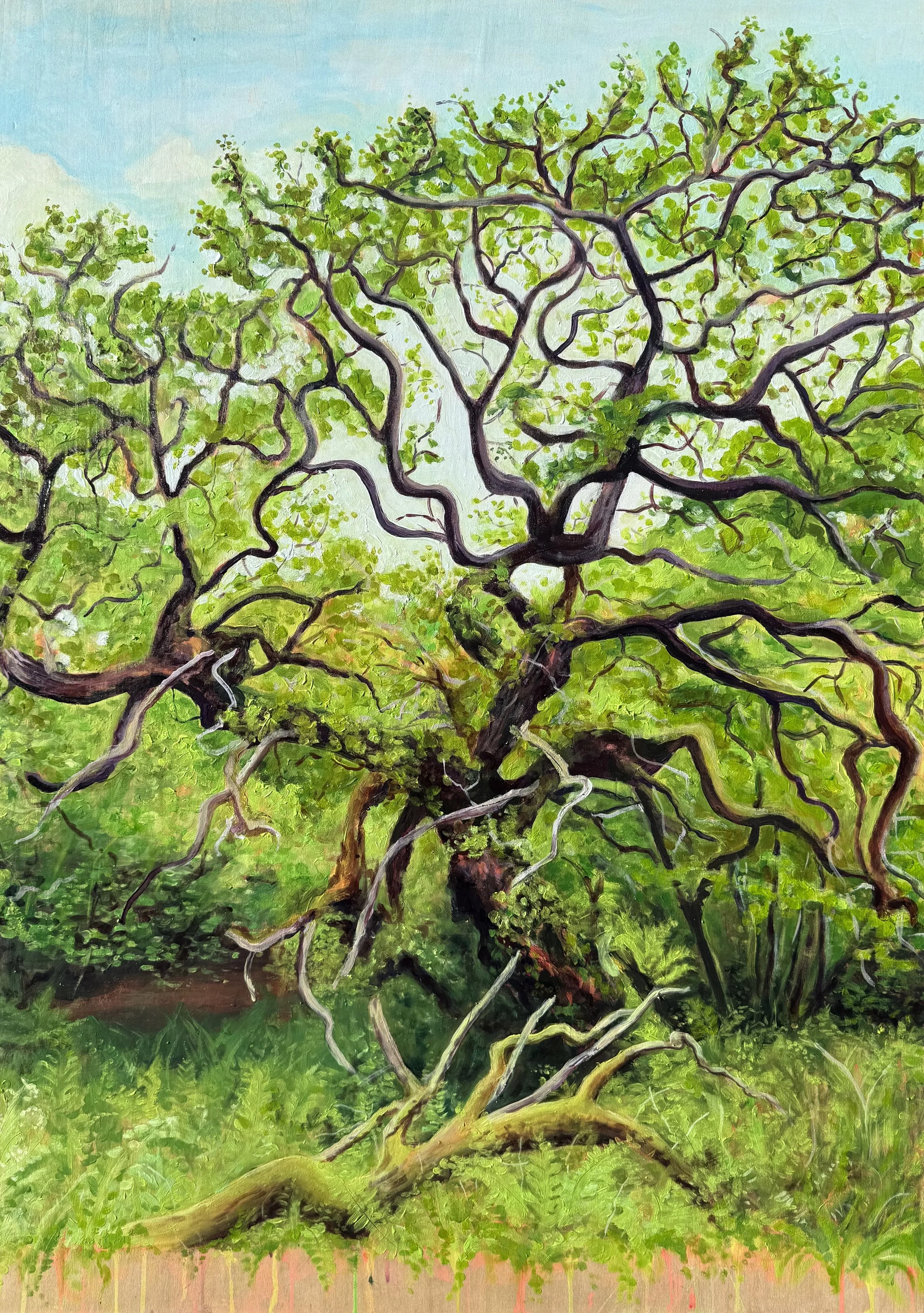
The Mother Tree is an original acrylic and water-soluble oil painting on wood panel (A1, 59.4 × 84.1 cm), inspired by a revered oak standing at the heart of Cabilla Woods, Cornwall - home to the charity The Thousand Year Trust. Credit: Katie Sims
L.Y.R: Music in the Rainforest
To explore this approach, we worked with L.Y.R, including author and British Poet Laureate Simon Armitage, singer-songwriter Richard Walters, and multi-instrumentalist & producer Patrick Pearson, to create a live music video in a patch of temperate rainforest in Dartmoor. Their album Dark Sky Reservation reflects how nature can calm, sustain, and connect people, even in a busy and disconnected world.
By filming and performing within the rainforest, the setting becomes part of the story itself. The project demonstrates that music and creativity can help people experience forests emotionally and build an awareness that supports conservation and turns into action.
Seeing the forest through a creative lens
In addition to music, literature and visual art play an essential role in rainforest recovery. Writers such as Guy Shrubsole (The Lost Rainforests of Britain) and Merlin Hanbury Tenison (Our Oaken Bones) explore the cultural and ecological importance of Britain’s rainforests, helping readers understand both the history of woodland loss and the possibilities for restoration.
Aidan Meighan’s book The Folklore of Trees, written and illustrated by the author with a foreword by Chris Packham, explores the myths, legends and stories associated with trees across cultures. From the Major Oak of Sherwood Forest to the ancient baobabs of Madagascar, the book brings together folklore, cultural history and personal reflection.
This book reminds us of the enduring power of stories to connect us to our history, to nature and hopefully to an ever-greener future. We need to love life, we need to love trees. - Chris Packham, Wildlife TV Presenter & Campaigner
Visual artists also help us see these forests in new ways. Andrew Gifford’s exhibition Moss Light, Painting the Atlantic Rainforestcaptures the shifting light, texture, and structure of these woods, details that may otherwise go unseen. Painter Katie Sims, who appeared on Landscape Artist of the Year, has also created work inspired by Cabilla in Cornwall, translating the atmosphere and layered textures of Atlantic temperate rainforest into paint.
Creative work like this helps us understand what exists, what has been lost, and what is possible through restoration.
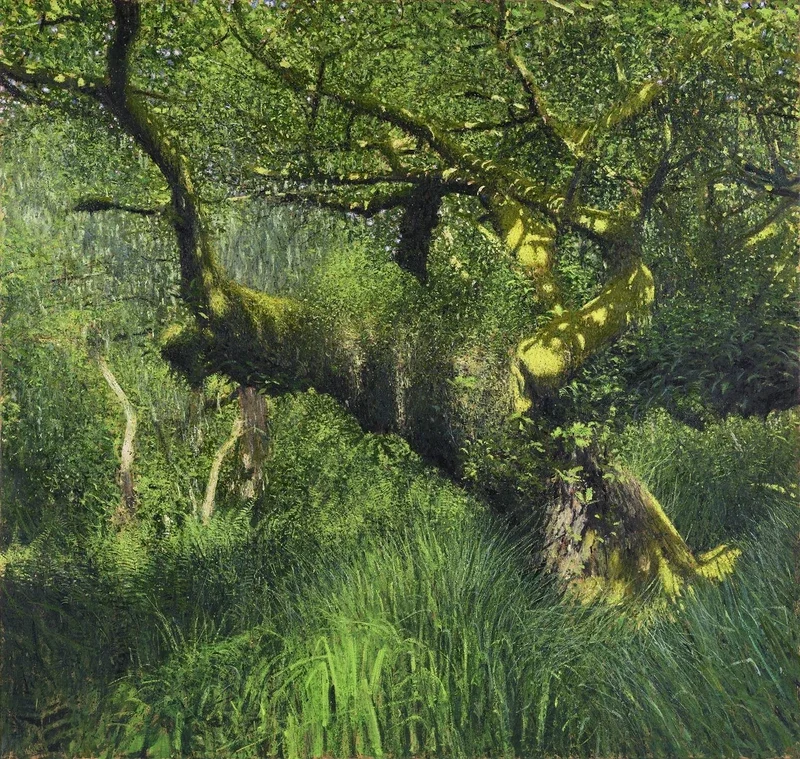
Andrew Gifford, Oak in Height of Spring, Wistman’s Wood, Dartmoor, 2024, oil on canvas, 190 x 200 cm. Credit: Courtesy of John Martin Gallery.
Get involved!
Stories, art, and music help us feel part of ecosystems rather than separate from them. They complement ecological restoration by reconnecting communities with the land.
You can support our temperate rainforest recovery work in several ways:
Read and share the Recovering the Rainforest Magazine
Join our volunteer days
Engage with artists, writers, and musicians and be part of a growing creative movement around rainforest recovery
Every story told, artwork created, and tree planted strengthens the connection between people and nature. Through creative communication and restoration work, we can remember we are a temperate rainforest nation and ensure these forests continue to thrive for future generations.