
What Can Temperate rainforests around the world teach us?
Written by: Bella Williams
A forest seen from the sea. Credit: Jasper Abel and PlantOne
What does it mean to be a rainforest nation?
The UK is now one of the most nature-depleted countries in the world, ranking among the bottom 10% of countries for biodiversity intactness globally. Alongside this, we rank 55th out of 61 countries studied for nature connectedness. Research increasingly suggests that our relationship with the natural world is closely linked to our physical and mental wellbeing, as well as the ways we value, care for, and manage the land. The fragmented state of Britain's temperate rainforest, with only around 10% of its original extent remaining, is a symptom of this wider story of ecological decline and disconnect.
These two issues cannot be tackled in isolation. Temperate rainforests once covered 20% of our landmass, at a time when our culture and practices were deeply entwined with place and the living world. As our landscape and culture have moved on, our relationship with temperate rainforest has become an important part of our history that has been largely forgotten. Reconnecting with our identity as a rainforest nation offers an opportunity to deepen our relationship with our own culture and place-based knowledge, as well as to reimagine what could be possible for ecological restoration in the UK.
But how can we imagine something we can barely remember?
Fortunately, the UK is not the only rainforest nation. Across the world, temperate rainforests survive in a handful of regions, each with their own ecology and ways of relating to the living world. Looking to these rainforest nations cannot tell us exactly how to restore our own, but their different approaches can offer practical ideas for restoring the forests, rivers and ecological relationships that sustain them. In doing so, they can show us what a deeper connection with our rainforests can look like, offering a new lens through which to understand our own culture and rainforest heritage.
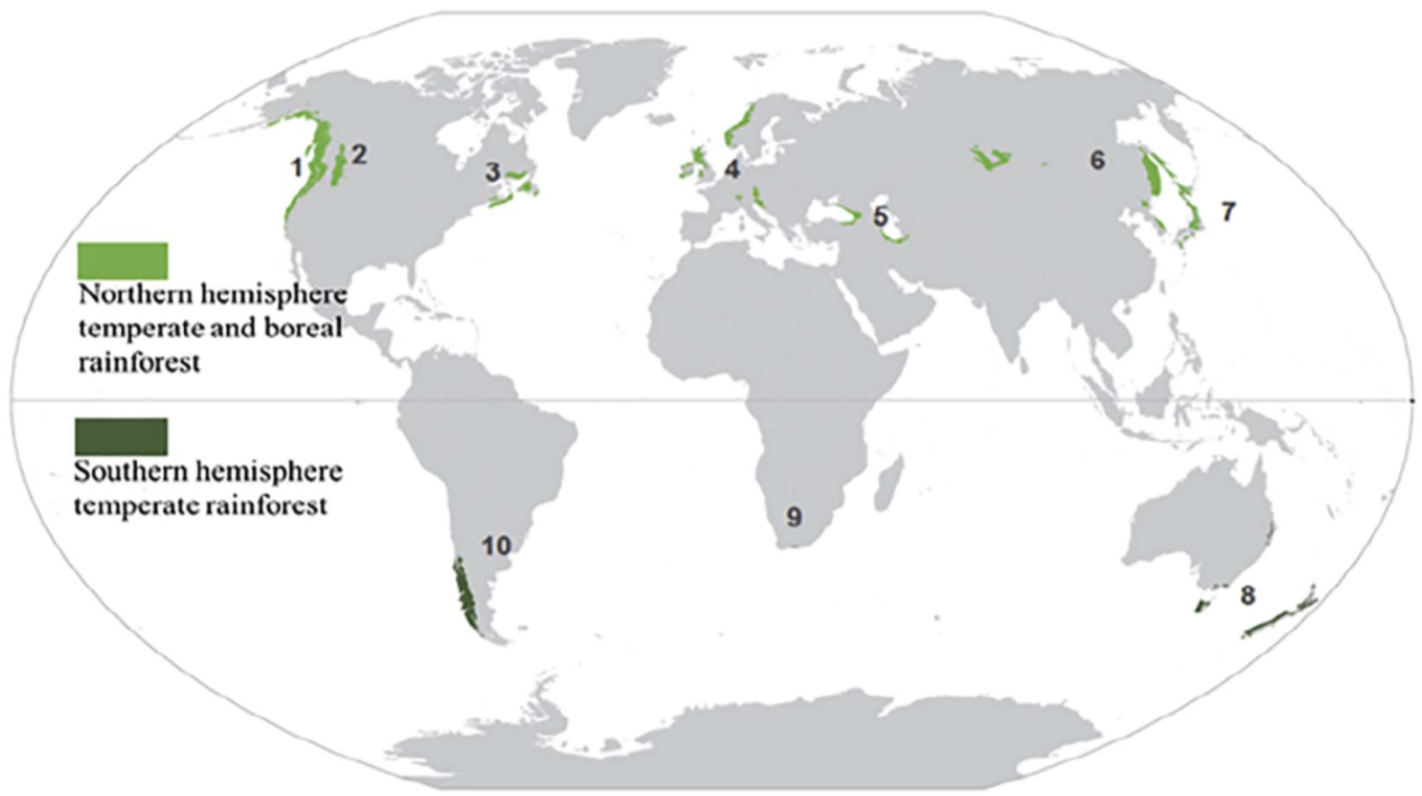
Rarer than tropical rainforests, temperate rainforests cover just 1% of the earth’s surface. Credit: World Merge, DellaSala
Where Forest Meets River: The Pacific Northwest
The of the largest remaining expanse of temperate rainforest on earth stretches from Northern California through Oregon and British Columbia to Alaska, more than a thousand miles of forest. The rainforests of the Pacific Northwest are defined by towering old growth giants such as sitka spruce, douglas fir and coastal redwoods, and are home to remarkable species including salmon-fishing sea wolves, white-coated Kermode or ‘spirit’ bears, sea otters and migratory whales. These forests are among the most biomass and carbon dense ecosystems on earth, with some old-growth stands containing extraordinary quantities of living and dead organic matter.


Beyond their remarkable wildlife, these forests offer something that has become increasingly rare in Britain: a glimpse of what a healthy forest ecosystem looks like when natural processes are allowed to shape it.
Within the vast forests of the Pacific Northwest are rivers where these processes remain relatively intact. Fallen trees become part of the river. Giant trunks span channels, slowing water flow, trapping sediment, and creating pools and sheltered areas to nurse young fish. As these trunks break down they support a wealth of fungal and insect life, providing a vital food source for the young fish beneath them. The wood itself also holds carbon within the ecosystem.
Together, these interconnected processes allow water to slow, spread, and settle across the landscape, rather than being rapidly channelled downstream. In the UK by contrast, centuries of river canalisation and widespread clearance of deadwood have dramatically reduced the amount of woody material found in our rivers, increasing both vulnerability to flooding, and the amount of run-off entering our rivers and oceans.
This points to water as an important starting point for rainforest restoration. The Woodland Trust are beginning to put this into practice, with river restoration forming part of the early stages of rainforest recovery. At Avon Valley Woods, the stream running through the woodland has been reconnected with 2 hectares of its floodplain, creating the conditions for rainforest, wetland, and wildlife to recover alongside it.
Forests Fed by the Sea: Japan
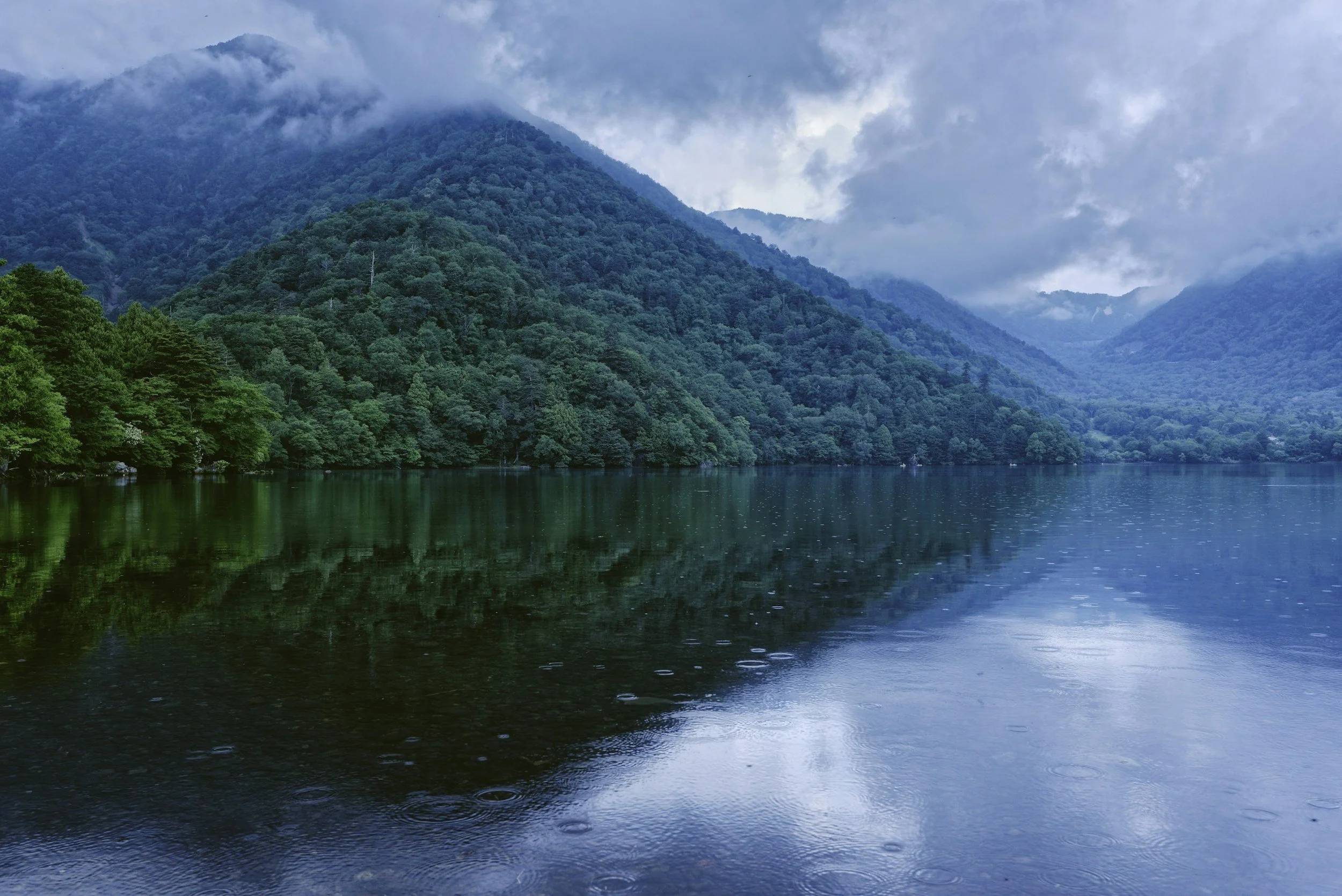
Temperate rainforests are created by moist ocean air moving inland. In Japan, mountain ranges force this moisture-laden air upwards, creating the heavy rainfall that sustains these forests. Credit: Takashi Miyazaki
On the other side of the Pacific, temperate rainforests of ancient cedar cloak the wetter parts of Japan, with some regions receiving up to 8,000mm of rain a year. By contrast, our wettest regions, considered ‘hyper-oceanic’ and supporting some of the highest diversity of lichens in Britain, receive around 1800mm a year. Some of Japan’s oldest cedars rise from forests of evergreen oaks, chinquapins and other broadleaf trees, while higher elevations give way to conifer-dominated rainforests and bamboo grasslands. These ecosystems are home to Japanese macaques, or ‘snow monkeys’, asiatic black bears, and the 5-foot long giant salamander.
From relationship with these forests came a proverb: ‘If you want to catch a fish, plant a tree.’
This saying speaks to the interdependence of land and sea, each feeding the other through a vast and complex flow of nutrients. This flow is facilitated by species that move between the two systems, such as salmon and eel, and by those that feed on them: bears, ospreys, sea eagles and humans, amongst others. What is left of the fish after predators feed eventually decays, with fungi breaking down their bodies and releasing nutrients into the soil, where they can be taken up by trees and plants. By this process, fish like salmon become part of the landscape, their bodies forming a living, or ‘biogenic’ layer through which ocean-derived nutrients cycle through the whole ecosystem.
Returning to the Pacific Northwest, researchers have found that around 22–24% of the nitrogen in the foliage of trees and shrubs beside salmon-spawning streams is derived from the ocean. In these forests, trees growing near rivers that have healthy salmon populations grow 3x faster than those where salmon aren’t present.
For Britain, where species like salmon and eel have declined or disappeared from many of our rivers, we have not only lost species, but also the ecological processes they helped drive. Restoring these species, and the ecosystems that sustain them offers a chance to restore these lost connections, allowing nutrients to move through the landscape once again, and rivers, forests, and seas to function as parts of the same living system.
When Rainforests have Rights: lessons from Australasian rainforests.
If the Pacific rainforests teach us that forests cannot be understood in isolation from the wider living systems they sustain, the rainforests of Australasia ask a different question: what happens when our laws begin to reflect that same understanding?
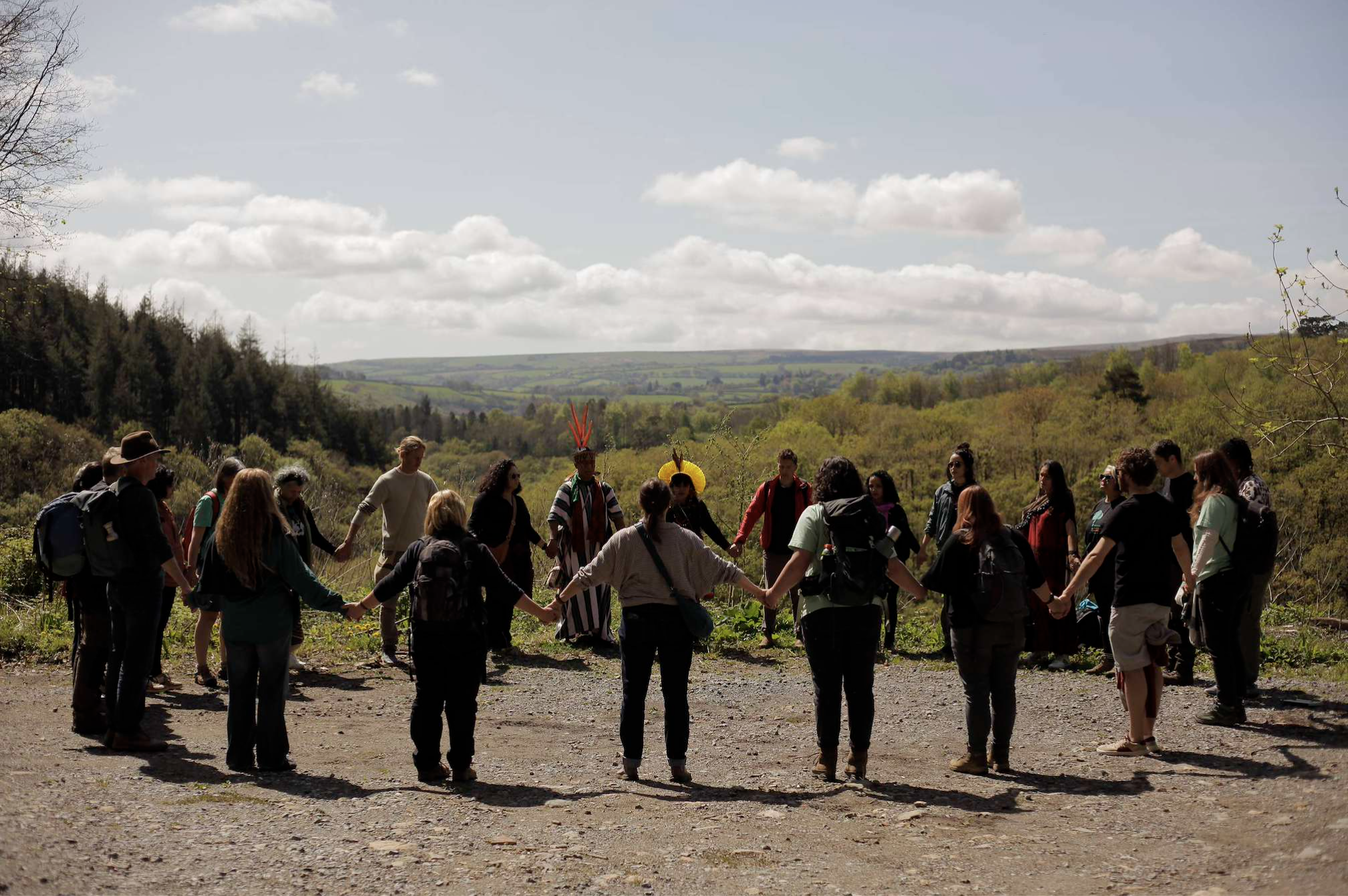
Staff members from the Woodland Trust, joined by members of NGOs and indigenous groups from the Amazon Rainforest, joining in a prayer conducted by Ju Kerexu of the Guarani people. The visit created an opportunity to share perspectives on forest stewardship and reflect on the different ways people understand and relate to the living world. Credit: Lee Magpie Photography
One of the landmark examples in the growing global rights of nature movement emerged from a struggle to protect a sacred temperate rainforest. Te Urewerea is a vast temperate rainforest on the New Zealand’s North Island, and the first specific natural entity in the world to be granted legal rights. Te Urewerea’s highlands are cloaked in red and silver beech forests, while its mist-laden lowlands contain rich communities of podocarps, an ancient lineage of conifers whose origins stretch back to the forests of Gondwana.
The forest is the ancestral homeland of the Ngāi Tūhoe people, known as the "Children of the Mist". In 2014, following a long history of Tūhoe resistance to Crown control of their ancestral lands, Te Urewera was removed from New Zealand’s colonial national park system and recognised in law as a legal entity with its own rights, powers, duties and liabilities. Rather than being owned by the Crown or transferred into private ownership, the forest effectively became an entity in its own right, with its intrinsic worth and relationship with Tūhoe recognised in law.
The story of Te Urewera offers one example of how a different relationship with the living world can shape the way a forest is protected and managed. Across the world, Indigenous Peoples steward some of the most biodiverse and ecologically intact landscapes on Earth, with their territories overlapping an estimated 80% of global biodiversity. Whilst these relationships are diverse and rooted in particular places, histories and cultures, they can offer new perspectives on connections between people and the living world that we may have lost sight of in Britain. When members of the Asháninka and Guarani peoples visited a Woodland Trust rainforest on Dartmoor, we had the opportunity to listen to their perspectives and reflect on our relationship with our own forests.
Returning Home: From Landscape to Flowscape
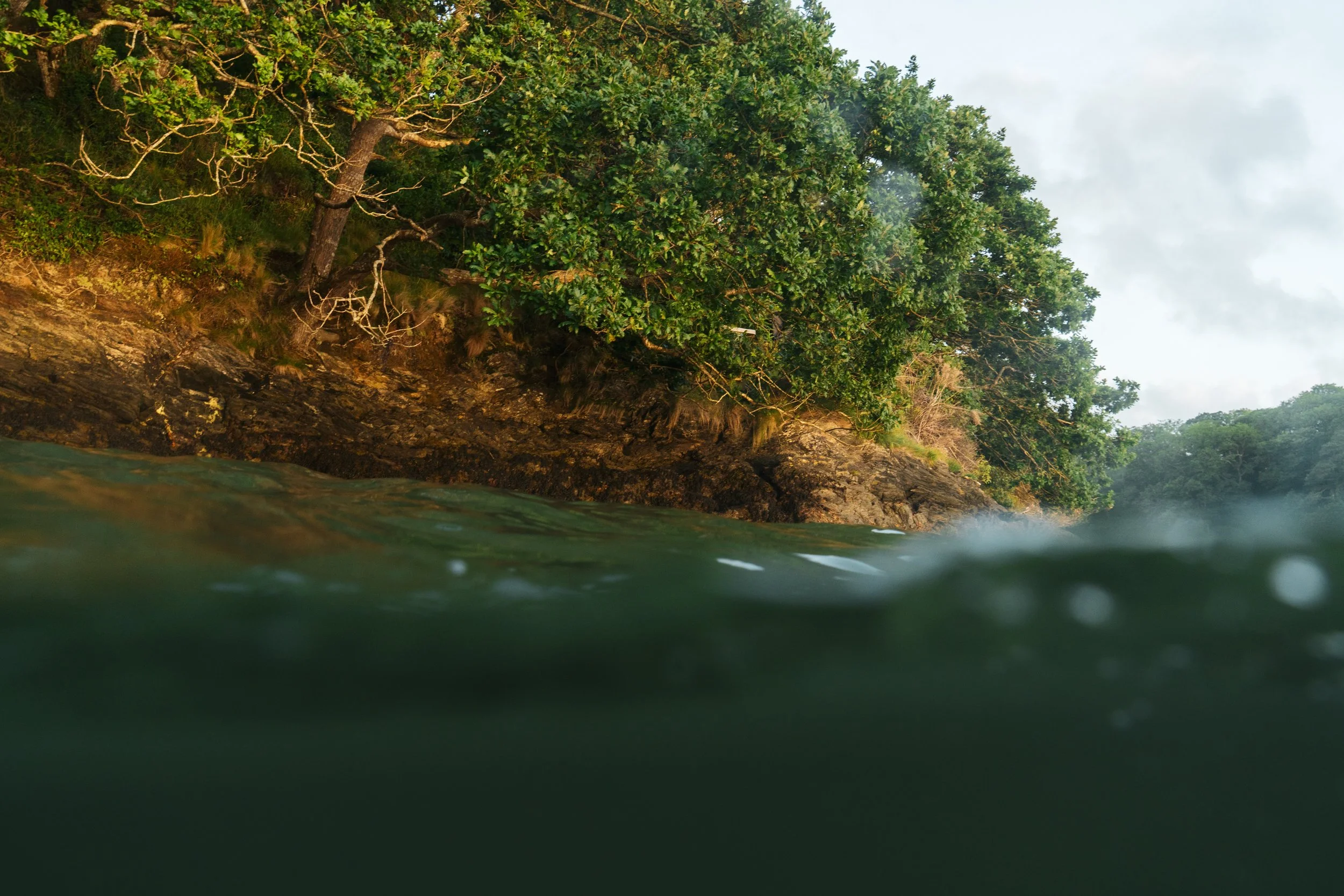
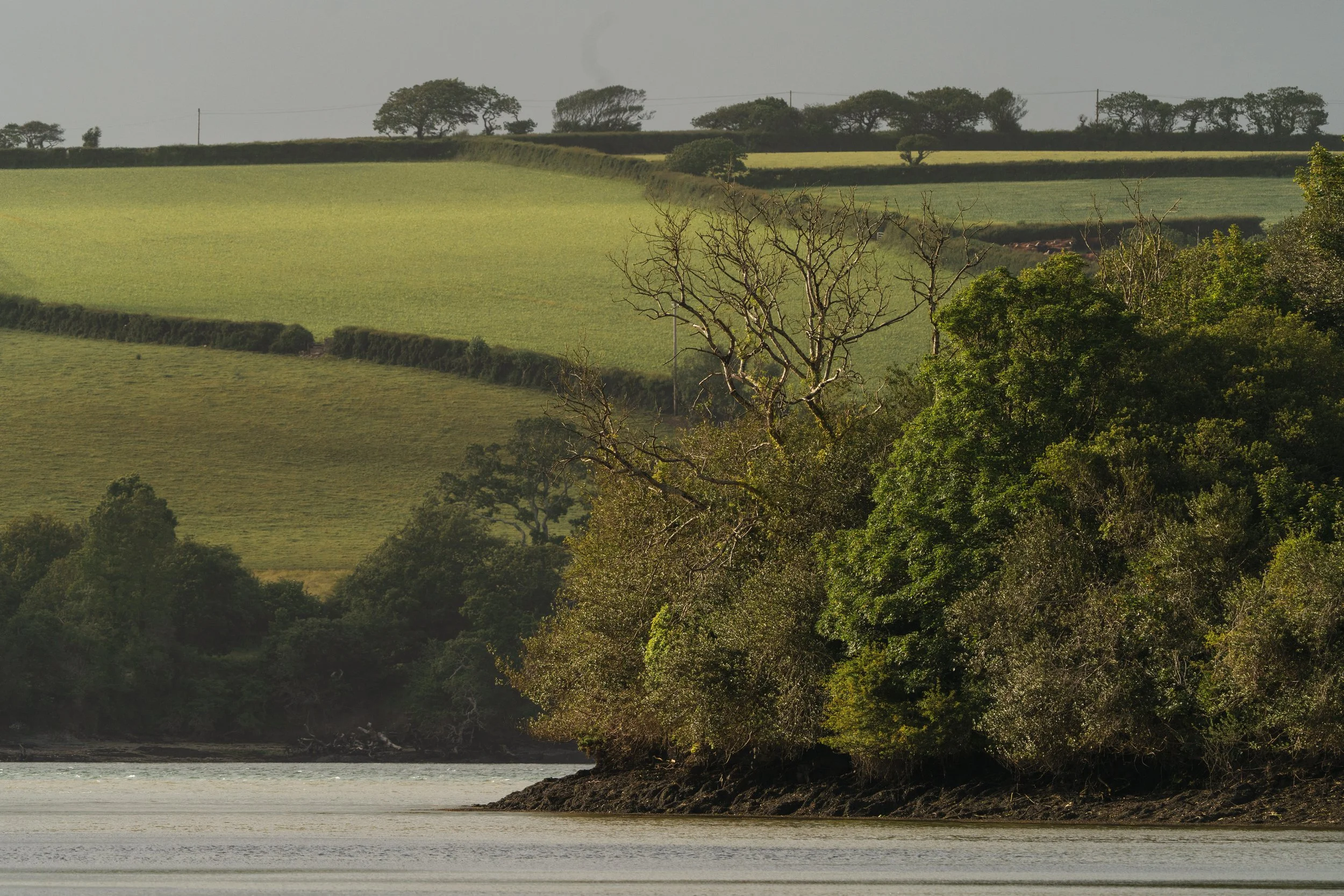
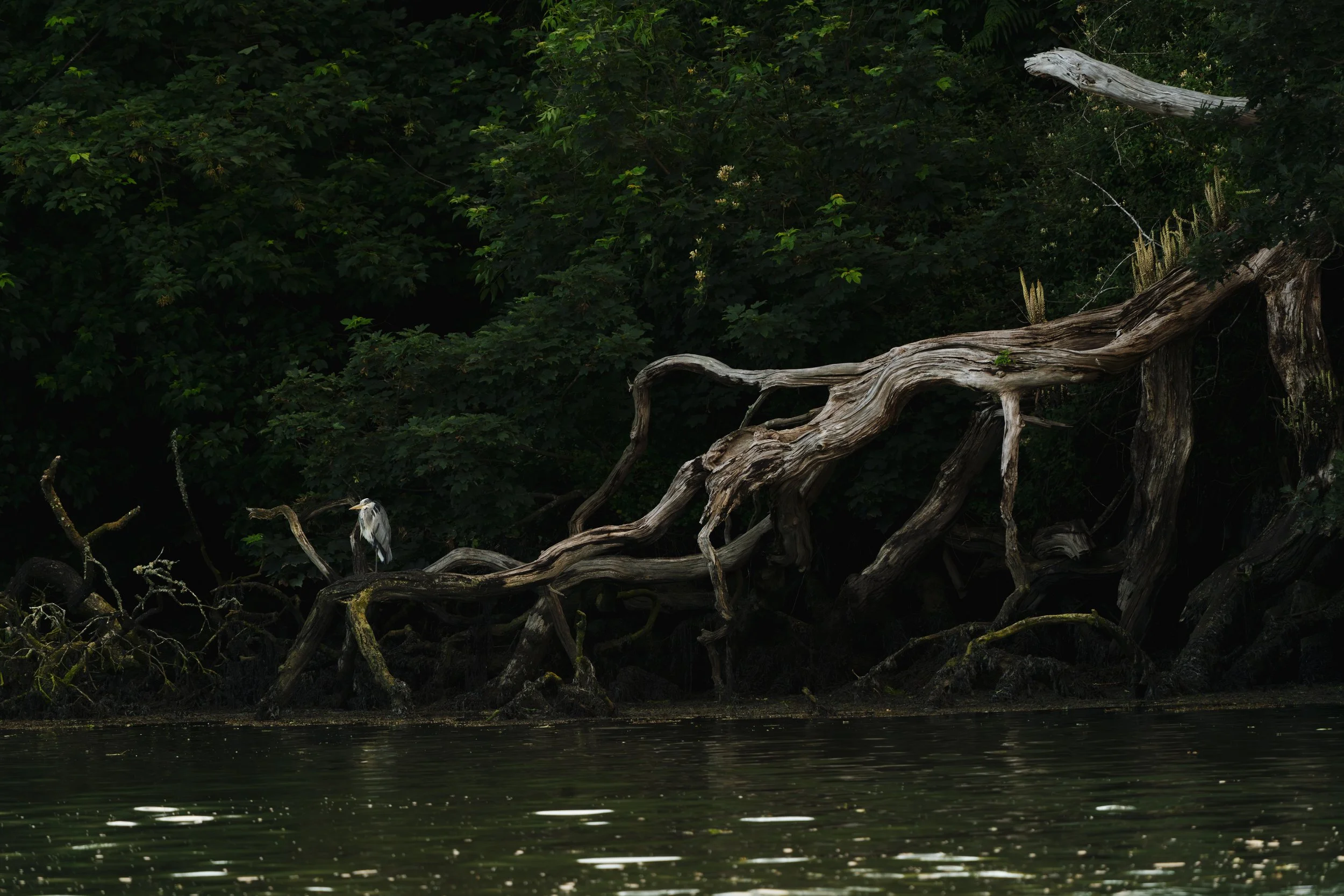
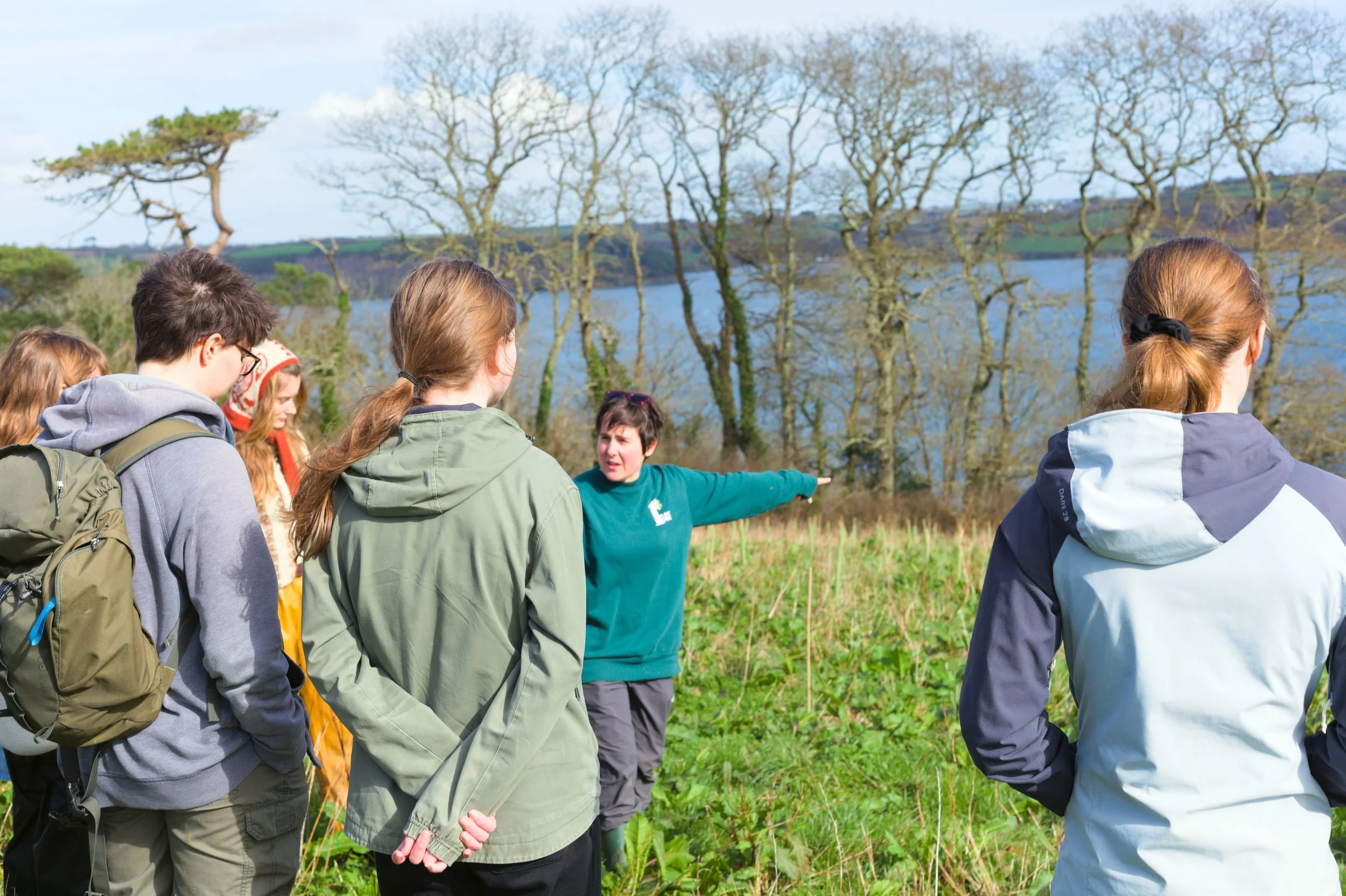
Looking to other rainforest nations is not about finding a blueprint for Britain's future. Every rainforest is different, and every culture has developed its own ways of understanding the living world. But together, these examples offer ways of seeing connections that have become less visible in our own landscapes. In doing so, they allow us to reimagine the role that we could play as a part of the ecosystem ourselves.
To explore these forgotten connections, The Woodland Trust funded the recent ‘Ocean Forest Links’ Report, a literature review of global research on the ocean-forest relationship, and the subsequent ‘From Trees to Seas’ research paper, investigating the condition of the UK’s own ocean-forest relationship. The results have called for a new way of speaking about our land and sea that reflects what is emerging from the science: that these systems are not separate, but part of one living system connected by the cycling of water, carbon and nutrients between them.
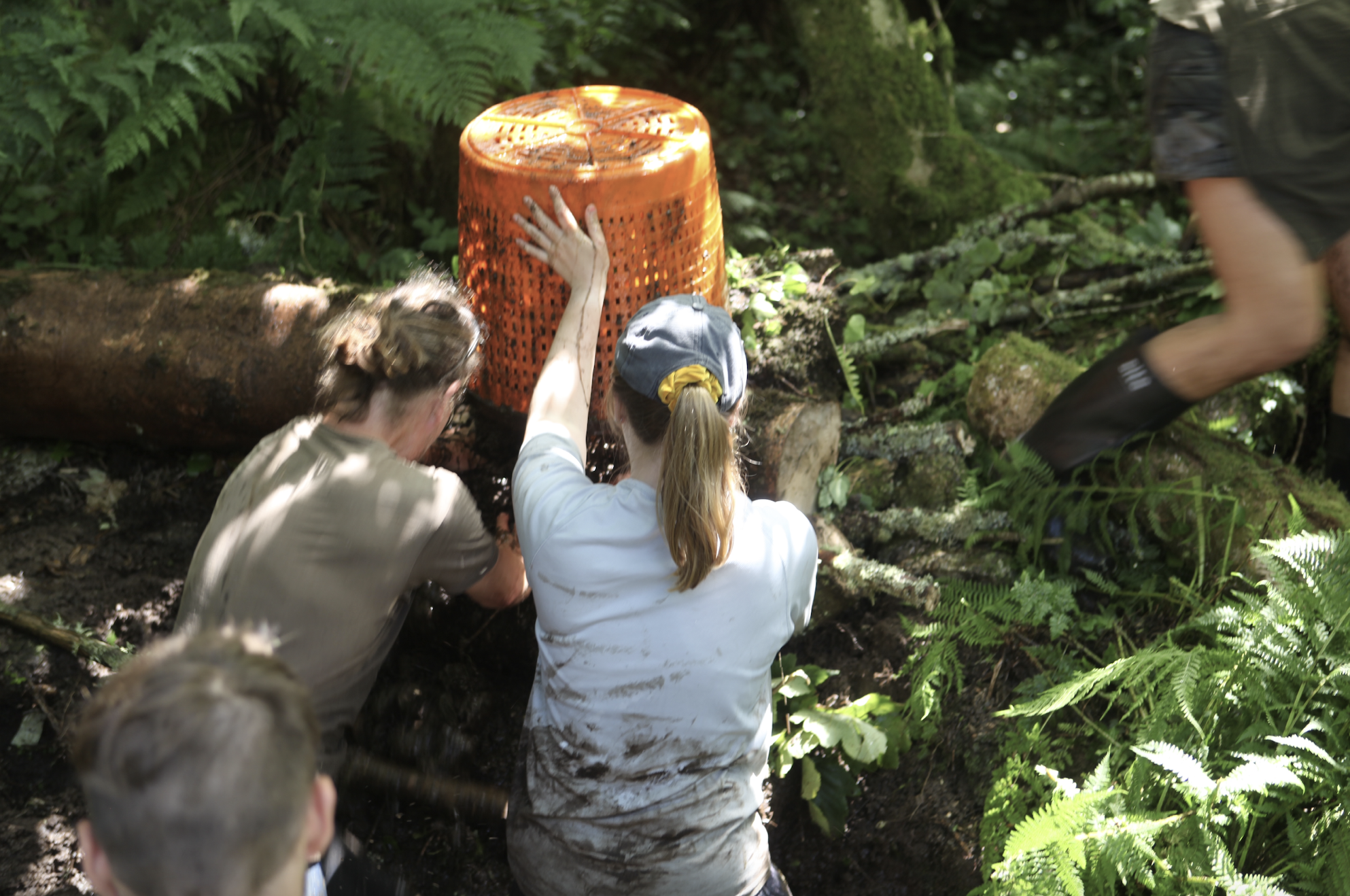
This interconnected system has been termed the flowscape. The concept underpins the No Trees No Seas campaign by Cornwall-based CIC PlantOne, who aim to restore 500 hectares of coastal and estuarine ‘fish forest’ in Cornwall over the next five years. Through our partnership youth volunteering group ‘Flowscape Action’, The Woodland Trust and PlantOne are working with young people to care for their own flowscapes, from building leaky dams to planting estuarine forests, while developing practical skills in landscape-scale restoration.
This concept is being applied elsewhere in Cornwall by Voices of Water Foundation, who are working to give a legal voice to the Helford river through rights of nature approaches. The Woodland Trust has been advising on how a flowscape-based approach could inform guardianship models, bringing together the ecological connections between rainforests, rivers and seas with new approaches to how we care for these systems.
This research has helped us focus our own efforts on temperate rainforest restoration on estuaries where we can have the biggest impact on land and in the connected estuaries: The Dart River, the Fowey and the Helford. Together, these projects are beginning to put the flowscape into practice, reconnecting systems we have traditionally treated as separate, and exploring new ways of caring for them. Perhaps this is what it means to rediscover Britain as a rainforest nation: moving beyond simply bringing back trees, towards restoring the ecological processes that make our ecosystems function.
Call to action:
If you are 18-35 and would like to join Flowscape Action, please contact bella@plantone.co.uk

Rainforest Recovery is the South West strand of The Rainforest Restoration Project. It is being led by the Woodland Trust in partnership with Plantlife. This project is funded as part of the Government's Species Survival Fund. The fund was developed by Defra and its Arm's-Length Bodies. It is being delivered on behalf of Defra by The National Lottery Heritage Fund.